
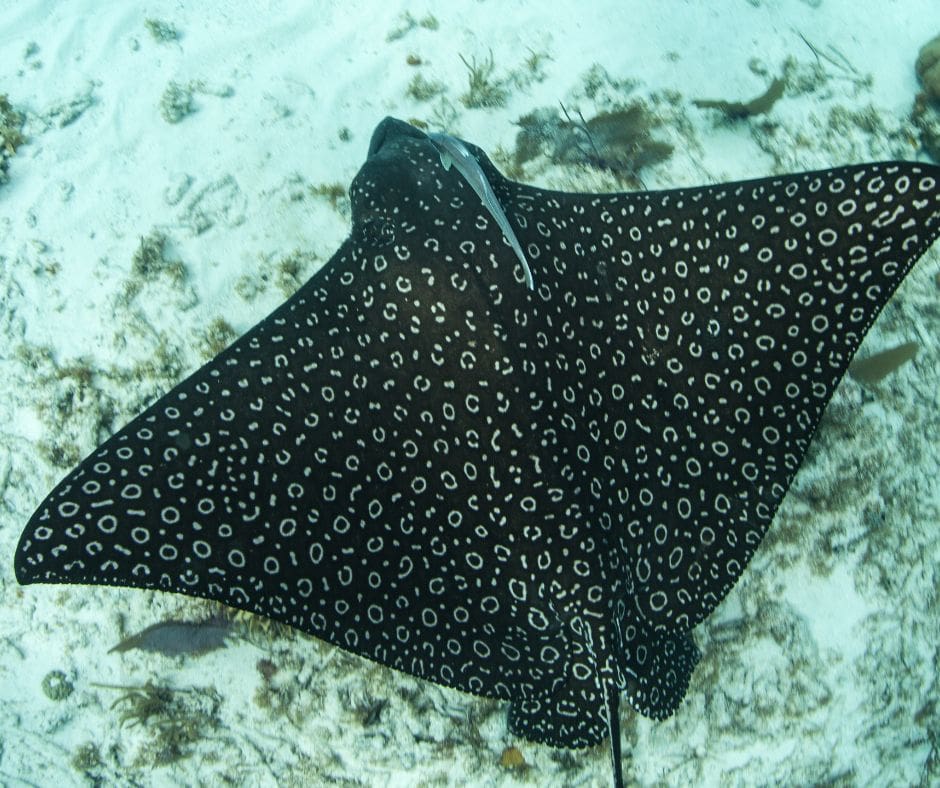
Eagle rays, with their distinctive and elegant appearance, are one of the ocean’s most mesmerizing sights, especially in the biodiverse waters of Costa Rica. These majestic creatures boast a unique flat and wide body, resembling a bird’s wingspan, which can reach up to several meters in width. Their coloration, often a mottled grey or brown with white underbellies, allows them to blend seamlessly into the ocean depths. A notable feature is their long, whip-like tail, which trails behind them gracefully as they glide through the water. The eagle ray’s face, with eyes positioned on the sides of their broad head, and a snout that resembles a bird’s beak, further contribute to their avian namesake. Floating effortlessly, often near the water’s surface, they present an awe-inspiring spectacle to lucky onlookers along Costa Rica’s coasts.
The Graceful Gliders of Costa Rica’s Seas
Eagle rays, known scientifically as the Myliobatidae family, are easily recognizable by their broad, flat bodies and long, slender tails. In Costa Rica, they are often spotted in the warm, tropical waters along both the Pacific and Caribbean coasts. These creatures are known for their graceful swimming, often likened to birds soaring through the sky.
A Glimpse into Their World
Unlike their stingray cousins, eagle rays are free-swimming and often found gliding in open waters. They are a frequent sight in places like the Gulf of Papagayo, Caño Island, and around the Osa Peninsula. Divers and snorkelers in these areas are often treated to the sight of eagle rays in flight, moving effortlessly through the water with wing-like pectoral fins.
Diet and Feeding Habits
Eagle rays primarily feed on benthic prey, which includes mollusks, crustaceans, and occasionally small fish. Using their snouts, they can dig into the sandy ocean floor to uncover hidden prey. Their strong jaws and flattened tooth structure enable them to crush hard shells of mollusks and crustaceans.
The Importance of Eagle Rays in Costa Rican Waters
Eagle rays play a vital role in the marine ecosystem of Costa Rica. As predators, they help maintain the balance of species below them in the food chain. Additionally, their feeding habits contribute to the aeration and turnover of the seabed, which is crucial for a healthy marine environment.
Conservation Efforts
These rays face threats from overfishing and habitat destruction. Costa Rica, known for its dedication to conservation, has several initiatives in place to protect these marine animals. Marine protected areas, regulations on fishing practices, and awareness campaigns are some of the efforts to ensure these creatures continue to thrive in Costa Rican waters.
Encountering Eagle Rays
For those hoping to witness these magnificent creatures, the best times are generally during the dry season, from December to April. Numerous tour operators offer snorkeling and diving trips where you might get lucky enough to encounter them. It’s an experience that beautifully encapsulates the magic of Costa Rica’s marine life.
Eagle rays, with their elegant flight and significant role in the ecosystem, are yet another reason Costa Rica’s waters are a treasure trove for marine enthusiasts and conservationists alike.
More related articles

Former Navy Journalist, published author and international speaker. Howler executive since 2019.