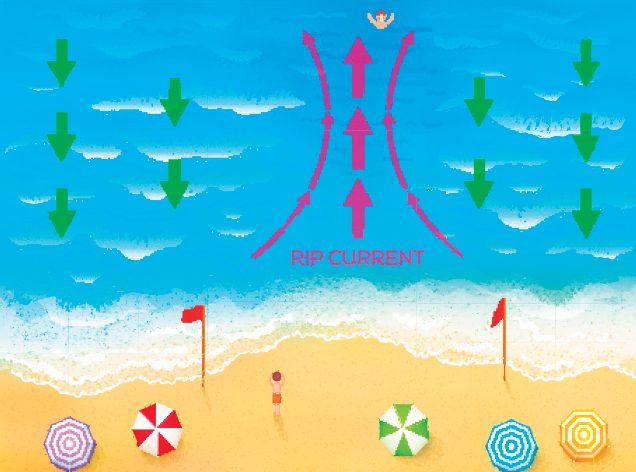

Rip currents are the leading surf hazard for all beachgoers. They are particularly dangerous for weak or non-swimmers. Rip current speeds are typically one to two feet per second. However, speeds as high as eight feet per second have been measured — faster than an Olympic swimmer can sprint! Thus, rip currents can sweep even the strongest swimmer out to sea.
More than 100 drownings due to rip currents occur every year in the United States. More than 80 percent of water rescues on surf beaches are due to rip currents.
How to identify rip currents
Look for any of these clues:
- A channel of churning, choppy water
- An area having a notable difference in water color
- A line of foam, seaweed or debris moving steadily seaward
- A break in the incoming wave pattern
None, one or more of these clues may indicate the presence of rip currents. Rip currents are often not readily or easily identifiable to the average beachgoer. For your safety, be aware of this major surf zone hazard. Polarized sunglasses make it easier to see the signs of a rip current.
Be careful out there
- Never swim alone.
- Be cautious at all times, especially when swimming at unguarded beaches. If in doubt, don’t go out!
- Whenever possible, swim at a lifeguard-protected beach.
- Obey all instructions and orders from lifeguards.
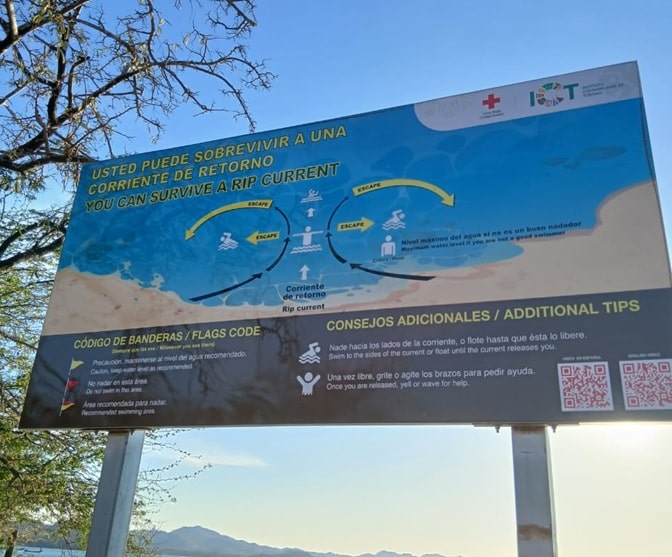
- If caught in a rip current, remain calm to conserve energy and think clearly.
Don’t fight the current. Swim out of the current in a direction following the shoreline. When out of the current, swim towards shore. - If you are unable to swim out of the rip current, float or calmly tread water. When out of the current, swim towards shore.
- If you are still unable to reach shore, draw attention to yourself. Face the shore, wave your arms and yell for help.
Saving a life
Many people drown while trying to save someone else from a rip current. If you see someone in trouble:
- Get help from a lifeguard.
- If a lifeguard is not available, have someone call 911.
- Throw the rip current victim something that floats and yell instructions on how to escape.