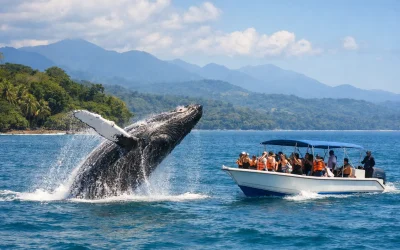

What makes kayaking with humpback whales in Costa Rica so special?
Kayaking alongside humpback whales offers a quiet, intimate view of these ocean giants—an experience far more magical than watching from a crowded tour boat. During August and September, Costa Rica’s Pacific coast becomes a temporary nursery for migrating humpbacks, making it the ideal season to paddle among whale tales and warm waves.
Where are the best places to kayak with whales in Costa Rica?
The top spots for whale-friendly kayaking include Marino Ballena National Park, Drake Bay, and the Golfo Dulce, all of which offer calm conditions and high whale activity.
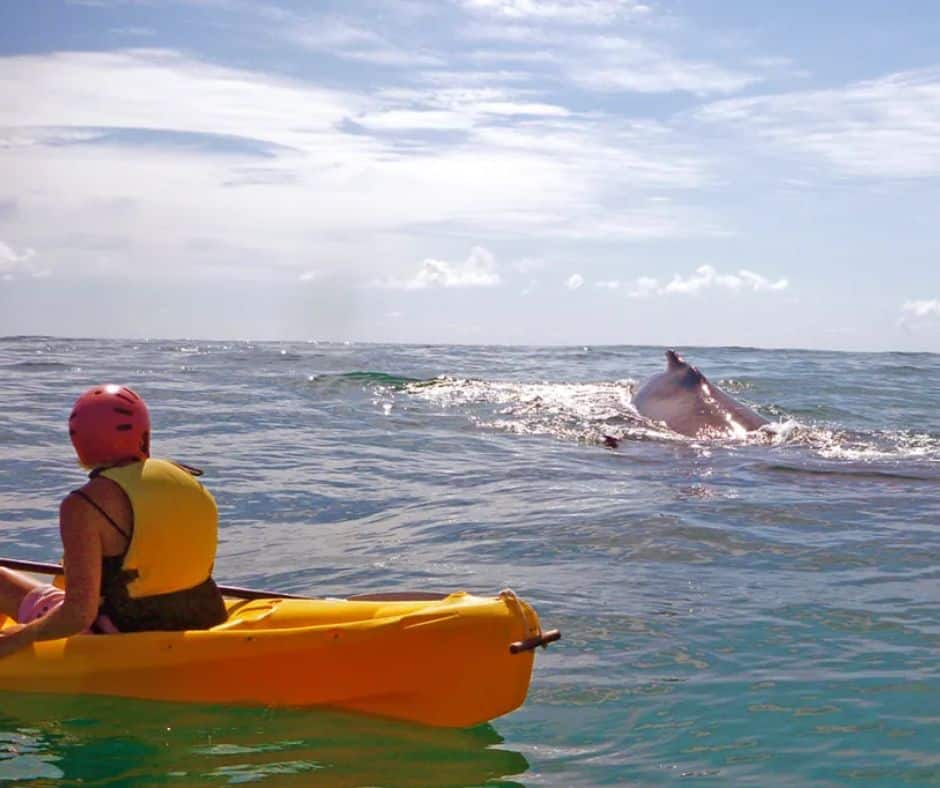
- Marino Ballena National Park: Famous for its sandbar shaped like a whale’s tail, this park is a hotspot for sightings just metres offshore.
- Drake Bay: With fewer crowds and abundant marine life, it’s ideal for kayakers who want a tranquil whale-spotting adventure.
- Golfo Dulce: One of the few tropical fjords in the world, this bay attracts mothers with calves thanks to its warm, protected waters.
When is the best time to see whales from a kayak?
Mid-August through September is peak season for humpback whales migrating from the Southern Hemisphere to breed and give birth in Costa Rican waters.
- Morning paddles: Calmer seas and less wind make early starts perfect for spotting blowholes and dorsal fins.
- New moon and full moon weeks: Tides can enhance your paddling conditions and increase marine activity.
- Avoid heavy swell days: While thrilling for surfers, choppy seas make it harder to spot whales and keep your kayak stable.
Is kayaking with whales safe and ethical?
Yes, as long as it’s done respectfully and with awareness. Always keep a minimum distance of 100 metres from whales, avoid loud splashing, and never paddle directly toward them.
- Keep your distance: Let the whales come to you (they’re curious creatures).
- Go with a certified guide: They know local regulations and whale behaviour.
- Stay calm and quiet: Whales are more likely to linger near you if you don’t behave like a caffeinated dolphin.
What gear do you need for whale kayaking in Costa Rica?
Simple, lightweight equipment will do the trick—comfort and safety are your top priorities.
- Sit-on-top kayak: More stable and beginner-friendly in open water.
- Dry bag: For your camera, snacks, and phone. Because saltwater loves a good splash.
- PFD (personal flotation device): Even if you’re an Olympic swimmer, it’s non-negotiable.
- Wide-brim hat and sunscreen: Sunburned whales are rare. Humans, not so much.
- Water shoes or sandals: For rocky beach launches and awkward landings.
Can you kayak alone to see whales, or should you book a tour?
It’s highly recommended to go with a local guide or tour group, especially if you’re unfamiliar with marine navigation or changing sea conditions.
- Guided tours offer safety and insight: You’ll learn about whale behaviour, ocean currents, and where to paddle for the best sightings.
- Rental shops may require experience: Solo trips aren’t always allowed without showing your kayaking credentials or proving you can tell a rip current from a banana peel.
- Group paddles are more fun: Share the wonder—and maybe that granola bar you forgot to pack.
FAQ
Do whales ever get too close to kayaks?
Sometimes, yes. They’re naturally curious, especially calves. Stay calm, don’t paddle away in a panic, and let them pass.
Can I take photos from my kayak?
Absolutely! Use a waterproof camera or a dry bag. But don’t get so focused on the shot that you forget to soak up the moment.
What other marine life might I see?
Expect sea turtles, dolphins, flying fish, and maybe even a cheeky ray or two showing off its aerial moves.
What if I get seasick?
Stick to calmer bays and take breaks. Ginger tablets and wristbands help, but your best bet is a good breakfast and positive vibes.Is it physically demanding?
It’s a workout, yes—but doable for most. Paddling for whales usually involves slow movement and lots of floating.
Former Navy Journalist, published author and international speaker. Howler executive since 2019.