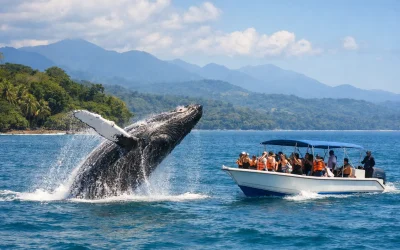

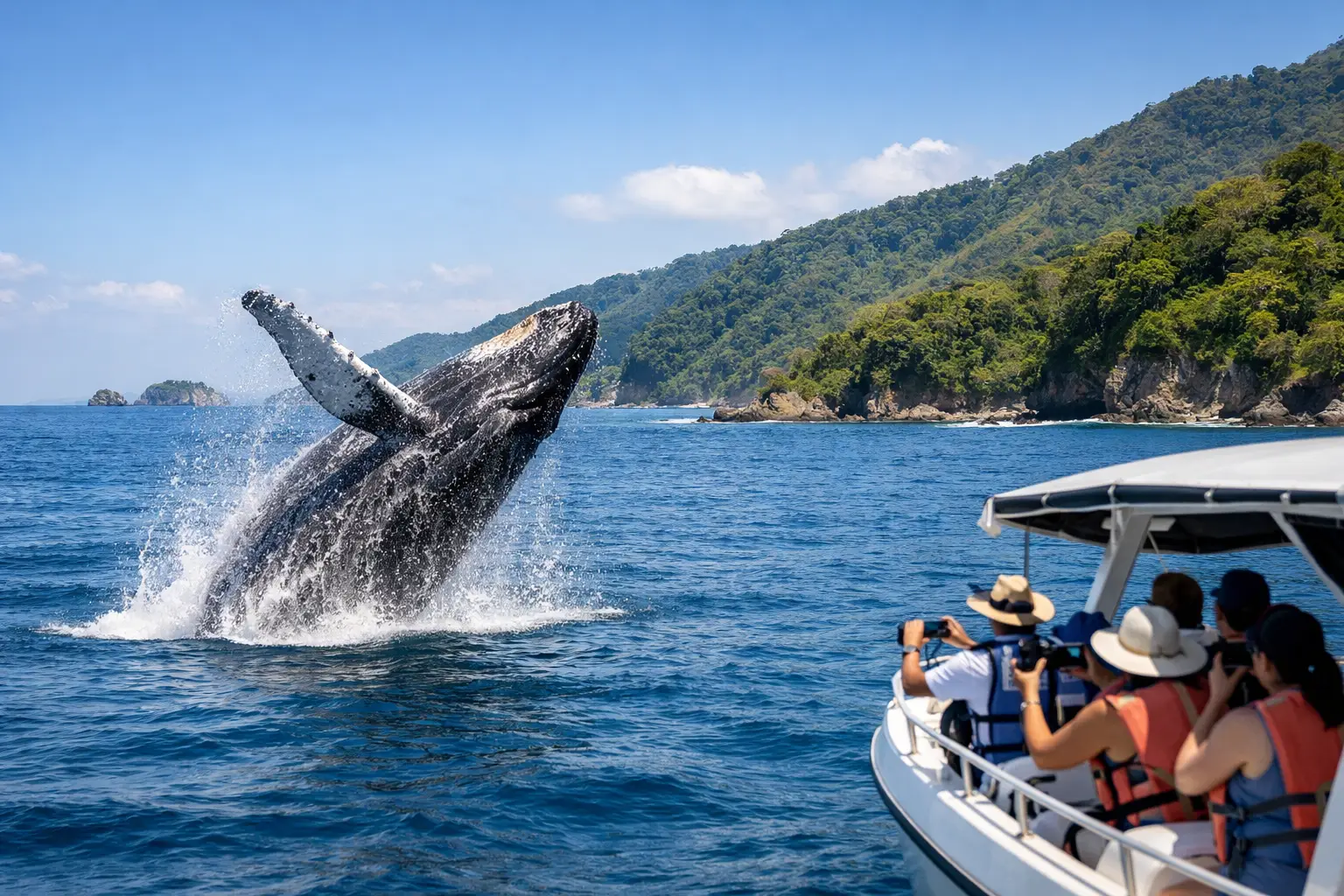
The first sign is rarely the splash. It is the pause that falls over the boat when everyone realizes something big is moving just under the surface. Then comes the exhale – loud, sudden, almost prehistoric – and a plume of mist rises against the blue. That is Pacific whale watching in Costa Rica at its best: not a staged attraction, not a marine theme park moment, but a wild encounter that makes even seasoned travelers go quiet.
Costa Rica’s Pacific coast has a rare advantage in the whale-watching world. You are not chasing a brief migration window with cold weather and rough seas as the price of admission. Here, warm water, dramatic coastline, and two different humpback populations create unusually long viewing seasons. For visitors planning a vacation, scouting future retirement spots, or simply looking for the kind of experience that stays with you long after the tan fades, this is one of the country’s most moving wildlife encounters.
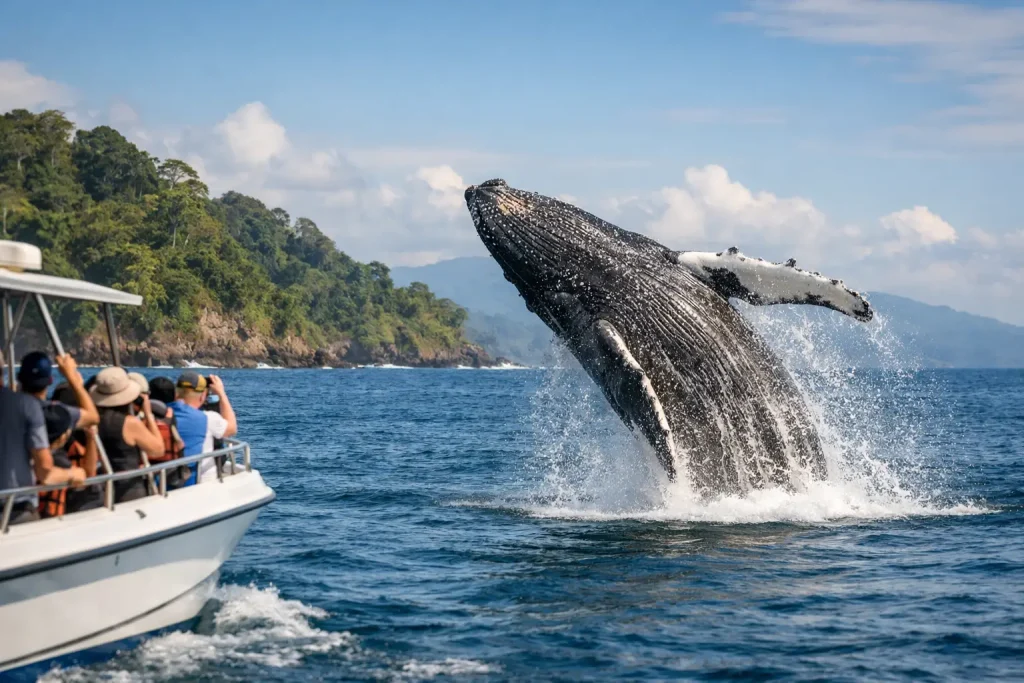
Why Pacific Whale Watching stands out here
Costa Rica sits in a sweet spot for humpback whales traveling from both the Northern and Southern Hemispheres. That means the Pacific coast receives visitors during different times of year, extending the season far beyond what many travelers expect. It is one of those natural advantages that feels almost unfair.
The northern humpbacks typically arrive from around December through April. The southern humpbacks, traveling much farther from Antarctic waters, usually appear from July through November, with peak activity often concentrated from August to October. The overlap does not guarantee whales on every outing, because wildlife never works on command, but it does mean Costa Rica offers one of the longest whale-watching calendars in the region.
That matters if you are trying to build a trip around more than one priority. Maybe you want a beach stay, rainforest excursions, and a wildlife day on the water. Maybe you are visiting in what would be considered an off-season month elsewhere and still want a strong chance of seeing marine life. In Costa Rica, that flexibility is real.
Best places for Pacific whale watching in Costa Rica
Not every stretch of coastline offers the same experience. Some destinations are known for convenience, others for scenery, and a few for the sense that whales are part of the local rhythm.
Marino Ballena National Park
If there is one place most associated with whale watching in Costa Rica, it is Marino Ballena National Park near Uvita. The name itself gives the game away – ballena means whale. This protected marine area has become a flagship destination for humpback sightings, especially during migration peaks.
The setting helps. The coastline curves into the famous Whale’s Tail sandbar, and offshore waters provide the kind of habitat whales use for breeding, calving, and resting. Tours here often combine whale watching with dolphin sightings and views of the park’s striking coastal formations. It is one of the easiest places to recommend because the experience feels grounded in conservation, not just tourism.
Drake Bay and the Osa Peninsula
For travelers who like their wildlife with a stronger edge of remoteness, Drake Bay offers a memorable version of pacific whale watching. This is not just about seeing whales. It is about heading out from one of Costa Rica’s most biodiverse corners, where the sea feels tied to everything happening on land.
The trade-off is access. Getting to Drake Bay takes more effort than reaching more established beach towns. But if your ideal trip includes scarlet macaws overhead, jungle-backed coastlines, and fewer crowds on the boat, it can be worth every extra mile.
Golfo Dulce
Golfo Dulce has a different mood altogether. This tropical gulf in the southern Pacific is known for calm waters and rich marine life, including dolphins and seasonal whales. For families, photographers, or travelers who prefer gentler boat conditions, this area can be especially appealing.
It is not always the flashiest name in guidebooks, which is part of its charm. The experience here can feel more intimate and less rushed.
Manuel Antonio and nearby coastlines
Manuel Antonio is better known for beaches, monkeys, and easy vacation logistics, but whale watching tours also depart from this area. If your trip is already centered there, adding a boat excursion can be a practical way to round out your stay.
This is a good example of where expectations matter. If whale watching is your number one goal, Uvita or the southern Pacific may offer stronger odds during peak periods. If convenience matters more, Manuel Antonio can still deliver a rewarding day on the water.
When to go and what to expect
The best whale-watching trip is not always the one in the statistically strongest month. Weather, sea conditions, and your tolerance for rain, heat, and crowds all play a role.
From July through October, the southern migration often creates the most celebrated season, especially around Uvita. These months can also fall within the rainy season, which means greener landscapes, dramatic skies, and occasional downpours. For many travelers, that is a fair exchange. Costa Rica in the green season has a richness that dry-season visitors sometimes miss.
From December through April, northern humpbacks arrive during months that many visitors already favor for beach travel. You may find more predictable sunshine and easier road conditions, especially helpful for those combining several destinations.
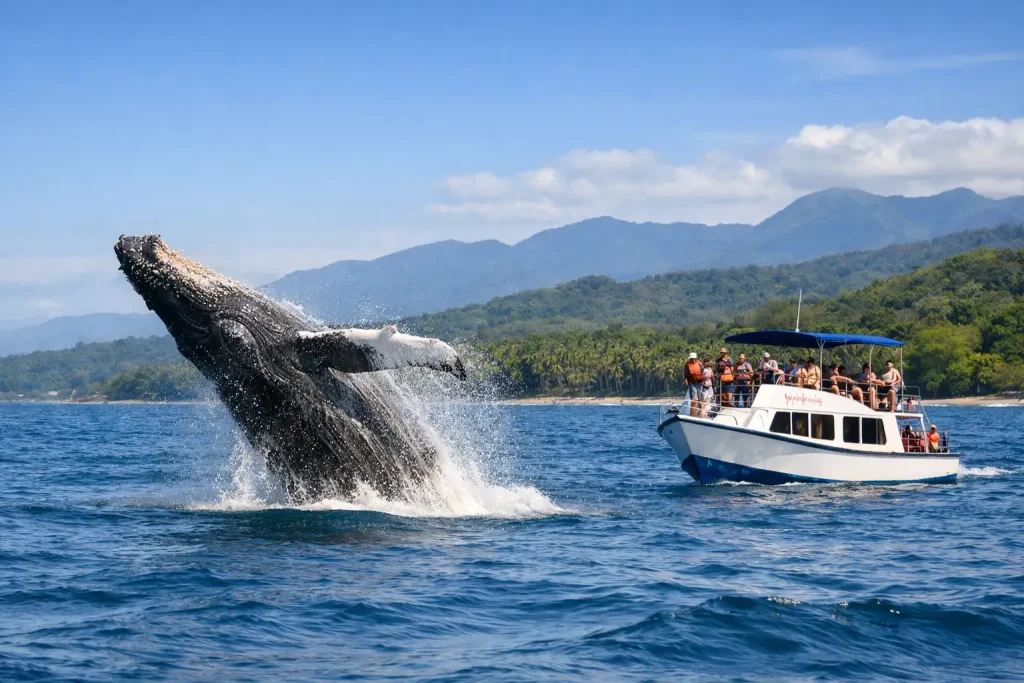
A typical tour lasts a few hours. You will likely board a small or mid-size boat, head offshore with a captain and guide, and spend time scanning the surface for blows, dorsal fins, tail slaps, and breaches. Some days are cinematic. Other days require patience. That unpredictability is part of the contract with wild nature.
How to choose a good tour
This is where excitement should meet discernment. A whale-watching trip is only as good as the operator running it.
Look for captains and guides who respect viewing distances, avoid aggressive pursuit, and clearly prioritize animal welfare over dramatic close-ups. Responsible operators explain the rules, set realistic expectations, and know how to read the water without harassing the animals. If a tour promises guaranteed acrobatics on command, that is your cue to be skeptical.
Boat size matters too. Smaller boats can feel more intimate and lower to the water, which some travelers love. They can also mean a bumpier ride. Larger vessels may offer more stability and comfort, especially for families or anyone prone to seasickness. There is no universal best choice. It depends on your style of travel and how adventurous you want the outing to feel.
Morning departures are often preferred because seas can be calmer earlier in the day. Bring sun protection, a light rain layer, water, and a camera you can handle quickly. And if your stomach has ever disagreed with a boat, prepare before boarding, not after the horizon starts moving.
The conservation side of the story
Whale watching is one of those travel experiences that can either support conservation or quietly undermine it. In Costa Rica, that distinction matters.
Marine protected areas, local guides, and conservation-minded tourism have helped create a model where living whales are worth more than exploited ones. But growth brings pressure. More boats, more development along the coast, and more demand for close encounters can strain fragile ecosystems if not managed carefully.
That is why choosing ethical tours is not just a nice gesture. It helps reinforce the kind of tourism Costa Rica has spent decades trying to build – one that treats natural wonder as something to protect, not consume.
For readers of Howler Media, this is often where Costa Rica becomes more than a vacation backdrop. The country’s appeal has always been tied to a larger question: how do you enjoy a place deeply while helping preserve what makes it extraordinary? Out on the Pacific, with a humpback surfacing beside your boat, that question feels immediate.
More than a bucket-list moment
What surprises many visitors is how emotional the experience can be. You may come for the photo, the family memory, or the simple thrill of seeing a whale breach. What stays with you is often something quieter: the scale of the animal, the tenderness of a mother and calf, the long silence between sightings that reminds you these waters are alive on their own terms.
Pacific whale watching in Costa Rica works so well because it fits the country’s deeper character. It is beautiful, yes, but it is also humbling. It asks you to pay attention. It rewards patience. And it offers that rare kind of luxury that has nothing to do with velvet ropes or polished service – the luxury of witnessing something ancient and real in a place that still knows how to protect wonder.
FAQs
What months are best for whale watching on Costa Rica’s Pacific coast?
The strongest periods are usually July through November and December through April. August to October is especially popular in the southern Pacific.
Where is the best place to see whales in Costa Rica?
Marino Ballena National Park in Uvita is widely considered the top destination, though Drake Bay and Golfo Dulce are also excellent.
Can you see whales in Manuel Antonio?
Yes. Tours operate from Manuel Antonio, and sightings are possible in season, though Uvita often has the strongest reputation for whale watching.
Are whale-watching tours safe for families?
Generally, yes, especially with reputable operators and calm sea conditions. Families with young children may prefer larger, more stable boats.
Will I definitely see whales?
No ethical operator can promise that. Whale sightings are often very good in season, but these are wild animals and conditions vary day to day.
What should I bring on a whale-watching tour?
Bring sunscreen, a hat, water, sunglasses, a light rain jacket, and motion-sickness prevention if you need it.
Have you gone whale watching in Costa Rica, or is it still on your list? Which part of the Pacific coast would you most want to experience from the water?
If this article has you planning your next coastal adventure, keep the conversation going and share it with someone who would never say no to a day on the ocean.