

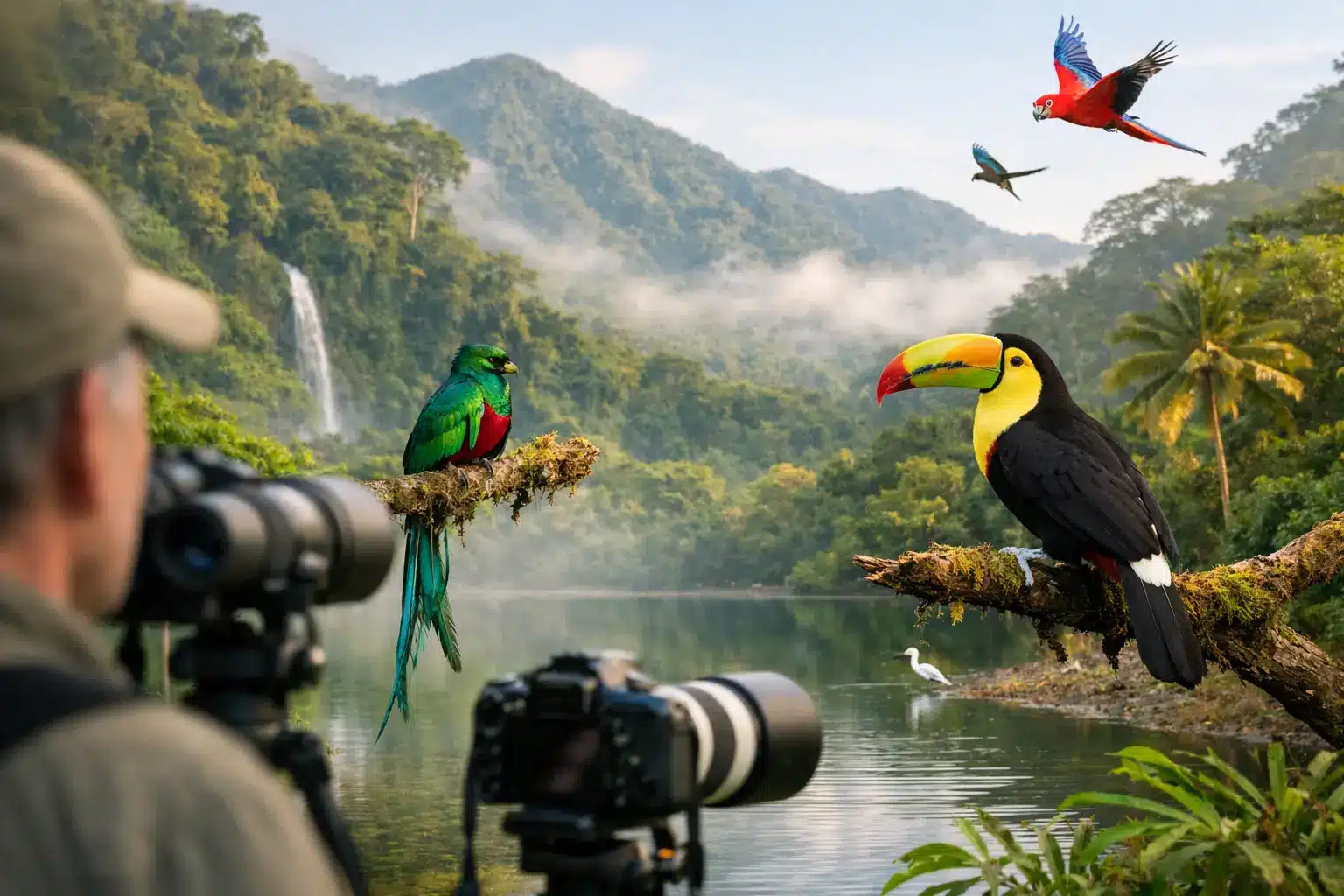
The sound often comes before the sight – a metallic call from the canopy, a flutter in the heliconias, a flash of scarlet crossing a green wall of forest. That is the magic of Costa Rica birdwatching spots. You do not simply arrive, check a species off a list, and move on. You listen, wait, and suddenly a country already famous for beaches and volcanoes reveals one of its richest identities: a place where birds still shape the rhythm of the day.
For travelers who care about nature, and for future residents looking for the kind of lifestyle Costa Rica can offer, birdwatching is more than a niche hobby here. It is one of the best ways to understand the country itself. In a relatively small area, you can move from mangroves to cloud forest, from Caribbean lowlands to Pacific dry forest, and each ecosystem changes the cast of characters overhead. The trade-off is simple: no single destination gives you everything. The reward is that each region tells a different story.
Why Costa Rica birdwatching spots are so exceptional
Costa Rica holds an astonishing diversity of habitats, which is the real reason birding here feels so rich. One morning might bring toucans and tanagers in humid foothill forest, and the next could put you in highland oak woods listening for resplendent quetzals. Add strong conservation efforts, a culture that values protected land, and relatively easy travel logistics compared with much of the tropics, and the country becomes accessible without losing its wild edge.
That said, expectations matter. Birdwatching in Costa Rica is not always easy, especially for first-timers. Dense foliage can turn a loud, obvious bird into a frustrating mystery. Rain changes trail conditions quickly. And some of the most memorable species are easiest to find with a local guide who knows not only bird calls, but fruiting trees, nesting areas, weather patterns, and timing. If you want a casual experience, many places are still rewarding from a hotel terrace. If you want target species, early starts and expert help are worth every minute.
10 standout Costa Rica birdwatching spots
Monteverde Cloud Forest
Monteverde is often the first name that comes up, and for good reason. Mist moves through the forest like a living thing, and every branch seems designed for epiphytes, orchids, and elusive birds. This is one of the classic places to look for the resplendent quetzal, especially when wild avocados are in fruit.
Monteverde can be cooler, wetter, and busier than some travelers expect. That is the trade-off for access and reputation. Still, if you want a cloud forest experience with excellent guiding infrastructure and a real chance at high-elevation species, it remains one of the most reliable choices in the country.
La Selva Biological Station and Sarapiqui
Sarapiqui feels lush in a way that almost defies description. The air is heavy, the rivers are broad and brown, and the forest hums with movement. Around La Selva and the greater Sarapiqui region, birders can encounter toucans, trogons, motmots, woodcreepers, and an impressive number of antbirds and hummingbirds.
This is not polished, postcard Costa Rica. It is greener, flatter, more humid, and wonderfully alive. For serious birdwatchers, that is exactly the appeal.
Carara National Park
Carara sits in a prized transition zone where dry forest and humid forest overlap, and that ecological meeting point creates unusual variety. It is one of the best places to see scarlet macaws on the Central Pacific side, often flying overhead in pairs that are impossible to ignore.
The trails can be hot and sticky, and timing matters. Go early, bring patience, and keep your ears open. Carara rewards people who slow down.
Tarcoles and the mangroves
Not every great birding session in Costa Rica happens on a forest trail. Around Tarcoles, the river mouth, mangroves, and nearby wetlands create a completely different experience. Boat-based birding here can reveal herons, kingfishers, shorebirds, and raptors, and the changing light over the estuary gives the whole outing a cinematic quality.
This is a smart stop for travelers who want variety without committing to long hikes. It also pairs well with Carara, making the region one of the strongest combinations in the country.
Arenal Observatory area
The Arenal region offers a rare blend of accessibility and habitat diversity. You have rainforest, open areas, foothills, and lake edges all within reach, which means your species list can build quickly. Toucans, parrots, tanagers, oropendolas, and hummingbirds are common stars, and lucky birders may also connect with more specialized species.
Arenal works especially well for mixed-interest travelers. If one person in the group wants birds and another wants hot springs or volcano views, this area keeps everybody happy.
Curi-Cancha Reserve
Though often mentioned alongside Monteverde, Curi-Cancha deserves its own place. The reserve is known for strong bird visibility, well-maintained trails, and a habitat mosaic that often makes sightings feel more immediate than in denser cloud forest.
For photographers and newer birders, this can be a sweet spot. You still get the highland atmosphere, but with a more approachable rhythm. Quetzals, bellbirds in season, toucanets, and multiple hummingbird species make it a favorite for good reason.
Palo Verde National Park
Palo Verde tells a different Costa Rica story – hotter, flatter, and shaped by wetlands and tropical dry forest. During the dry season especially, waterbirds can gather in impressive numbers. This is where egrets, herons, spoonbills, ibises, and ducks take center stage.
If your image of Costa Rica birding is all cloud forest and jungle, Palo Verde broadens the picture fast. It also shows why the country’s biodiversity is not just about altitude, but about water.
San Gerardo de Dota
If the quetzal is on your wish list, San Gerardo de Dota belongs near the top. The valley’s cool climate, oak forests, and quiet atmosphere make it one of the most rewarding highland birding destinations in Costa Rica. But it is not only about quetzals. Timberline wrens, silky-flycatchers, and fiery-throated hummingbirds give the area remarkable depth.
This is a place for early mornings, layered clothing, and a slower pace. It feels less tropical in the beach-vacation sense and more intimate, more hushed, and deeply memorable.
Tortuguero
Tortuguero is usually associated with sea turtles, but birders know its canals and Caribbean lowland forests are full of life. Boat travel changes the pace of observation. You drift rather than hike, and the edges of water become a stage for kingfishers, jacanas, herons, monkeys, and sudden bursts of color in the overhanging trees.
Rain is part of the deal here, and logistics are a bit more involved. But the sense of immersion is extraordinary.
Corcovado and the Osa Peninsula
For travelers who want the wildest feel, the Osa Peninsula stands apart. Corcovado and the surrounding region are rich, remote, and biologically intense. Expect scarlet macaws, trogons, tinamous, antbirds, and the kind of layered forest soundscape that stays with you long after the trip ends.
The trade-off is effort. This is not the easiest birding destination in Costa Rica, and it should not be treated casually. But for many experienced nature travelers, Osa is where the country feels most alive.
When to go for the best birding
Costa Rica is rewarding year-round, but your best timing depends on your priorities. The dry season, generally from December through April in many regions, brings easier roads, more comfortable hiking, and simpler logistics. The green season can be wetter, of course, but it often means fewer crowds, dramatic landscapes, and active birdlife.
Migration also changes the picture. North American migrants add seasonal interest, especially in wetlands, coastal zones, and lower elevations. If you are targeting breeding behavior, nesting activity, or a specific call-rich period, a local guide can help narrow the calendar in a way broad travel advice never fully can.
How to choose the right spot for your trip
The best of the Costa Rica birdwatching spots depends on what kind of traveler you are. If this is your first birding trip and you want comfort, choose places with strong lodge and guide networks, such as Arenal, Monteverde, or San Gerardo de Dota. If you are building a serious species list, pair contrasting habitats, such as Caribbean lowlands with high elevations, or mangroves with inland rainforest.
It also depends on your tolerance for motion and mud. Tortuguero is wonderful if you like boats. Corcovado is better for those comfortable with more rugged planning. Palo Verde is ideal if you want wetlands without the intensity of dense rainforest trails.
Practical tips that make a real difference
Start early. In Costa Rica, dawn is not a suggestion for birdwatchers; it is the main event. Light rain gear, neutral clothing, insect protection, and binoculars matter, but so does restraint. Walk slower than you think you should. Stand still longer than feels natural. Many sightings happen just after the moment most people would have moved on.
A guide is not mandatory everywhere, but it often changes the experience from pleasant to unforgettable. This is especially true in thick forest, where sound identification can mean the difference between hearing a bird and actually seeing it. For readers who follow Costa Rica through publications like Howler Media, this is one of those cases where local knowledge is not just helpful – it is the experience.
FAQs
What is the best birdwatching spot in Costa Rica?
There is no single best answer. Monteverde, San Gerardo de Dota, Sarapiqui, and Osa are all top-tier, but the right choice depends on whether you want quetzals, wetland birds, scarlet macaws, or overall species diversity.
When is the best time for birdwatching in Costa Rica?
Birding is good year-round. Dry season is easier for travel, while green season can bring fewer crowds and lush conditions. Migratory bird activity can also make certain months especially rewarding.
Do I need a guide for birdwatching in Costa Rica?
Not always, but guides are extremely valuable, especially in dense forest habitats. They improve your chances of seeing target species and help you understand behavior, calls, and habitat.
Can beginners enjoy birdwatching in Costa Rica?
Absolutely. Places like Arenal, Curi-Cancha, and Tarcoles are very approachable for beginners, while still exciting for experienced birders.
Are Costa Rica birdwatching spots family-friendly?
Many are. Arenal, Tarcoles, and some Monteverde-area reserves are good options for families because they combine wildlife, easier access, and nearby activities.
Birdwatching in Costa Rica has a way of changing how you travel. After a while, you stop rushing to the next attraction and start paying attention to every branch, call, and patch of moving color.
Which bird would you most want to see in Costa Rica – a resplendent quetzal, a scarlet macaw, or something less famous but just as unforgettable? Have you visited any of these Costa Rica birdwatching spots, and which one would you recommend to another traveler? Share your experience and start the conversation.