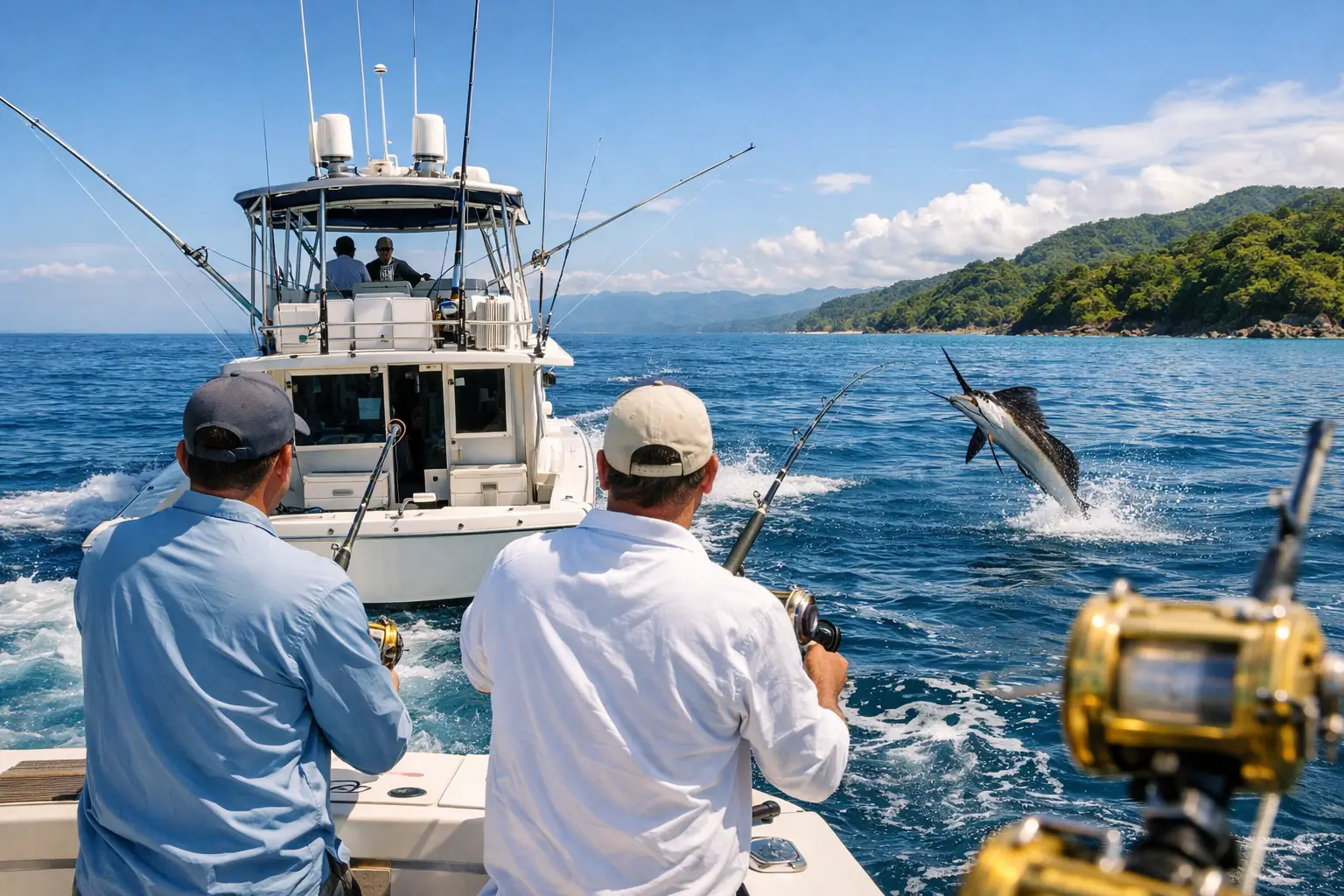
The marina wakes up early. Before the sun burns the pink off the horizon, crews are already loading bait, checking lines, and swapping the kind of dockside predictions that sound half science, half folklore. One captain says the billfish were running blue water yesterday. Another points to the breeze and says the bite will turn by noon. This is charter fishing in Costa Rica – part precision, part patience, and part pure anticipation.
For many visitors, the fantasy is simple: step onto a beautiful boat, head offshore, catch something enormous, and come back with a story that improves every time you tell it. Sometimes it works exactly like that. Sometimes it does not. The best charter fishing trips here are not just about what ends up on the line. They are about reading the season, picking the right coast, understanding what kind of day you actually want, and going with people who respect both the ocean and the experience.
Why charter fishing feels different in Costa Rica
Costa Rica has a rare advantage. It offers serious fishing on both the Pacific and Caribbean coasts, with different personalities, different species, and different rhythms. On the Pacific side, places like Los Sueños, Quepos, Tamarindo, Flamingo, and Golfito have built international reputations around offshore action. Anglers come chasing sailfish, marlin, dorado, tuna, and roosterfish, often with travel photos that look suspiciously unreal until you see the water yourself.
The Caribbean is a different story, quieter in some places and less publicized, but no less compelling for anglers who want variety and a little less dockside glamour. Tarpon and snook get plenty of attention there, especially among fishermen who care less about polished marina scenes and more about a strong fight in beautiful, less crowded surroundings.
That contrast is part of the appeal. Charter fishing here can be luxurious, family-friendly, hardcore, or relaxed. It depends where you go, what you book, and what kind of angler you are.
Choosing the right charter fishing trip
The biggest mistake first-timers make is booking the boat before deciding on the day they want. Those are not the same thing.
If your dream is offshore big game fishing, you are looking at a full-day trip, and sometimes longer runs depending on conditions and the season. If you are traveling with children or mixed-interest groups, an inshore trip may be the smarter call. You still have a legitimate shot at exciting fish, but the day is often easier, the water can be calmer, and the schedule leaves room for everyone to enjoy themselves.
Boat size matters, but not always in the way people think. A larger sportfisher can mean comfort, shade, a proper restroom, more deck space, and a smoother ride. That matters if you are paying premium rates or bringing family members who are more interested in the overall experience than the technical side of fishing. Smaller boats can be excellent too, especially for experienced anglers who care more about efficiency and local knowledge than onboard luxury.
The captain and crew matter more than almost anything else. A polished website does not guarantee a great day on the water. Good charter fishing operators communicate clearly, explain what is realistic for the season, maintain their equipment, and do not promise fantasy catches just to close the booking. The best crews also know how to read the group. Some guests want coaching. Some want conversation. Some want quiet and a horizon line.
What you can catch, and when it changes
One reason Costa Rica has become a bucket-list destination for anglers is that the calendar rarely goes flat. There is no single perfect month for every species, but there is almost always something worth targeting.
On the Pacific, sailfish are a major draw and often the headliners for offshore charter fishing. Marlin, dorado, yellowfin tuna, wahoo, and roosterfish keep the roster exciting, with peak moments shifting by region and season. The dry season often brings reliable weather in many Pacific destinations, which is one reason so many travelers book then, but the green season can also produce excellent fishing, fewer crowds, and lush coastal scenery that makes the whole trip feel more cinematic.
That is the trade-off. If you want the buzz of high season, book when conditions are traditionally stable and marinas are humming. If you prefer a more relaxed feel and are comfortable with a little weather variability, the so-called off-season can reward you in ways people rarely mention in the brochures.
On the Caribbean side, tarpon and snook are the names that pull serious anglers east. Conditions there follow a different pattern, and local knowledge becomes even more valuable. This is where asking detailed seasonal questions pays off.
How to tell a good charter from an expensive boat
Price alone tells you very little. A costly trip may include top-tier equipment, experienced crew, lunch, drinks, quality electronics, dock fees, and fish handling. Or it may simply be expensive because it sits in a high-profile marina. A more modestly priced charter may turn out to be outstanding if the captain knows the water intimately and runs an honest operation.
Ask what is included. Ask whether licenses are covered or need to be purchased separately. Ask about tackle, bait, drinks, snacks, fish cleaning, transportation, and gratuity expectations. Ask whether the quoted trip is truly private. These details shape both the budget and the experience.
It is also worth asking how the charter approaches catch and release. In Costa Rica, many offshore species, especially billfish, are handled with strong conservation awareness. That is a good sign. Sport fishing depends on healthy fisheries, and the captains who understand that are usually thinking beyond one day’s photo.
The reality of the day on the water
Even dream trips have practical realities. The run offshore can be long. Heat builds fast. Motion sickness is not a character flaw, and people who ignore that often regret it by breakfast. If you are prone to seasickness, prepare before the boat leaves the dock, not after the horizon starts tilting.
Clothing matters more than people expect. Lightweight long sleeves, sun gloves, a buff, polarized sunglasses, and reef-safe sunscreen can save the day. Hydration is not optional. Neither is listening to the crew when the action starts. Good boats run like small teams. When a fish hits, things happen quickly.
And yes, not every trip produces the hero shot. Fish move. Weather shifts. Water conditions change. Anyone who tells you charter fishing guarantees trophies is selling something other than reality. But that uncertainty is part of the bargain. It is what keeps a fishing story alive long after the boat is washed down.
Who charter fishing is really for
It is easy to assume charter fishing is only for obsessed anglers, but that misses the broader appeal. In Costa Rica, a fishing charter often becomes one of those rare vacation days that pleases very different personalities at once. The serious fisherman gets the thrill of the hunt. The casual traveler gets a front-row seat to dolphins, sea birds, changing coastlines, and open Pacific drama. Even non-anglers tend to remember the run out, the rising sun, and the sudden collective jolt when a reel starts screaming.
That said, not every charter is right for every group. Families with younger children may want shorter trips and calmer water. Couples may prefer a private full-day with a more upscale boat. Experienced anglers may care almost entirely about species, tackle, and technique. The best booking decisions happen when people are honest about expectations instead of pretending every group wants the same adventure.
Charter fishing with respect for Costa Rica’s waters
Costa Rica’s reputation as a nature destination did not happen by accident. It depends on a culture of stewardship that is never perfect, but often deeply felt. Fishing belongs inside that conversation. The best charters respect regulations, support sustainable practices, and understand that the value of these waters extends beyond one customer’s catch.
For visitors, this is part of the privilege. You are not just buying a day on a boat. You are participating in a marine economy that touches local jobs, tourism, conservation, and community identity. That makes choosing the right operator more than a consumer decision. It is also a statement about what kind of travel experience you want to support.
If charter fishing is on your Costa Rica list, give it a little more thought than a quick online booking. Match the trip to the season, the coast, and the people you are traveling with. Ask better questions. Leave room for the ocean to surprise you. The right day offshore rarely feels like a transaction. It feels like you were let in on something.
FAQs About Charter Fishing
Is charter fishing in Costa Rica good for beginners?
Yes, especially on boats with patient crews who enjoy teaching. Beginners often do best on inshore or half-day trips, while full offshore days can be better for people prepared for a longer, more physical outing.
What is the best coast for charter fishing in Costa Rica?
It depends on what you want to catch. The Pacific is best known for sailfish, marlin, tuna, dorado, and roosterfish. The Caribbean is especially appealing for tarpon and snook.
How much does charter fishing usually cost?
Prices vary widely based on boat size, trip length, marina, and what is included. A smaller inshore charter costs much less than a luxury offshore sportfishing boat, so it is important to compare details, not just rates.
Do I need fishing experience?
No. Many charters welcome complete beginners. What matters most is choosing a crew that matches your skill level and being realistic about the kind of trip you can enjoy.
Should I book a half-day or full-day trip?
A half-day works well for families, first-timers, or travelers fitting fishing into a broader vacation schedule. A full-day is usually better for offshore fishing and for anglers targeting larger pelagic species.
Can you keep the fish you catch?
Sometimes, yes, depending on the species and the charter’s practices. Many billfish are released, while species like tuna or dorado may be kept if regulations and charter policies allow.
What kind of fishing day would you choose in Costa Rica – a laid-back inshore run or a full offshore hunt for billfish? And if you have already gone, what surprised you most once the lines hit the water?
If you are planning your next escape, keep asking the local questions that make the trip better. That is where the best Costa Rica stories usually begin.