

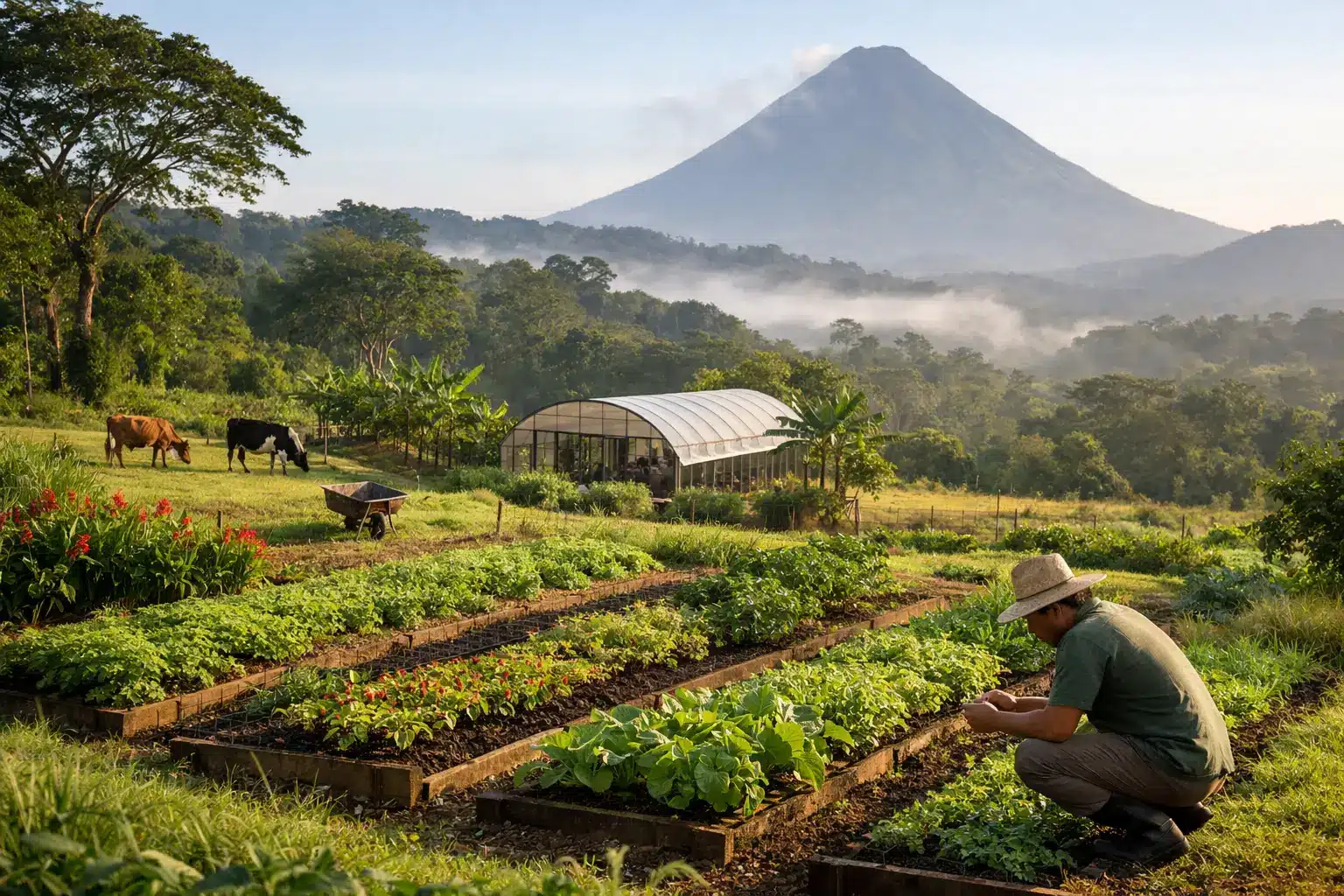
Walk onto a biodynamic farm at first light in Costa Rica and the difference is easy to feel before anyone explains it. The air is damp and alive, the compost smells rich instead of sour, and the fields seem less like production blocks and more like a living neighborhood. Biodynamic farming Costa Rica is not just organic agriculture with a philosophical twist. At its best, it is a whole-farm approach that treats soil, plants, animals, water, and human stewardship as one connected system.
That idea lands especially well here. Costa Rica has built a global reputation on conservation, biodiversity, and a style of development that at least tries to keep nature in the frame. For readers who care about what they eat, how land is managed, or where the next generation of wellness travel and regenerative investment is heading, biodynamic agriculture deserves a closer look.
Why biodynamic farming fits Costa Rica
Costa Rica already speaks the language of ecological interdependence. A hillside coffee farm, a cacao grove under shade trees, a mixed orchard near the coast, or a mountain homestead with vegetables, chickens, and compost all exist inside a web of rain patterns, pollinators, microclimates, and soil life. Biodynamic farming simply pushes that logic further.
Instead of asking only how to control pests or raise yields, biodynamic growers ask what makes the farm more balanced over time. They pay close attention to compost quality, biodiversity, animal integration, cover crops, and the subtle timing of planting and harvesting. Some follow a biodynamic calendar tied to lunar and cosmic rhythms, which can sound mystical to outsiders. For some farmers, that part is central. For others, the practical gains come less from belief and more from disciplined observation, healthier soils, and tighter closed-loop systems.
In Costa Rica, where rainfall can be abundant, erosion can be brutal, and tropical soils can lose vitality quickly under conventional pressure, that matters. A biodynamic approach often favors permanent soil cover, compost-based fertility, and more resilient field ecology. Those are not abstract ideals when a heavy rainy season hits a sloped property.
What makes biodynamic farming different from organic
This is where the conversation usually sharpens. Organic farming is largely about what you avoid or restrict – synthetic pesticides, certain fertilizers, genetically modified inputs, and a long list of prohibited substances. Biodynamic farming includes that organic baseline, but it goes further by viewing the farm as a self-sustaining organism.
That means fertility should increasingly come from within the farm rather than from purchased inputs. Compost is not just a waste solution. It is the biological engine. Animals are not always required on every property, but they often play an important role in cycling nutrients. Hedgerows, forest edges, beneficial insects, and water management become part of the productive design rather than decorative extras.
Then there are the biodynamic preparations, made from herbs, minerals, and manure in very small quantities and applied to compost or fields. Supporters say these preparations stimulate soil and plant vitality in ways that standard agronomy does not fully measure. Skeptics remain skeptical, and fairly so. If you are a practical landowner or investor, the real question is not whether every aspect fits your worldview. It is whether the farm becomes healthier, more resilient, and more distinctive in the marketplace.
Biodynamic farming Costa Rica on the ground
In Costa Rica, this approach tends to show up where quality and story matter as much as volume. Coffee is an obvious fit. So is cacao. Tropical fruit, specialty vegetables, medicinal herbs, and mixed-use retreat properties also lend themselves to biodynamic methods because the value proposition is broader than commodity production.
A biodynamic coffee farm in the Central Valley or highland regions might focus on shade management, compost production, and biodiversity corridors while building a premium identity around flavor and land stewardship. A cacao farm in the Caribbean lowlands may use layered agroforestry systems that protect soil moisture and support wildlife while producing a more complex landscape and a stronger visitor experience.
That last point matters. In Costa Rica, farms are rarely just farms anymore. Many are also educational spaces, hospitality concepts, export brands, wellness destinations, or lifestyle properties. Biodynamic agriculture fits naturally into that world because it gives a coherent story to the land. It tells visitors, buyers, and residents that this place is being cared for as a whole.
The benefits are real, but so are the trade-offs
The bright side is compelling. Healthier soils tend to hold moisture better, support stronger root systems, and reduce dependence on outside fertilizers. Greater biodiversity can lower pest pressure over time, especially in farms that have spent years rebuilding ecological balance. Crops grown in living soils often attract premium buyers, particularly in niche export markets and among consumers who care about traceability and environmental ethics.
There is also a branding advantage. In a country where conscious travel, farm-to-table dining, and wellness real estate continue to attract attention, biodynamic production can help a business stand out. It suggests seriousness. It signals that sustainability is not just a brochure word.
Still, this is not a magic wand. Transitioning to biodynamic management takes time, labor, and patience. Yields may dip while the land resets. Certification, if pursued, adds complexity and cost. Some methods are management-intensive and demand close, almost daily observation. If a property owner wants absentee agriculture with minimal involvement, biodynamics is probably not the easiest path.
Costa Rica adds its own variables. Humidity can create disease pressure. Remote farms may have labor constraints. Market access depends on region, logistics, and whether the crop can command a premium high enough to justify the extra care. The answer is often yes for specialty farms, but not always for larger-scale commodity models.
A cultural match with the country’s values
One reason biodynamic farming resonates here is that it aligns with a familiar Costa Rican instinct: respect the living system first. That does not mean every local farmer uses biodynamic language, or that all regenerative traditions arrived under that label. Many Costa Rican producers have long practiced versions of integrated land care shaped by climate, topography, necessity, and generational knowledge.
What biodynamics adds is a framework – sometimes rigorous, sometimes controversial, often inspiring – that helps organize those instincts into a complete philosophy of farming. For international readers considering a move, an investment, or a more rooted way of life, that can be appealing. It frames agriculture not as extraction, but as relationship.
That relationship also has business implications. Properties with meaningful agricultural identity can be more than scenic holdings. They can support boutique products, hospitality experiences, educational programming, or wellness offerings tied directly to the land. In the right hands, a biodynamic farm in Costa Rica can become both an ecological project and a durable lifestyle asset.
Is biodynamic farming right for every farm?
No, and that honesty matters.
For some landowners, a strong organic program with smart regenerative practices may deliver most of the benefits without the added philosophical or certification layers. For others, especially those building premium brands or land-based experiences, biodynamics offers a deeper and more distinctive operating model.
The best fit often depends on the crop, the altitude, the labor available, the manager’s skill, and the business goal. A small diversified farm near a wellness retreat may thrive with biodynamic methods. A large operation built around uniform export volume may find the transition harder to justify. It depends on whether the farm is competing on price, story, quality, resilience, or some combination of all four.
For Costa Rica, though, the larger significance is hard to miss. In a country constantly balancing conservation with growth, biodynamic agriculture points toward a version of rural development that protects ecological richness while creating value. It is not the only answer, but it is one of the more thoughtful ones.
The next time you pass a hillside of coffee, a patchwork of cacao under shade, or a market table piled high with tropical produce, it is worth asking not just what was grown there, but how the land itself is being shaped. In Costa Rica, that question often leads somewhere beautiful.
FAQs
What is biodynamic farming?
Biodynamic farming is a holistic agricultural system that treats the farm as a living organism. It includes organic practices but also emphasizes composting, biodiversity, animal integration, and natural cycles.
Is biodynamic farming common in Costa Rica?
It is not mainstream across all agriculture, but it has a growing presence in specialty crops, wellness-oriented properties, small diversified farms, and premium food production.
How is biodynamic different from organic?
Organic farming focuses mainly on avoiding prohibited synthetic inputs. Biodynamic farming includes that standard but adds whole-farm fertility, ecological integration, and specific preparations and calendars.
Which crops in Costa Rica work well with biodynamic methods?
Coffee, cacao, tropical fruit, vegetables, herbs, and mixed agroforestry systems are often strong candidates, especially when quality and brand identity matter.
Does biodynamic farming improve soil health?
It often can, especially through composting, cover crops, and reduced reliance on external inputs. Results depend on management quality, climate, and how degraded the soil was to begin with.
Is biodynamic certification necessary?
Not always. Some farms use biodynamic principles without seeking formal certification. Certification can add market value, but it also adds cost and administrative work.