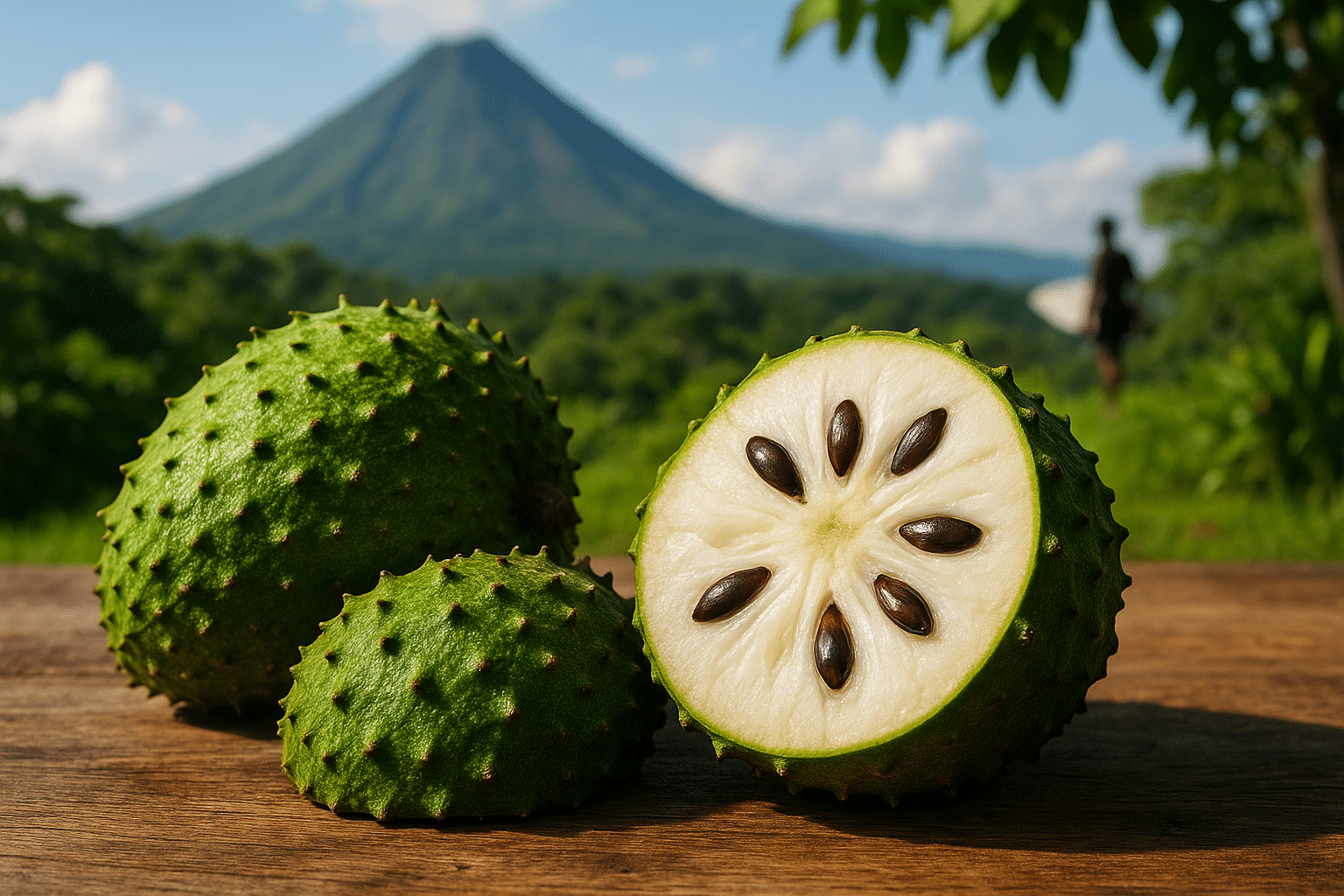
Costa Rica has a way of weaving guanábana into almost every part of daily life. You sip it as a cold fresco after a long surf session, lick it off a dripping ice cream cone at a beach fiesta, and see it piled high in market stalls beside plantains and papayas while real estate agents talk ocean-view deals over coffee. It belongs to the same Costa Rican landscape as canopy ziplines, open-air concerts, howler monkeys in the treetops and family sodas serving casados. This one strange, spiny fruit somehow connects adventure, culture, entertainment, wildlife, business and, of course, food.
Guanábana and Cancer: Miracle Cure or Costa Rican Superfruit Myth?
What exactly is guanábana and why do Ticos love it?
Guanábana is a large green fruit with soft spines and creamy white flesh that tastes like citrus, strawberry and pineapple all at once.
It grows on the evergreen graviola tree (Annona muricata), native to Central America, the Caribbean and parts of South America. In Costa Rica you meet it everywhere: on smoothie menus, in heladerías, in homemade desserts and even frozen into paletas sold on the beach. For many locals it tastes like childhood, Sunday lunches and roadside adventures on the way to the coast.
How does guanábana fit into Costa Rican food and lifestyle?
Guanábana is a quietly iconic player in Costa Rican cuisine and hospitality.
You will see it used in:
-
Fresh juices and licuados blended with milk or water
-
Ice creams and sorbets served after long, hot days in the sun
-
Sauces and syrups for pancakes, cakes and flans
-
Home-style “anti-resfriado” drinks when someone in the family has a cough
Because the fruit is rich, filling and naturally sweet, it slots neatly into the Pura Vida lifestyle: generous, easy-going and focused on sharing food with friends and visitors.
Does guanábana really have anti-cancer properties?
Guanábana shows promising anti-cancer activity in laboratory studies, but it is not a proven cure for cancer in humans.
Scientists have isolated compounds in the plant called acetogenins. In test tubes and animal models, some of these compounds can slow the growth of certain cancer cells and may help trigger their death. That is where the “natural chemotherapy” stories began. However, human clinical trials are still very limited, and we do not yet know the safest dose, the best form or which patients, if any, might benefit most.
How might guanábana affect cancer cells?
Guanábana compounds appear to attack highly active cells, which includes many types of cancer cells.
Cancer cells tend to have:
-
Faster metabolic activity
-
Higher energy demand
-
More active cell membranes
Acetogenins seem to interfere with how these cells produce energy, making it harder for them to survive. This selective pressure is theoretically useful, but it has mostly been shown in controlled laboratory conditions, not in day-to-day human life. Real bodies are far more complex than cancer cells in a dish.
Is it safe to use guanábana alongside cancer treatment?
You should never replace medical cancer treatment with guanábana, and you should always speak to your doctor before using it as a supplement.
Chemotherapy, radiotherapy and targeted drugs are carefully dosed and monitored. Adding strong herbal preparations without medical supervision can:
-
Interfere with how medicines are processed in the liver
-
Worsen side effects such as nausea or low blood pressure
-
Add extra strain if your body is already exhausted
There is also some concern that very high, long-term intake of annonaceous plant products (including concentrated guanábana extracts) may affect the nervous system. This is one more reason to talk to an oncologist or integrative doctor before doing anything more than enjoying the fruit as part of a normal diet.
What are the everyday health benefits of guanábana?
Guanábana can support general wellbeing as part of a varied, balanced Costa Rican-style diet.
The fresh fruit and juices typically provide:
-
Vitamin C, which supports the immune system and helps protect cells from oxidative stress
-
B vitamins, involved in energy production and brain function
-
Dietary fibre, which is good for digestion and helps you feel full
-
Fluid and natural sugars, helpful after hiking, surfing or working in the heat
Traditional herbalists also use the leaves in teas to help with sleep, mild pain and coughs, although these uses are based more on experience than on large modern clinical trials.
How can you enjoy guanábana safely in Costa Rica?
Enjoy guanábana as food and treat any concentrated remedy as you would a medicine.
Practical tips:
-
Choose fresh, ripe fruit or reputable frozen pulp.
-
Remove the shiny black seeds – they are not for eating.
-
Enjoy juices, smoothies or ice creams in moderation if you are watching your sugar intake.
-
If you are pregnant, breastfeeding or living with a serious health condition (including cancer), ask your doctor before drinking strong leaf teas or taking capsules or extracts.
That way, you still get the pleasure and many of the nutritional benefits without stepping into risky territory.
Can guanábana help prevent cancer?
Guanábana on its own will not guarantee that you never develop cancer, but it can be part of an overall healthy lifestyle.
A colourful Costa Rican-style way of living – fresh fruit, vegetables and beans, plenty of movement, time outdoors, less processed food and strong social connections – is still the best-supported route to lowering cancer risk. Guanábana fits beautifully into that picture: one delicious fruit on a plate full of many others.
FAQ: Guanábana, Cancer and Your Health
Can guanábana cure cancer?
No. At present there is no solid clinical evidence that guanábana cures cancer in humans. It should never replace standard medical treatment.
Is guanábana tea good for cancer patients?
Some people find guanábana leaf tea soothing, but cancer patients should check with their medical team first to avoid interactions with treatment.
Are guanábana supplements safer than the fruit?
Not necessarily. Supplements and strong extracts can deliver far higher doses of active compounds, which may increase the risk of side effects.
Can I eat guanábana every day?
Most healthy people can enjoy reasonable amounts as part of a balanced diet, but if you have a chronic condition, ask your doctor what is right for you.
What part of the guanábana plant is used in herbal medicine?
Traditional remedies use the fruit, leaves, bark and roots, but the leaves tend to hold the highest concentration of acetogenins and are therefore the most potent – and the ones that most need medical oversight.
A Costa Rican superfruit with a grounded kind of magic
Guanábana is one of those fruits that seems to gather Costa Rica around it: surfers and executives, grandmothers and backpackers, real estate clients and wildlife guides all happily sharing the same jug of chilled fresco after a long hot day. Its story in cancer research is exciting, but still very much in progress. For now, its true magic is simpler and perhaps even more powerful: a reminder that Pura Vida can be green and spiny, sweet and slightly strange, comforting and adventurous all at once. Enjoy it in your glass and on your spoon, cherish the science as it unfolds, and let Costa Rica’s most curious fruit be a delicious ally – not a solitary hero – in caring for your health.