
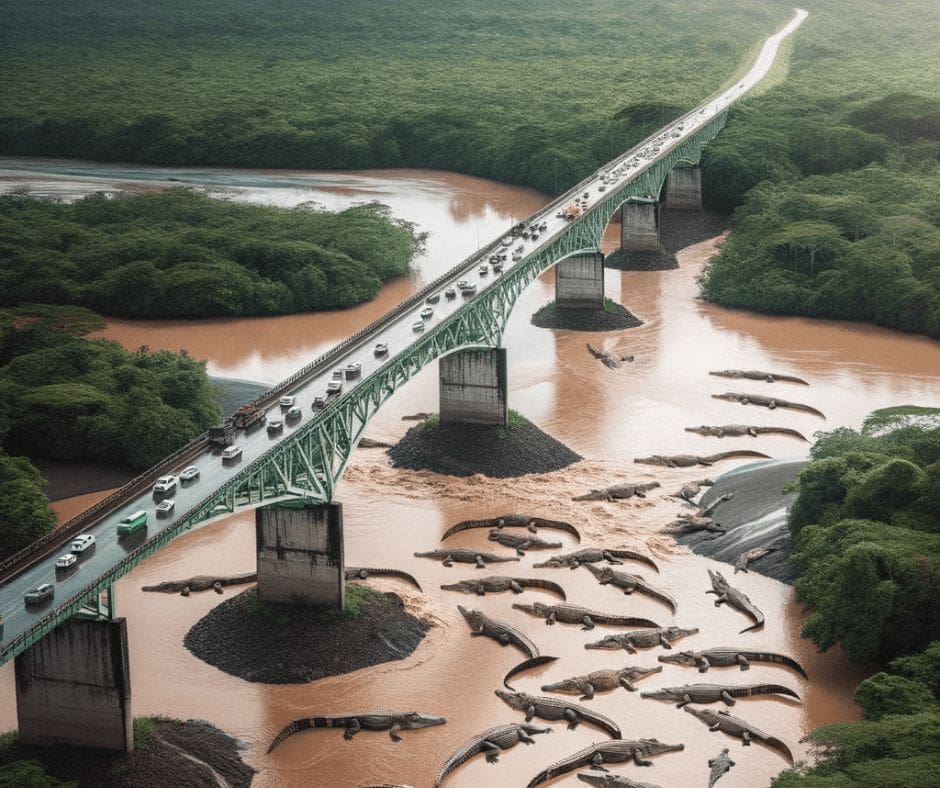
The Tarcoles River in Costa Rica is a remarkable natural habitat known for its abundant American crocodile population and scenic views. Originating near the Pacific slopes of the Costa Rican Central Valley, the river stretches approximately 111 kilometers before emptying into the Pacific Ocean. One of the most popular spots for visitors is the bridge over the Tarcoles, which serves as an ideal vantage point to observe the large crocodiles below. These crocodiles, some of the largest in Central America, are a major draw for tourists and nature lovers.
Despite its beauty and ecological importance, the Tarcoles River faces significant environmental challenges. It is one of the most polluted rivers in Latin America, suffering from high levels of untreated sewage and agricultural runoff. This pollution not only poses a threat to the crocodile population and other wildlife but also impacts local communities and the overall biodiversity of the area.
Conservation efforts are essential to restore and protect the Tarcoles River. Local organizations and government agencies are collaborating to tackle pollution, promote sustainable practices, and educate the public about environmental conservation. Efforts are particularly focused on safeguarding the crocodile habitat to ensure their survival and the health of the river ecosystem.

Tourists visiting the Tarcoles River can partake in guided tours that offer a deeper understanding of the local wildlife and conservation challenges. These tours provide a unique opportunity to engage with nature while learning about the importance of protecting such ecosystems. Visitors are encouraged to respect the wildlife and adhere to safety guidelines during their visits. The Tarcoles River, with its mix of natural beauty and environmental issues, symbolizes Costa Rica’s rich natural heritage and the ongoing efforts to balance human activity with ecological preservation. For more engaging stories and updates on Costa Rica, follow us on social media using the hashtags #howlermag and #howlermagazine.JTNDaWZyYW1lJTIwc3JjJTNEJTIyaHR0cHMlM0ElMkYlMkZ3d3cuZ29vZ2xlLmNvbSUyRm1hcHMlMkZlbWJlZCUzRnBiJTNEJTIxMW0xOCUyMTFtMTIlMjExbTMlMjExZDMxNDU0LjYyMzM0MTIzNjk3MyUyMTJkLTg0LjYzNjg5MTc1MTQ2NDc5JTIxM2Q5Ljc4MDYyNDAxOTUzMTY0NSUyMTJtMyUyMTFmMCUyMTJmMCUyMTNmMCUyMTNtMiUyMTFpMTAyNCUyMTJpNzY4JTIxNGYxMy4xJTIxM20zJTIxMW0yJTIxMXMweDhmYTFjYTc3ZGQ2NWJhZmYlMjUzQTB4NjY3NzAyODE2YjEyYjFhZiUyMTJzQ3JvY29kaWxlJTI1MjBCcmlkZ2UlMjE1ZTAlMjEzbTIlMjExc2VuJTIxMnN1cyUyMTR2MTcxNjIzNTg1MDM0MCUyMTVtMiUyMTFzZW4lMjEyc3VzJTIyJTIwd2lkdGglM0QlMjI2MDAlMjIlMjBoZWlnaHQlM0QlMjIyNTAlMjIlMjBzdHlsZSUzRCUyMmJvcmRlciUzQTAlM0IlMjIlMjBhbGxvd2Z1bGxzY3JlZW4lM0QlMjIlMjIlMjBsb2FkaW5nJTNEJTIybGF6eSUyMiUyMHJlZmVycmVycG9saWN5JTNEJTIybm8tcmVmZXJyZXItd2hlbi1kb3duZ3JhZGUlMjIlM0UlM0MlMkZpZnJhbWUlM0U=