

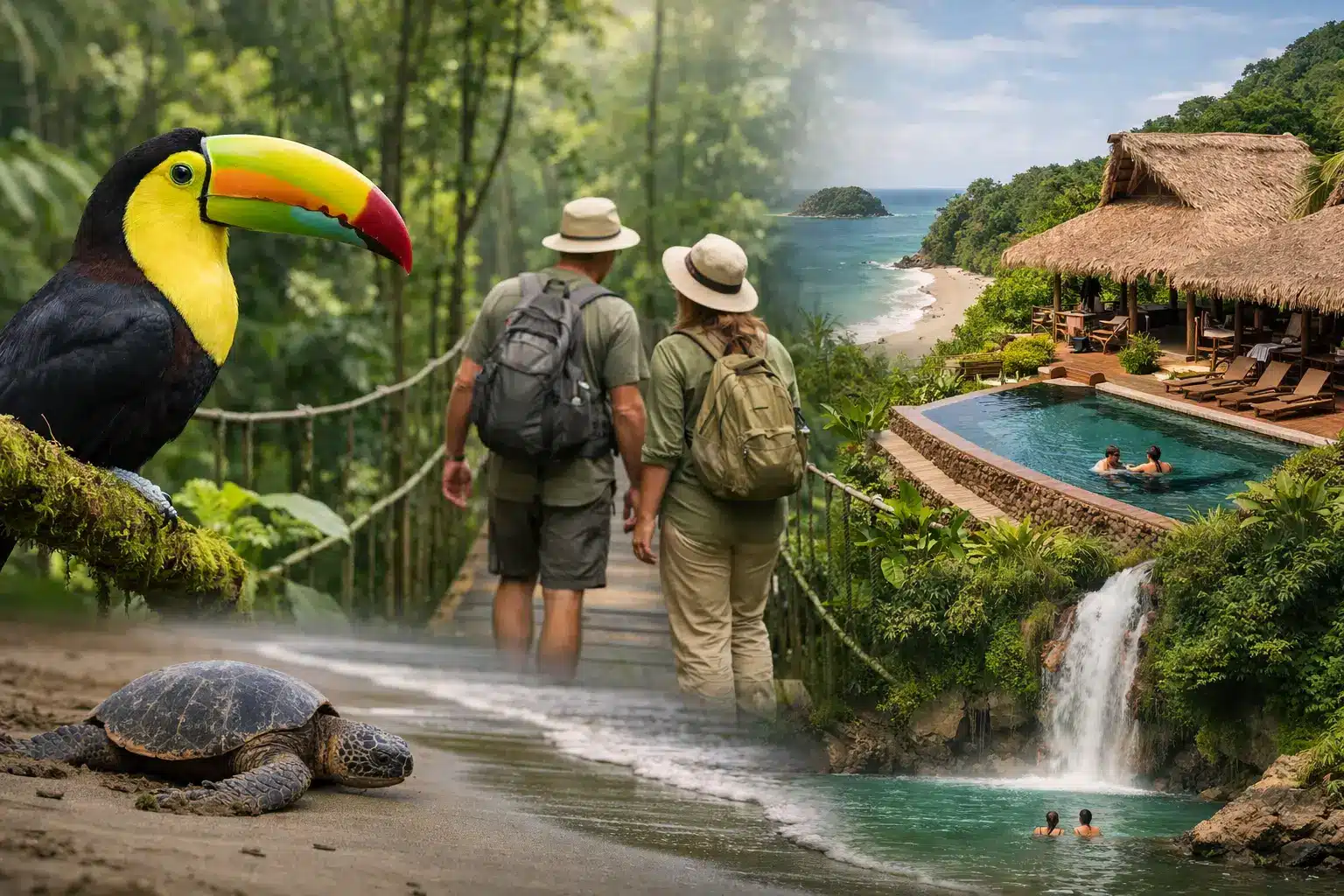
The best sustainable tourism examples Costa Rica offers are not always the flashiest ones. Often, they happen where a forest edge is left standing, where a family-run lodge hires from the village next door, or where a visitor chooses a slower itinerary that keeps money in the community instead of rushing through a checklist. In a country known for waterfalls, surf breaks, cloud forests, and scarlet macaws overhead, the real story is how tourism can help protect the very places people come to see.
Costa Rica has earned its global reputation the hard way, through decades of conservation policy, park protection, reforestation, and a national conversation about what development should look like. That does not mean every hotel is green or every tourism project is equally thoughtful. It means the country has built a living laboratory where better models are visible, measurable, and worth paying attention to.
Why sustainable tourism examples in Costa Rica matter
Tourism is one of Costa Rica’s great economic engines, but it shares space with farms, fisheries, wildlife habitat, growing towns, and coastal development pressure. That creates a constant balancing act. A new boutique hotel may bring jobs, but if it strains water systems or clears too much habitat, the long-term cost can be steep.
That is why the strongest examples of sustainable tourism in Costa Rica are not about green branding alone. They show what happens when business decisions match the country’s ecological reality. In practical terms, that can mean protecting ridgelines from overbuilding, reducing waste in remote areas where disposal is difficult, or designing tours that do not turn wildlife into a performance.
For travelers, this matters because the experience is better when the place remains intact. For investors and business owners watching Costa Rica closely, it matters because sustainability here is not just a nice add-on. It is increasingly part of what makes a tourism project credible.
1. Ecolodges that protect more land than they build on
Some of the most convincing success stories start with restraint. Across Costa Rica, especially in rainforest and mountain regions, certain lodges have chosen to build lightly and preserve heavily. Instead of leveling large tracts, they cluster rooms in a smaller footprint, leave wildlife corridors intact, and let the surrounding land stay wild.
This approach works because the forest is not background scenery. It is the product. Guests are paying to wake up to bird calls, walk under towering trees, and watch monkeys move through the canopy. When operators understand that, conservation stops being a marketing line and becomes the business model.
The trade-off is simple – lower density can mean fewer rooms and slower returns. But it can also create a stronger brand, better guest experience, and a property that ages well instead of fighting the landscape.
2. Community-based tourism that keeps income local
One of the most powerful sustainable tourism examples Costa Rica continues to refine is community-based travel. In rural areas, Indigenous territories, coastal villages, and farming communities, local guides and small enterprises are creating experiences rooted in place rather than imitation.
That might look like a cacao tour led by a family with generations of agricultural knowledge, a mangrove boat ride run by fishers who know the estuary by memory, or a cultural visit where guests learn about traditions from the people who live them. The value here is not only economic. It protects knowledge, supports local pride, and gives travelers an experience that feels real instead of staged.
Of course, community tourism is not automatically sustainable just because it is small. It still needs fair pricing, respectful visitor behavior, and limits around group size and cultural access. When done well, though, it spreads tourism benefits beyond the usual resort zones.
3. Wildlife watching with rules, not chaos
Costa Rica’s wildlife is one of its greatest draws, and also one of its most vulnerable assets. Ethical wildlife tourism is one area where good operators make a visible difference. The best naturalist guides know when to stop, how far to stay back, and when not to pursue an animal just to satisfy a photo request.
Whether the setting is a sea turtle nesting beach, a river known for crocodiles and birds, or a cloud forest trail where quetzals may appear for a few lucky minutes, the principle is the same. Wildlife encounters should happen on the animal’s terms.
This is where travelers can quickly spot the difference between sustainability and spectacle. If baiting, crowding, touching, or loud pursuit is part of the experience, something has gone off track. The strongest operators understand that patience is part of the magic.
4. Regenerative farms opening their gates to visitors
Some of the country’s smartest tourism experiences now begin in the soil. Regenerative farms, organic coffee producers, and permaculture projects are increasingly blending hospitality with education. Guests do not just taste Costa Rica. They see how food, land use, and conservation connect.
A farm stay or guided agricultural visit can reveal a side of the country many travelers miss. You begin to understand how shade-grown crops can support bird habitat, how healthy soil affects water retention, and why diversified farming is often more resilient than monoculture. Suddenly, sustainability stops sounding abstract.
These experiences also broaden the tourism map. They encourage visitors to spend time inland, support agricultural families, and appreciate Costa Rica as a working landscape, not just a postcard.
5. Coastal hotels rethinking water and energy use
Beach towns have some of Costa Rica’s toughest sustainability challenges. High demand, dry-season water stress, waste management pressure, and rapid growth can all strain local systems. That is why serious resource management matters so much in coastal hospitality.
The better examples are often behind the scenes. Hotels investing in solar energy, low-flow systems, wastewater treatment, linen policies that actually make sense, and architecture designed for airflow rather than constant air conditioning are doing more than trimming costs. They are adapting to the realities of place.
Still, context matters. A beautiful sustainability program on paper means less if a project was oversized for the area from the start. Scale is part of the conversation. In Costa Rica, the smartest development often asks not just what can be built, but what should be built.
6. National parks supported by nearby businesses
Costa Rica’s protected areas are central to its tourism identity, yet the parks do not exist in isolation. Their success often depends on what happens just outside the boundaries. In many destinations, local hotels, tour companies, restaurants, and transport providers benefit directly from nearby national parks and reserves.
When those businesses support conservation education, respect visitor limits, and encourage low-impact activities, the result is a healthier destination economy. Travelers spend money in town, then head into ecosystems that still feel alive and protected. Everyone understands the connection.
This model is not perfect. Popular parks can face overcrowding, and gateway towns can develop fast. But where local business culture aligns with conservation, tourism becomes a reinforcing loop rather than a draining one.
7. Certification programs that push businesses beyond good intentions
Costa Rica has long stood out for trying to measure sustainability rather than simply claim it. Certification systems and environmental standards have helped create a common language for hotels and tourism operators that want to prove they are doing more than the bare minimum.
That does not mean every certified business is flawless, or that a non-certified small operator is doing poor work. Certification can be costly and time-consuming, especially for smaller enterprises. But the broader effect has been useful. It has pushed the industry toward clearer benchmarks around energy, waste, labor practices, and community engagement.
For visitors, certifications are best treated as a helpful signal, not the whole story. Ask questions. Look for consistency. The most sustainable businesses usually show their values in daily operations, not just in a plaque at reception.
8. Reforestation tied to the visitor experience
In parts of Costa Rica, tourism has become an ally in bringing forests back. Private reserves, lodge properties, and community projects have restored pastureland, expanded biological corridors, and improved habitat for species moving between fragmented ecosystems.
This is one of the country’s most hopeful stories. A guest walks a trail and sees mature forest, but twenty years earlier that same land may have been degraded cattle ground. Tourism revenue helped finance the recovery, and now the restored land creates both ecological and economic value.
It is not instant. Reforestation takes time, technical knowledge, and a willingness to think beyond quarterly returns. Yet few examples show the long view more clearly than this one.
9. Slow travel that reduces impact and deepens the trip
Not every sustainability win belongs to a business. Some belong to the traveler. Choosing fewer destinations, staying longer, eating locally, hiring regional guides, and resisting the urge to turn Costa Rica into a seven-day sprint can make a real difference.
Slow travel reduces transport churn and keeps spending concentrated in the places you actually visit. It also changes the quality of the experience. You notice weather patterns, neighborhood rhythms, the names of birds, the family running the soda on the corner. The country stops feeling like a highlight reel and starts feeling like a place.
That may be the most useful lesson of all. Costa Rica works best when tourism is rooted in attention – attention to ecosystems, to communities, to carrying capacity, and to the small decisions that shape a destination over time. For travelers, residents, and businesses alike, the future here will not be built by big promises alone. It will be built by choosing the version of paradise that can still thrive after the visitors head home.
FAQ: Sustainable Tourism in Costa Rica
What is sustainable tourism in Costa Rica?
Sustainable tourism in Costa Rica means travelling in a way that protects nature, supports local communities, and reduces harm. It includes responsible hotels, ethical wildlife tours, community-led experiences, conservation projects, and smarter travel choices.
Is Costa Rica really a sustainable travel destination?
Costa Rica is one of the world’s strongest examples of sustainable travel, but not every tourism business is equally responsible. Travellers should still ask questions, check practices, and support operators that show real environmental and community commitment.
What is the most sustainable way to travel around Costa Rica?
The most sustainable way to travel around Costa Rica is to visit fewer places and stay longer in each one. This reduces transport impact, supports local economies more deeply, and creates a richer travel experience.
Are ecolodges in Costa Rica worth it?
Ecolodges in Costa Rica are worth it when they genuinely protect land, hire locally, reduce waste, and respect wildlife. The best ones offer comfort without overwhelming the landscape.
How can I tell if a wildlife tour is ethical?
You can tell a wildlife tour is ethical if animals are not touched, fed, chased, crowded, or baited. Good guides keep distance, speak quietly, follow rules, and put animal welfare before photos.
Why is community-based tourism important?
Community-based tourism is important because it keeps tourism income closer to local families and helps protect cultural knowledge. It gives travellers more authentic experiences while supporting people who live in the destination.
What should I avoid as a responsible traveller in Costa Rica?
Avoid feeding wildlife, buying wildlife products, using unethical animal attractions, leaving rubbish, wasting water, ignoring park rules, or choosing tours that promise guaranteed close-up animal encounters.
Can luxury tourism be sustainable in Costa Rica?
Luxury tourism can be sustainable if it manages water, energy, waste, land use, staffing, and community impact responsibly. Luxury alone is not the issue; scale, design, and behaviour matter.
What are examples of sustainable tourism activities in Costa Rica?
Examples include guided rainforest walks, birdwatching, farm tours, cacao experiences, responsible whale watching, community homestays, national park visits, mangrove tours, and stays at conservation-focused lodges.
How does sustainable tourism help Costa Rica’s wildlife?
Sustainable tourism helps wildlife by protecting habitats, funding conservation, supporting national parks, reducing harmful behaviour, and giving local communities economic reasons to preserve ecosystems.