
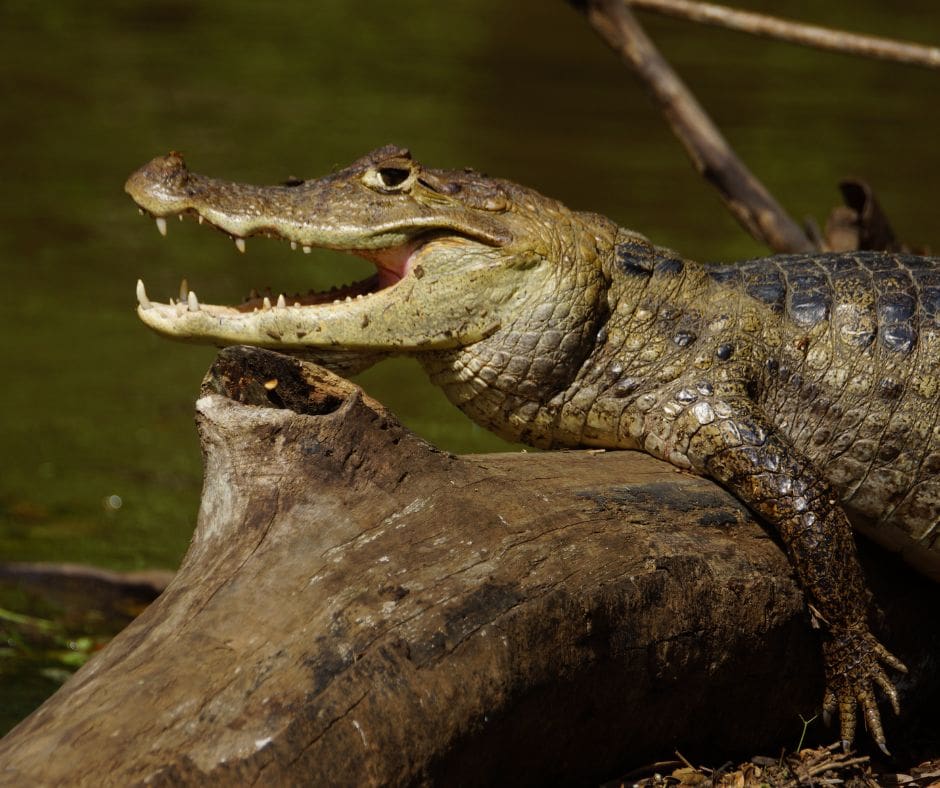
Imagine peering through the misty veil of Costa Rica’s lush wetlands, only to lock eyes with a pair of ancient, yet oddly stylish, spectacles. No, you haven’t stumbled upon a lost treasure or an eccentric librarian, but rather the spectacled caiman – a fascinating reptile that roams the tropical waterways of this vibrant country.
Where to Spot the Spectacled Caiman
If you’re eager to encounter these remarkable creatures, Costa Rica offers several prime locations. Head to Tortuguero National Park, a watery paradise where narrow canals weave through dense rainforests, providing a perfect habitat for caimans. The park is a sanctuary not just for caimans but also for a plethora of wildlife, making it a must-visit for nature enthusiasts.
Another hotspot is the Palo Verde National Park, renowned for its diverse ecosystems and seasonal wetlands. Here, you can embark on a boat tour to witness caimans basking on the banks or silently gliding through the water. Don’t forget to visit Caño Negro Wildlife Refuge, an internationally recognized wetland where caimans coexist with a variety of bird species and other wildlife.
The Social Lives and Nesting Habits of Spectacled Caimans
Contrary to their solitary appearance, spectacled caimans are quite social, especially during the dry season when water sources dwindle. This forces them into closer quarters, leading to fascinating interactions. They communicate through a series of vocalizations, body postures, and even by blowing bubbles underwater. It’s like a reptilian social network, minus the selfies!
When it comes to nesting, female caimans are the epitome of dedicated mothers. They build mound nests from vegetation and mud, often near water to ensure the humidity levels are just right for their eggs. A female can lay anywhere from 10 to 50 eggs, which she fiercely guards against predators. She even assists her hatchlings to the water after they emerge, showcasing a tender side to these formidable reptiles.
Adaptations: Masters of Fresh and Saltwater
One of the most extraordinary aspects of the spectacled caiman is its adaptability. While primarily inhabitants of freshwater environments, such as rivers, lakes, and wetlands, they are also known to venture into brackish waters. This ability to tolerate varying salinity levels is a testament to their resilience and evolutionary prowess.
Caimans have a unique gland near their eyes, often referred to as “salt glands,” which helps them excrete excess salt from their bodies. This adaptation not only allows them to thrive in different habitats but also contributes to their survival in an ever-changing environment.
Environmental Contributions of the Spectacled Caiman
The spectacled caiman plays a vital role in maintaining the health of aquatic ecosystems. As apex predators, they help control populations of fish and other prey species, ensuring a balanced ecosystem. Their nesting habits also contribute to the environment; the decaying vegetation from their nests enriches the soil, promoting plant growth.
Additionally, caimans are bioindicators, meaning their presence and health can indicate the overall health of the ecosystem. A thriving caiman population often signals a well-balanced and functioning environment, making their conservation crucial for the broader ecological community.
Discovering the Spectacled Caiman
Exploring the realms of Costa Rica’s wetlands and encountering the spectacled caiman is more than just a wildlife experience – it’s a journey into the heart of nature’s intricate web. These remarkable reptiles, with their unique adaptations and vital ecological roles, offer a glimpse into the delicate balance of our natural world. So, next time you find yourself in Costa Rica, keep an eye out for those stylish spectacles and appreciate the silent guardians of the wetlands.