

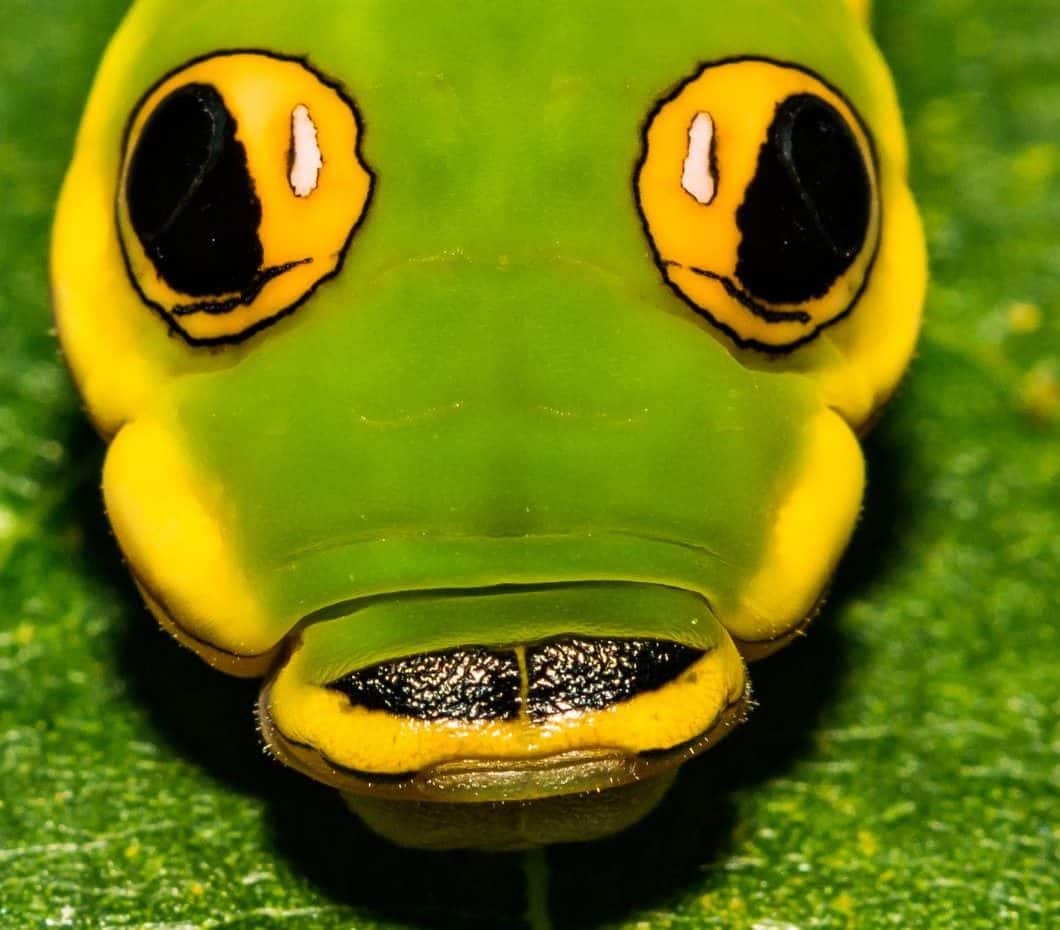
In the dense, verdant jungles of Costa Rica’s Corcovado National Park, a remarkable example of nature’s ingenuity in survival and adaptation quietly thrives. The Hemeroplanes triptolemus, more commonly known as the snake-mimic caterpillar, is a startling and fascinating creature whose survival strategy is as effective as it is theatrical. At first glance, it might seem like just another inhabitant of the lush Costa Rican forests. However, upon closer inspection, this caterpillar reveals its extraordinary defensive mechanism. When threatened, it undergoes a transformation that is as dramatic as it is sudden: the once nondescript caterpillar contorts and expands its body, mimicking the appearance of a viper’s head. This mimicry extends to the caterpillar’s coloration, texture, and even its behavior, creating a convincing illusion designed to deter would-be predators.
The snake-mimic caterpillar’s ability to imitate a venomous snake is a stunning example of what biologists call Batesian mimicry—a form of mimicry where a harmless species evolves to imitate the warning signals of a harmful species to deter predators. This evolutionary strategy is especially critical for the Hemeroplanes triptolemus, as it provides a vital survival advantage in the predator-rich environment of Corcovado National Park.
The Hemeroplanes triptolemus not only captivates those who are fortunate enough to witness its transformation but also holds significant scientific interest. Researchers study these caterpillars to understand more about the evolutionary processes that led to such sophisticated biological mimicry. Additionally, the presence and health of such unique species are excellent indicators of the overall health of the forest ecosystems in Costa Rica.
For visitors to Corcovado National Park, the possibility of encountering this caterpillar adds an element of wonder and excitement to their experience. The park, known for its incredible biodiversity, offers a rare glimpse into the complex and interconnected lives of tropical species, where even a small caterpillar can hold secrets of evolutionary genius.
The survival of species like the Hemeroplanes triptolemus underscores the importance of conservation efforts in regions like Corcovado. Protecting these habitats ensures not only the survival of individual species but also the preservation of ecological balance and the continuation of natural evolutionary experiments like the snake-mimic caterpillar.
In the grand scheme of Costa Rican wildlife, the Hemeroplanes triptolemus stands out as a testament to the creativity of natural selection. This small yet remarkable creature reminds us of the wonders that lie hidden in the world’s forests, waiting to be discovered and, importantly, protected. For more fascinating stories about Costa Rica’s unique wildlife, follow us on social media with the hashtags #howlermag and #howlermagazine