
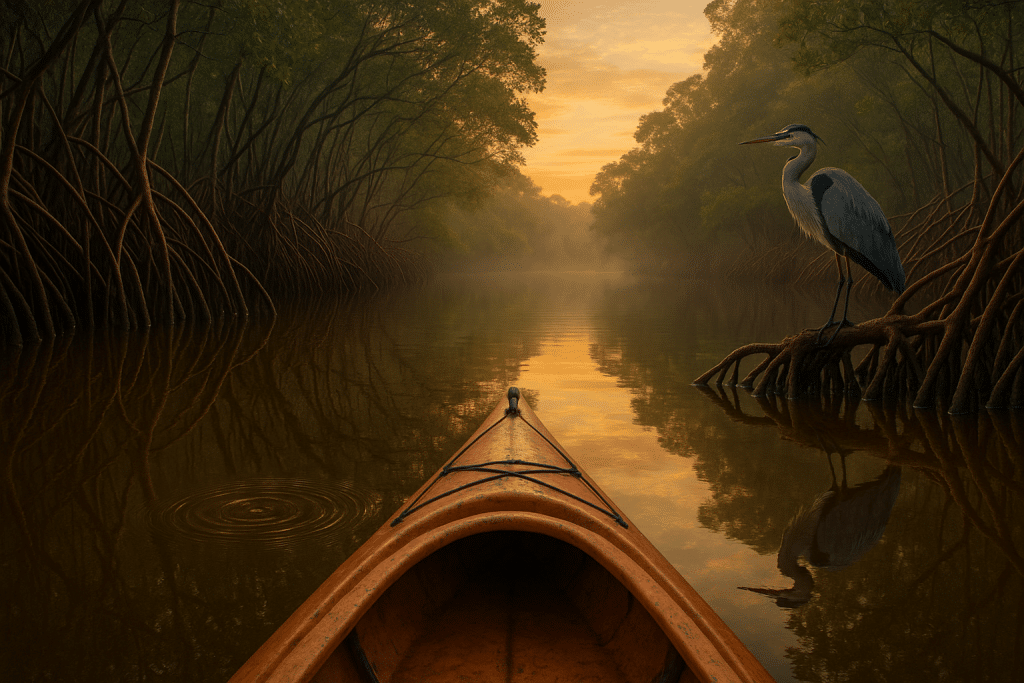
Costa Rica’s mangroves are where adventure goes quiet and your ears do the exploring. Drift a kayak through tea-colored creeks and you’ll hear a strange breakfast soundtrack—snap, crackle, pop—while howler monkeys commentate from above. It’s culture in stereo: the old rhythm of the tide, the entertainment of wildlife close-ups, and the very real business of eco-tourism that keeps these nurseries healthy. For real estate dreamers, mangrove-adjacent communities mean views and birdlife—with sensible setbacks. For food lovers, the “bacon” sound comes from shrimp you won’t be eating; instead, paddle out, listen in, and finish with a plate of local ceviche at a waterside soda. #howlermag #howlermagazine
What’s making the bacon-frying sound?
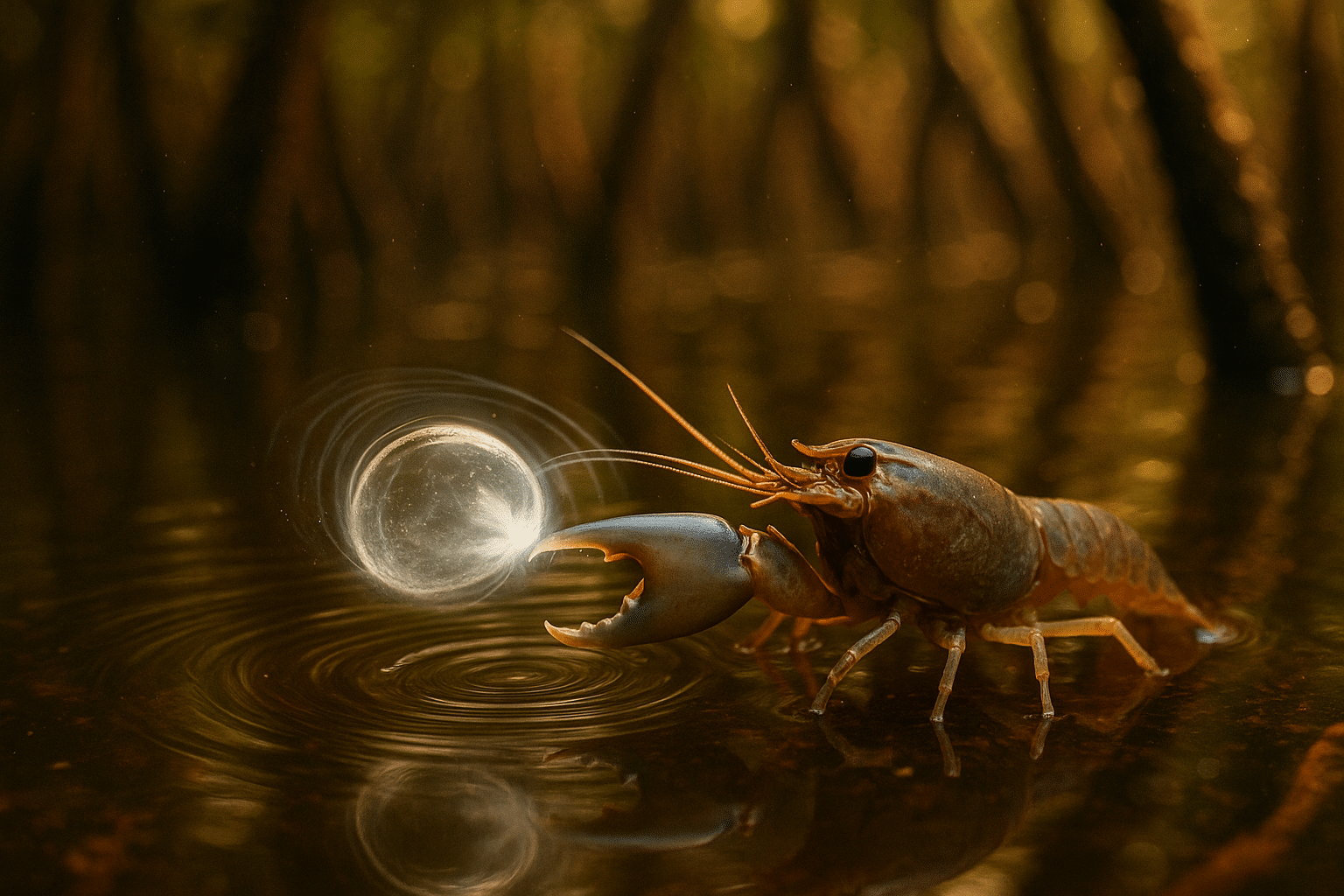
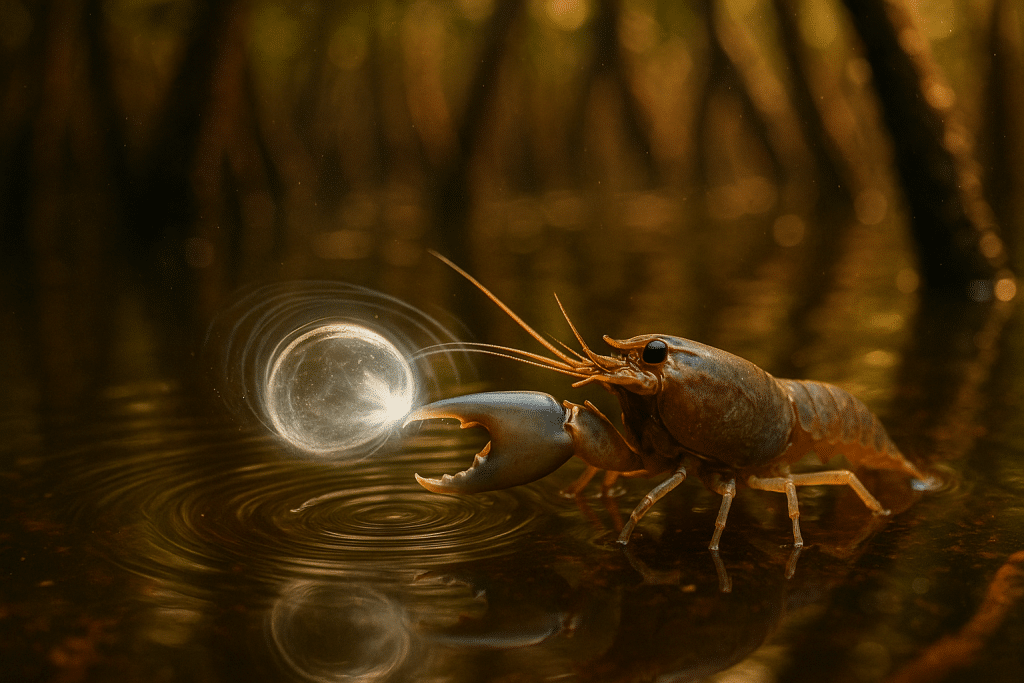
It’s snapping (pistol) shrimp rapidly closing an oversized claw to create a shockwave. Their snap generates a tiny cavitation bubble that collapses with a crack—multiplied by thousands of shrimp, it becomes the familiar mangrove sizzle. Scientists have even documented a brief flash of light (sonoluminescence) as the bubble implodes—blink and you’ll miss it. (PubMed)
How does a creature the size of your thumb make such a racket?
It weaponizes water with physics. The claw’s rapid closure fires a jet that spawns a low-pressure bubble; when that bubble collapses, it releases a pressure pulse that can exceed ~200 dB re 1 μPa at the source—loud in water but lasting less than a millisecond to human ears. Field and lab studies have measured the snap and the brief, ultra-hot conditions inside the collapsing bubble. (Discovery of Sound in the Sea)
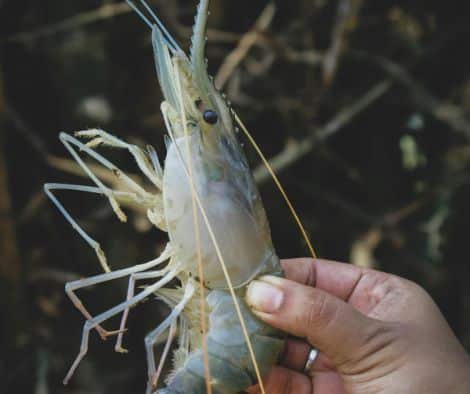
Why do fish and other animals care?
Crackling shrimp help guide life home. Many reef and mangrove species—fish and even coral larvae—use soundscapes rich in shrimp snaps and fish choruses as “acoustic signposts” that signal healthy habitat and cue settlement. Managers now monitor snap rates to track ecosystem recovery. (Woods Hole Oceanographic Institution)
Where in Costa Rica can I hear the shrimp symphony?
Choose quiet, sheltered mangroves and go at slack tide.
- Térraba–Sierpe National Wetlands (Osa/Sierpe): Costa Rica’s largest mangrove system; maze-calm channels make textbook listening spots, especially by kayak with a naturalist guide. (activities.marriott.com)
- Damas Island Mangroves (near Manuel Antonio): Shaded, glassy waterways; easy access from Quepos for serene SUP or pedal-kayak tours where subtle snaps carry far. (Paddle 9)
- Tamarindo–Las Baulas Estuary (Guanacaste): Protected mangrove fingers off the main river; pick early mornings or dusk when boat traffic drops. (tripadvisor.com)
- Gulf backwaters (Golfo Dulce & Nicoya side channels): Protected embayments and creeks around Puerto Jiménez and inner Nicoya offer calm, tannin-dark water ideal for eavesdropping. (osagreentravel.com)
When do I listen for peak crackle?
Aim for still water and low noise. The snap chorus is easiest to hear at dawn, dusk, and slack tide on windless days—when surface chop and engines aren’t drowning out the millisecond pops. Long passive listens beat constant paddling for picking up the faint fizz. (pmc.ncbi.nlm.nih.gov)
What kit and etiquette should I bring?
Pack light, move lighter.
- Quiet craft & soft strokes: A stable kayak or SUP and feathered paddle strokes keep hull noise down so you actually hear the snaps.
- Simple “ear-to-water” hacks: Rest an ear on the hull or bring a cheap plug-in hydrophone for your phone or action-cam to record the crackle.
- Red-light head torch: Keeps your night vision and disturbs wildlife less than white beams.
- Respect the nursery: Never feed wildlife, keep distance from crocodiles and nesting birds, and follow your guide’s cues—mangroves are living crèches, not theme parks. (Certified eco-operators are best.) (Paddle 9)
Is the shrimp snap dangerous to people?
No—your ears are safe in a kayak. The shock is a close-quarters hunting tool for tiny prey; what reaches you is a harmless pop, like static amplified by water. The real risk is sun, tide, and crocodiles—so clip your PFD and listen smart. (Discovery of Sound in the Sea)
Will I actually hear “bacon”?
Very likely, if conditions are calm. The more sheltered the creek and the fewer engines around, the more the mangrove will sound like a breakfast skillet under your boat. Reef edges and oyster-rich banks crackle too, but mangrove creeks give you that intimate stereo effect. (tos.org)
FAQ
Do pistol shrimp really make light? Yes—a micro-flash during bubble collapse has been observed in lab imaging (sonoluminescence). (PubMed)
How loud is the snap? At the source it can exceed ~200 dB re 1 μPa, but it’s incredibly brief, so to humans it’s a sharp tick rather than a roar. (Discovery of Sound in the Sea)
Can I record it on a phone? Yes, with a basic hydrophone; without one, press a waterproof action-cam or recorder against the hull and float quietly.
Are pistol shrimp edible? Not practically—they’re tiny. Save your appetite for the day’s catch at a local marisquería; the shrimp symphony is best consumed with your ears.
When’s the best season? Year-round in tropical mangroves; aim for calm days and minimal boat traffic, especially at dawn/dusk. (pmc.ncbi.nlm.nih.gov)