
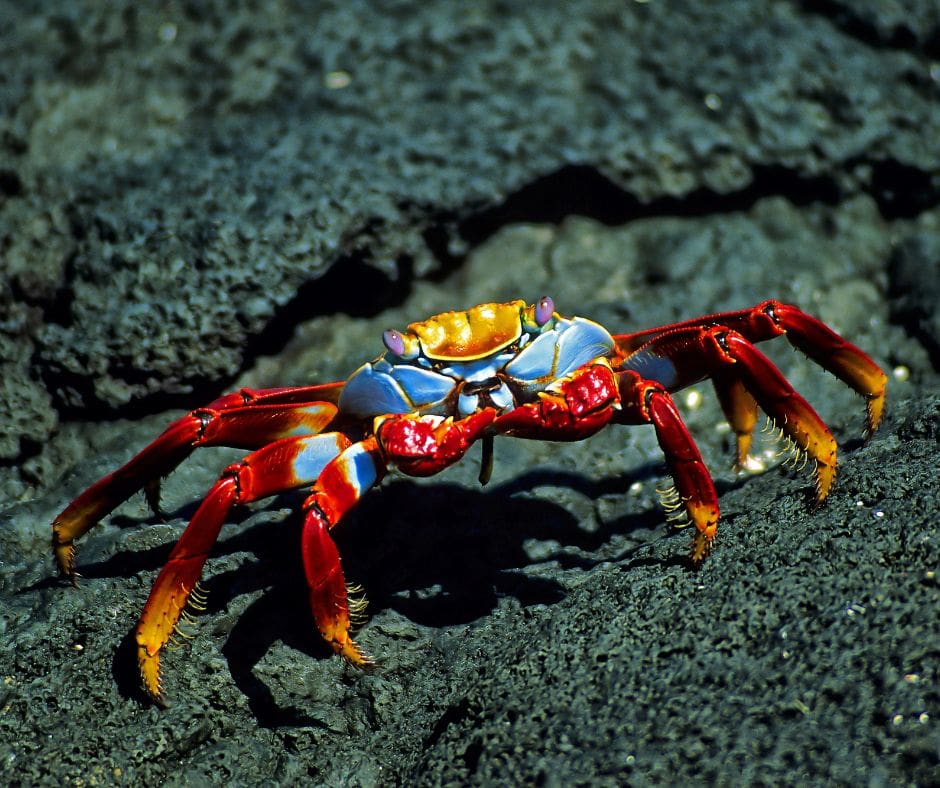
The shores of Costa Rica, known for their lush landscapes and rich biodiversity, are also home to one of nature’s most vibrant displays—the Sally Lightfoot crab (Grapsus grapsus). With shells that seem to have been dipped in a painter’s palette, these crustaceans bring a burst of color to the rocky coastlines where the forest meets the sea.
A Coastal Spectacle
The Sally Lightfoot crab is a visual treat, clad in hues of brilliant red and yellow, with occasional splashes of blue on their hard carapaces. They possess an extraordinary agility that allows them to navigate sharply across jagged rocks and slip into tiny crevices with the ease of seasoned acrobats. This agility not only makes them a challenging subject for photographers but also a delightful sight for visitors who are lucky enough to spot them during low tide.
Where to Spot Sally Lightfoot Crabs
In Costa Rica, these crabs are commonly found along the Pacific and Caribbean coasts, especially in places where volcanic rocks and coral debris provide ample hiding spots. National parks like Manuel Antonio and the remote beaches of the Osa Peninsula are fantastic locations to observe these crabs in their natural habitat. Early morning or late afternoon, when the tide is low, is the best time to see Sally Lightfoot crabs as they forage along the shore, playing hide and seek with the waves.
Environmental Contributions
Sally Lightfoot crabs play a critical role in their ecosystems. As opportunistic feeders, they help keep the coastal areas clean by eating dead organic material and algae. This not only prevents the accumulation of decaying matter but also aids in nutrient recycling, crucial for the health of coastal ecosystems. Their presence also indicates the overall health of their environment, serving as a barometer for ecological balance.
Natural Adversaries
Despite their speed and agility, Sally Lightfoot crabs face several predators. Birds such as herons and frigatebirds often snatch them from the rocks. Larger fish and even octopuses can turn these crabs into a meal when they venture too close to the water. On land, they must watch out for raccoons and other mammals that can navigate the rocky shorelines.
A visit to Costa Rica’s coasts is incomplete without witnessing the colorful dance of the Sally Lightfoot crabs. Their vibrant presence not only enhances the visual appeal of the beaches but also underscores the interconnectedness of our ecosystem. Whether scuttling underfoot or posing on a sunny rock, they remind us of the beauty and fragility of coastal life.