

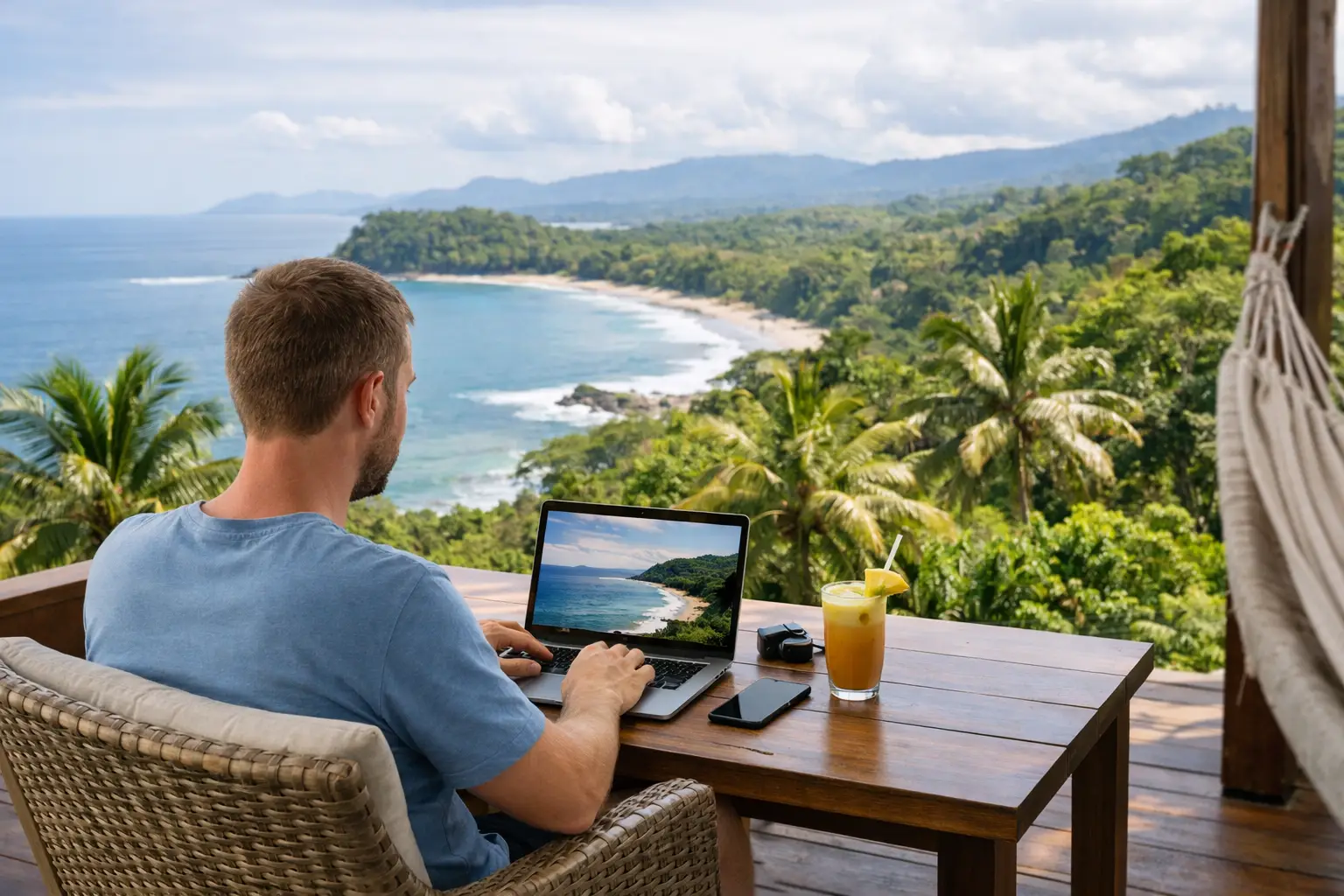
By 7:30 a.m. the howler monkeys have already made their point, the coffee is strong, and your first video call may happen with a wall of green behind you instead of a city skyline. That is part of the appeal of remote work from Costa Rica. But the postcard version only tells half the story. The other half is about infrastructure, routine, legal planning, weather patterns, and choosing the right community for the life you actually want to lead.
Costa Rica has become a serious option for professionals who want more than a short escape. It offers political stability, strong global name recognition, a culture that values quality of life, and landscapes that can shift from surf town to mountain valley in a single day. For many remote workers, that mix feels less like a temporary experiment and more like a viable lifestyle.
Why remote work from Costa Rica keeps attracting people
The obvious answer is beauty. You can finish a workday and be in the ocean before sunset, or trade a rushed lunch break for a walk under giant trees. That matters more than people sometimes admit. Environment shapes routine, and routine shapes whether remote work feels sustainable or draining.
But Costa Rica also attracts people for more practical reasons. It is relatively easy to navigate for English-speaking newcomers in many popular areas, healthcare has a strong reputation, and there is a wide range of living environments depending on your priorities. Some people want the energy of beach communities with cafés and coworking spaces. Others want cooler mountain air, quieter neighborhoods, and easier access to long-term housing.
That said, not every destination works for every worker. A freelance designer with flexible hours can tolerate occasional power or internet hiccups more easily than a finance executive running back-to-back calls all day. A family with school-age children will assess Costa Rica very differently than a solo traveler staying for two months. The country rewards people who match their location to their actual work style instead of their vacation fantasy.
Where remote workers tend to settle
The Pacific coast gets much of the attention, and for good reason. Towns in Guanacaste appeal to people who want dry-season sunshine, beach access, and developed services. Places such as Tamarindo and nearby communities can feel socially easy for newcomers, with international restaurants, fitness studios, and a visible remote-work crowd. The trade-off is cost. Housing in popular coastal hubs can be expensive, and in high season the pace can feel more tourism-driven than local.
The Central Valley offers a different version of remote life. Areas around Escazu, Santa Ana, Grecia, Atenas, and parts of the greater San Jose region tend to appeal to people who prioritize reliable services, healthcare access, established neighborhoods, and proximity to the international airport. You lose the walk-to-the-beach fantasy, but you often gain smoother daily logistics. For many full-time professionals, that is not a small thing.
Then there are places that sit in between those extremes. Nosara attracts wellness-oriented remote workers and entrepreneurs, but pricing can be high and rental inventory competitive. The southern Pacific has spectacular nature and a slower rhythm, though connectivity and services can vary more by location. The Caribbean side offers culture and color in abundance, but it makes sense to research infrastructure carefully before committing to a long stay.
The real question: can you actually work well here?
Yes, but it depends on where and how you set yourself up.
Internet quality in Costa Rica can be excellent in some neighborhoods and frustratingly inconsistent in others. That is true even within the same town. Before renting a place, ask specific questions about fiber availability, backup options, average speeds, and outage frequency. General assurances are not enough if your income depends on stable connectivity.
Power reliability is also worth checking. Many areas are dependable, but weather, roadwork, or regional conditions can still affect service. If your job is high stakes, have redundancies. A mobile hotspot, a nearby coworking option, and a clear plan for outages can save you from avoidable stress.
This is where romanticism can get expensive. Ocean views are lovely. So is making your client presentation without interruption. The best remote setups in Costa Rica are often the ones that blend natural beauty with boring competence: good desk, good chair, good signal, and enough quiet to focus.
Visas, legal status, and the fine print
Remote work from Costa Rica sounds simple until legal details enter the conversation. They should enter early.
Costa Rica has offered a digital nomad pathway that has helped formalize longer stays for qualifying remote workers, but requirements can change and individual situations vary. Some people come for shorter periods under standard tourist entry rules, while others look into residency routes if they plan to stay longer or relocate more fully. Each option carries different implications for documentation, banking, healthcare, taxes, and length of stay.
This is one area where optimism should be paired with caution. Do not assume that what worked for a friend last year still applies exactly now. Immigration and tax questions deserve current, professional guidance. Costa Rica is welcoming, but it also expects compliance. That is a healthy thing, especially in a country balancing growth, conservation, and rising international demand.
Cost of living is not one number
People often ask whether Costa Rica is cheap. The honest answer is no, not in the simplistic sense. It can be more affordable than many major US cities, but it can also surprise newcomers who arrive expecting bargain-basement tropical living.
Imported goods are often pricey. Rent in sought-after beach towns can be high. Short-term furnished rentals usually carry a premium, especially in peak months. If you want air conditioning, walkability, modern finishes, and strong internet near the coast, your monthly budget may look much closer to Southern California than to the low-cost paradise of internet mythology.
On the other hand, costs can ease when you stay longer, rent locally, eat more seasonal food, and choose areas beyond the most famous hot spots. A couple of kilometers inland can change prices considerably. So can a shift from vacation habits to daily-life habits.
The key is to budget for the version of Costa Rica you actually want. If your ideal life includes surf lessons, restaurant dinners, private shuttle services, imported groceries, and a stylish rental in a prime beach community, your spending will reflect that. If you value simplicity, local markets, and a home base chosen for function rather than image, the math may feel far more comfortable.
Culture matters as much as logistics
One reason people stay is that Costa Rica does not just offer scenery. It offers a rhythm. There is a human scale to daily life that many remote workers find restorative after years of speed and noise. Courtesy still matters. Conversation matters. So does patience.
That last part is worth sitting with. Remote professionals arriving from highly optimized environments sometimes struggle when things move differently. Bureaucracy can take time. Deliveries may not work the way you expect. Service standards vary. Weather disrupts plans. If you need every process to feel instantaneous, frustration will follow you into paradise.
The people who tend to thrive are those who adapt without becoming careless. They show up on time for work, respect local norms, learn some Spanish, support local businesses, and understand that living in Costa Rica is not the same as consuming Costa Rica. That distinction matters in communities under pressure from development, water use, traffic, and rising housing costs.
How to make remote work from Costa Rica sustainable
Treat your first stay like a field test, not a life decision made in a haze of sunsets. Give yourself enough time to see a place in ordinary mode. Work a full week. Shop for groceries. Drive in the rain. Test the internet during a storm. Notice whether the soundtrack of your neighborhood is birdsong, motorcycles, construction, or all three.
It also helps to choose one priority and let it lead. If work reliability is non-negotiable, start in a well-connected area and save the more remote dream spots for weekends. If wellness is your main goal, pick a community where your mornings and evenings naturally support that. If your focus is family life, schools and healthcare should weigh more heavily than beach proximity.
There is no single correct version of this experience. Some people come for a season and leave with renewed energy. Others build businesses, buy property, or stay long enough to become part of the fabric. What Costa Rica offers, at its best, is not escapism. It is perspective – a chance to work seriously while living in a place that keeps reminding you to look up from the screen.
FAQ
Is Costa Rica good for digital nomads?
Yes, Costa Rica can be excellent for digital nomads, especially those who want lifestyle benefits along with decent infrastructure in the right areas.
What is the best town in Costa Rica for remote work?
There is no single best town. Tamarindo suits people who want energy and beach access, while Central Valley areas often suit professionals who want smoother logistics.
Is the internet good enough to work online in Costa Rica?
Yes, in many places it is, but quality varies sharply by neighbourhood, so it is essential to verify before renting.
Is Costa Rica affordable for long-term remote work?
It can be, but it is not automatically cheap. Costs depend heavily on location, rental style, and whether you live like a tourist or a resident.
Do you need a visa to work remotely from Costa Rica?
You may, depending on your length of stay and situation. Entry options and requirements vary, so current legal advice is important.
Is beach life always the best option for remote workers?
No, not always. Beach towns are attractive, but inland areas often offer better reliability, lower stress, and more practical daily living.