

Refuge for Wildlife Animal Rescue. Many areas of Guanacaste are experiencing a surge in human development. Fragmented habitats and electricity installations are causing wildlife deaths and injuries. Electrical cables provide an efficient, but lethal, way for monkeys to travel through urbanized segments of forest. All too often, they suffer horrific injuries and violent deaths from being in contact with uninsulated power cables and transformers.
On average, Refuge for Wildlife responds to more than 100 rescue calls each year relating to electrocuted howler monkeys. Most of the survivors are young infants who were holding onto their mothers during the accident.
Most of the survivors are young infants
who were holding onto their mothers
during the accident.
Liza was only a few weeks old when she was severely injured in this manner. After climbing onto an uninsulated power transformer, Liza’s mother was brutally killed by a jolt of electricity so strong that her body caught on fire with baby Liza still clinging to her fur. Liza was also quickly engulfed in flames, painfully burning her entire body. For many weeks, Liza required extensive veterinary treatment, including oxygen therapy inside an incubator.
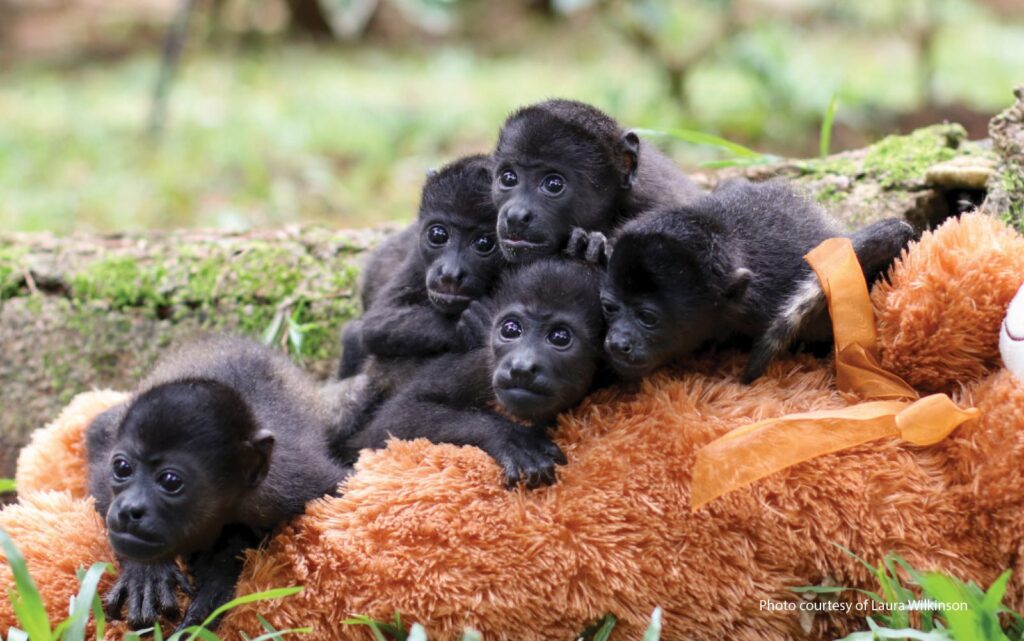
Liza and Mario (top photo) are growing up together with their adopted siblings in the Mango Troop.
The dedication of veterinary staff and animal caregivers in such cases is extraordinary, as they work 24 hours a day to give every orphaned baby the best possible chance at rehabilitation. Liza has now fully recovered from her injuries, and so far has not shown any signs of the internal damage that many electrocution victims typically succumb to. She is now sharing an enclosure at Refuge for Wildlife with more than a dozen other monkeys in her age group, many of whom were also electrocuted.
Liza will stay with us for another four years until she is old enough to be released. Meanwhile, you can help her on the path to freedom by virtually adopting her troop! Refuge for Wildlife relies entirely on public donations to carry out our vital work. Adopting Mango Troop is an easy and rewarding way to support Liza and other beautiful monkeys just like her.
Visit our website for details about Mango Troop adoptions or to make a U.S. tax deductible donation. You can also learn about our Stop the Shocks program, book an educational visit or volunteer to help us out.
Contact us at www.refugeforwildlife.org
Pet Cancer and Chemotherapy
Wildlife: An Extraordinary Case of Caring
Blood Transfusions for cats and dogs
Pets get STD’s too
What to Expect from a Costa Rica Vet Visit
Pet Traveling: Happy Landings for your Pet
What to Expect when you pet is expecting
Preparing your pets for raining season
Pet Care: Water Health and Safety
Tick Fever or Ehrlichiosis
Spay or Neuter Pets
Snake Bites: A common pet emergency in Costa Rica