

Hola from Gringo Gardeners on Facebook! This month we’re highlighting an amazing plant that Ed, in Atenas, shared with the group. The flowers bloom right out of the ground! This is Kaempferia rotunda, native to China but naturalized in Costa Rica. It’s often called the resurrection plant because it blooms only once a year at Semana Santa. A member of the ginger family, Kaempferia grows from a rhizome and has many medicinal properties.
Plant identification
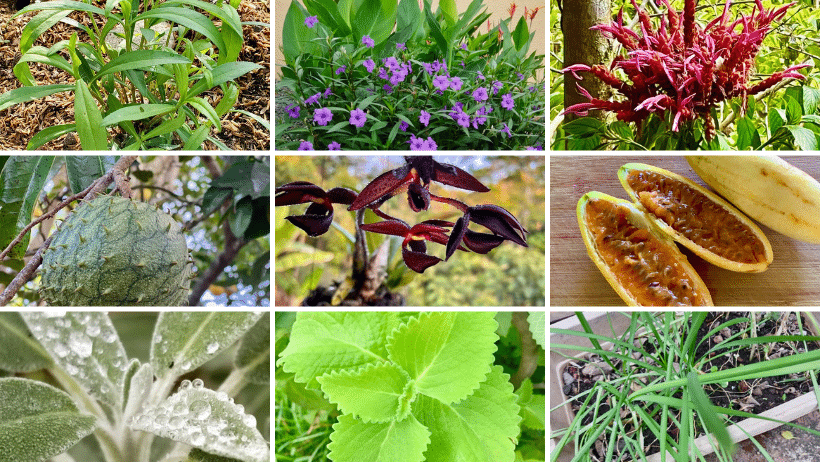
One of the most common posts on our group page is a request for plant ID. The plant apps don’t always work; sometimes you need an expert gardener, and we have plenty of those. Here are some of the identifications made over the years.
The orange shrimp plant (Aphelandra Sinclairii) is native to Costa Rica, thriving in partial shade and attracting birds and butterflies. There’s also a yellow variety of shrimp plant which is more common.
Leaf cactus (Pereskia Bleo), is an unusual plant in that it’s a cactus with leaves. A native of the Costa Rican rainforest, leaf cactus does well in shady, moist areas.
For those of you who are orchid lovers, the unusual bat orchid species (Mormodes) grows well in coconut shells. If you’re interested in learning more, we have some very knowledgeable orchid experts in the group. Nancy (group moderator) in Orosi has close to 400 different species!
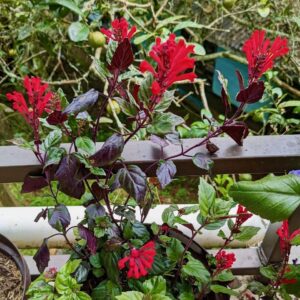
Costa Rican skullcap (Scutellaria Costaricana) is native to Costa Rica, where it grows in humid rainforests. In “captivity” it requires well drained soil and does well in a container. Skullcap grows into a 2 to 5-foot shrub. Its red blooms, which are rare in the mint family, attract hummingbirds.
Among the 19 types of canna lily (Canna Indica) is one that might look like an orchid. It prefers moist, sunny conditions. 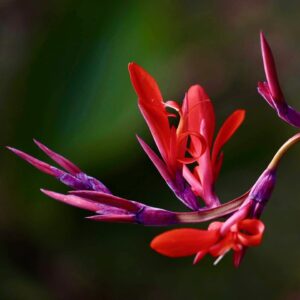
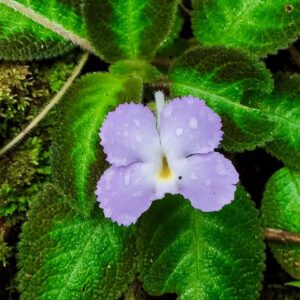 Blue flowered teddy-bear (Episcia Lilacina) is a low-growing plant with fuzzy, vibrantly coloured leaves and flowers. They’ve been seen in La Fortuna, and near Parrita and Manuel Antonio. Native to central South America, the blooms are usually red, making this blue variety quite unique. It prefers a damp, shady spot.
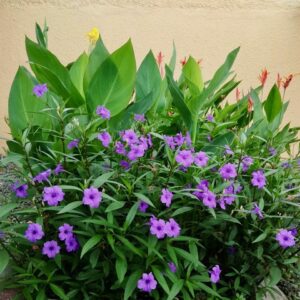 Mexican petunia (Ruellia Brittoniana) is considered invasive. Be careful where you plant them because they spread like weeds and it’s hard to get rid of them. They grow wild and tolerate poor growing conditions. You can propagate Mexican petunias simply by rooting stems or letting them self-seed.
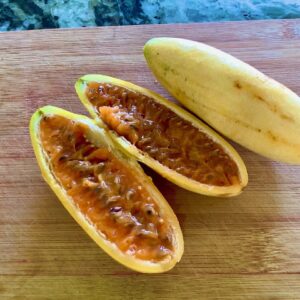 Banana passion fruit, or banano maracuyá, is prolific and has gorgeous pink flowers. The inside seedy area is delicious and dense, with fewer seeds than passion fruit. More than one group member has commented that it’s their favorite Costa Rican fruit.
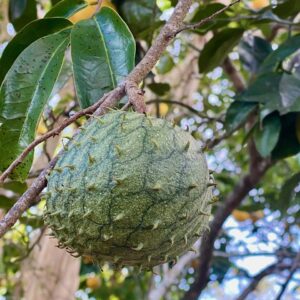 In response to a photo post requesting an ID, quite the debate was stirred in our group: “Is it anona, guanabana, or soursop? Is soursop the same as guanabana? It’s either anona or soursop, depending on which Tico you ask. Either way, the inside white flesh makes a great drink — mix with water in a blender and then strain through a sieve … it’s very good. Wait! It’s not guanabana — they grow on tree trunks, not branches … do they? All guanabanas are anonas, but not all anonas are guanabanas!”
Shannon (group expert) would like to add that if this is indeed guanabana, be sure to remove the seeds before making juice, as they’re actually toxic. Good to know, Shannon!
Herbs that thrive in Costa Rica
My co-administrator at Gringo Gardeners, Nel Cameron, volunteered to share some thoughts (below) on herbs. If Nel’s name sounds familiar it’s because she has quite a few Facebook groups of her own devoted to helping expats in Costa Rica. Check out
Cooking in Costa Rica to ask questions or find recipes and ideas on how to prepare the unique fruits, vegetables and herbs that grow here. We’ll be talking more about fruits and vegetables in upcoming articles as well as ornamentals and flowering plants.
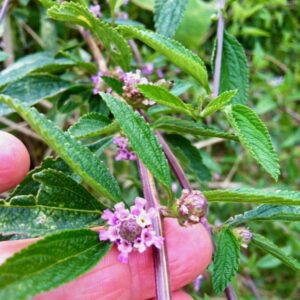 Probably the No. 1 most popular herb that will grow like a weed anywhere in the country is juanilama (lemon verbena). It’s a medicinal herb, makes a lovely tea and is great for an upset stomach. One little cutting will produce a huge bush in no time. Give it a lot of water. Dry the leaves by tying a bunch of stems together and hanging in a dark, dry place. Rub them (don’t cut) to ensure they maintain their flavor longer. This is a good rule to follow with all dried herbs.
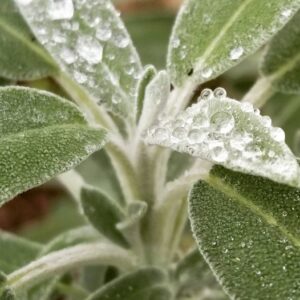 Sage is also easy to grow, it prefers well-drained soil and sun. If it gets leggy, cut off the stems but make sure there’s more growing near the ground level so you don’t kill it. Tie and hang the stems to dry the same as Juanilama above.
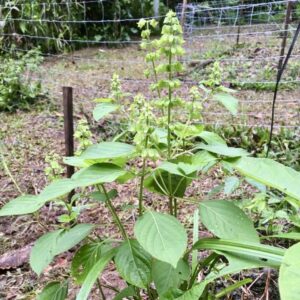 Regular basil will grow here, and is a good addition to many recipes. But if you’re looking for a healing herb, give tulsi (aka holy basil) a try. Widely known for its ayurvedic properties and as an antimicrobial, it has a basil taste with a hint of pepper. Tulsi makes a great hot or iced herbal tea and is very healthy for you.
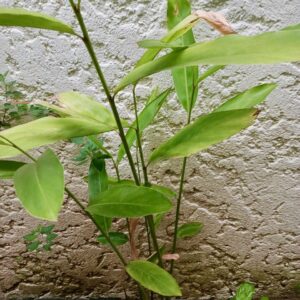 Galangal is a well-known “ginger” type plant. You eat the root! Mine isn’t quite ready for harvest yet but it grows well at my altitude (3,700 feet). It’s an Asian root used in Thai and Malaysian cooking with a mild ginger taste.
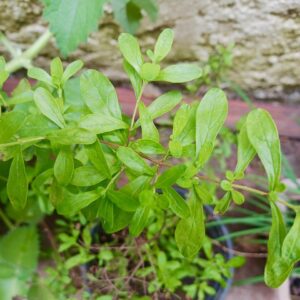 Costa Rican mint is uniquely savory as well as minty. Rich in vitamins and antioxidants, it makes a wonderful addition to soups, stews and salads. It spreads like crazy so you might want to keep it in a pot! This shrub can grow up to five feet or more. It does best in full sun to partial shade with regular watering.
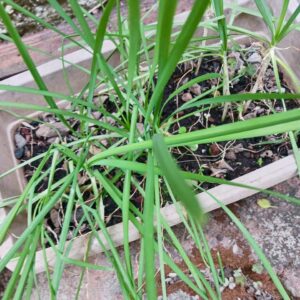 Garlic chives go with everything and they’ll grow pretty much anywhere in the country! They make a great addition to soups, stews, or wherever you want to add a garlicky onion flavor.
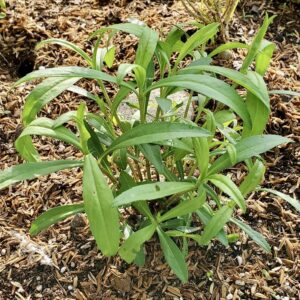 Mexican tarragon is delicious. I use it as a vinaigrette dressing or add it to chicken dishes. It has a subtle flavor that is quite different. The plant is prone to powdery mildew and takes a lot of care. It grows like an annual here in San José, dying off for part of the year.
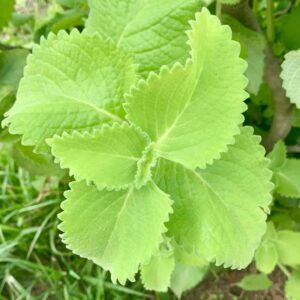 Mexican oregano will grow prolifically pretty much anywhere. One little cutting will produce a huge bush in no time. The leaf is thicker than regular oregano. It requires a lot of water.
These are just a few of the herbs that you can successfully grow here.
Gardening tips from group members
Debra in Grecia (top contributor): Baking soda, bicarbonate de soda, is nature’s best gardening tool. Plant a teaspoon with each tomato plant for sweeter tomatoes.
Use as a fungicide in soil around plants.
Mary Lynn in Miravalles, Perez Zeledon: Don’t be afraid to fail. We’ve all killed our share of plants to get a successful garden.
Reed in Perez Zeledon (top contributor): There are so many zones and growing conditions in Costa Rica — from hot to chilly, from dry to wet, from one soil to
another. Be sure to match plants and trees with your location. Look around your area, ask what grows best, obtain simple knowledge of plants and trees before you
start buying and planting. You can’t grow everything in one location that grows well in another. Some plants and trees simply need particular conditions to thrive and will
die or struggle no matter how much care they get.
Sally Rose in Santiago de Puriscal: Learn what grows well in your Costa Rican micro-climate. Focus on plants that thrive and re-seed or multiply easily.
Jan in Grecia (group expert): There’s so much to say, and learn, but trial and error is the best method for each individual area and elevation. Good luck out there!
See you next month with more gardening insights unique to Costa Rica!
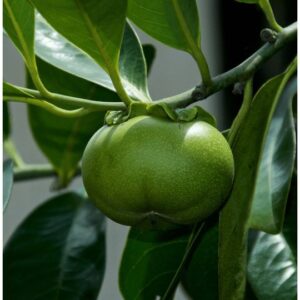
NO!!!
There’s one element of Costa Rican nature that you should be particularly aware of: the manchineel tree. This notoriously dangerous plant is found throughout the coastal regions of Costa Rica and can be identified by its distinctive greenish-gray bark and wide crown of branches.
The manchineel tree can be deadly – its sap, leaves, and even fruit can cause severe skin irritation and blistering. If ingested, the toxins in its fruits can cause seizures, paralysis, and even death. It’s important to be vigilant when exploring areas with manchineel trees, and it’s best to avoid them altogether.
To stay safe, don’t touch any part of the tree, and don’t let its fruit or sap come into contact with any part of your body. If you happen to get the sap on your skin, wash the area immediately with soap and water, and seek medical attention if irritation persists.
The manchineel tree adds a unique and dangerous element to Costa Rica’s tropical paradise, and it pays to be cautious when exploring nature in the country. With a few simple precautions, you can enjoy all that Costa Rica has to offer without putting yourself in danger.