

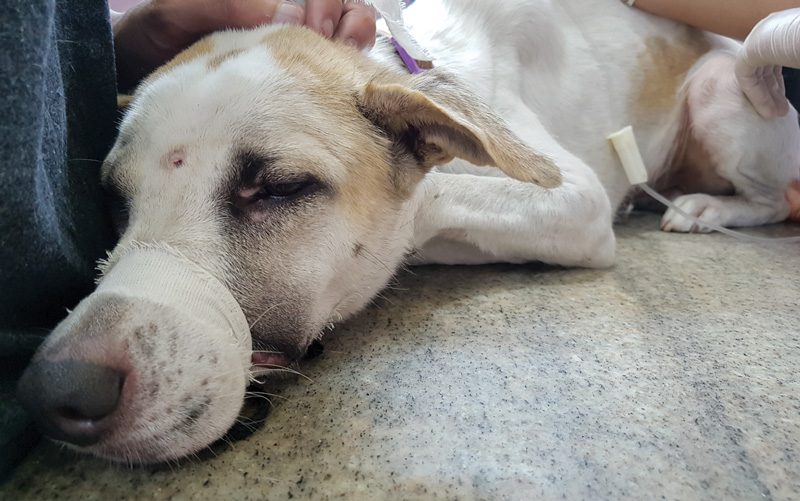
Pet Care: Pet Cancer – Is Chemotherapy another chance for your pet? Chemotherapy has become a more promising and widely accepted treatment option for pet cancers. It wasn’t long ago that veterinarians like myself, as well as pet owners, automatically assumed euthanasia was the only alternative when a malignant tumor was diagnosed. Fortunately, we’ve been proven wrong. I’ve seen quite a few cases of healthy pets undergoing chemotherapy successfully. The outcome can be positive even for older animals with some health problems but a strong will to survive.
The longer the life expectancy of an animal, the greater its probability of experiencing various illnesses, including tumor development. As in humans, the appearance of any new mass, overgrowth or change in skin pigmentation warrants attention as soon as possible. Although masses are usually not found in dogs and cats younger than seven years of age, they can appear earlier in some cases.
The cytology and/or biopsy
results are a basis for making
treatment decisions.
When a new mass is detected in your pet during a veterinary visit, there are different ways to test it. The first and simplest method is cytology. This is a non-invasive procedure for taking a tissue sample, usually with a syringe, for laboratory analysis and diagnosis. Second, a biopsy of the mass may be performed in one of two ways, depending on location and other factors. Using a punch to take a minor sample can often be done under local anesthesia but total extirpation — excising to remove the tumor — usually requires general anesthesia.
The cytology and/or biopsy results are a basis for making treatment decisions. Some benign tumors can be left alone if there is no negative health impact or when the risks associated with surgical removal outweigh the benefits. But removal of even a benign tumor may be advisable if it’s causing bleeding, growing too fast or is in a place that might compromise your pet’s life.
For malignant tumors, a key consideration is whether the cancer has spread to other parts of the body (metastasized) or is potentially aggressive. X-rays of the thorax and abdomen can detect internal metastasis, and its absence improves the prognosis.
Chemotherapy refers to the use of drugs capable of killing cells that reproduce quickly. The specific type of medication, and the dosage, frequency and method of administration will depend on the type of cancer your pet has. In our practice, protocols are established by the veterinary oncology specialist we work with. Treatment is followed up in our office, with some control visits in San José.
Based on the encouraging results we’ve seen, our recommendation is to not fear the worst if your pet tests positive for cancer. It does not have to mean the end … at least ask for another opinion about another possible chance!