

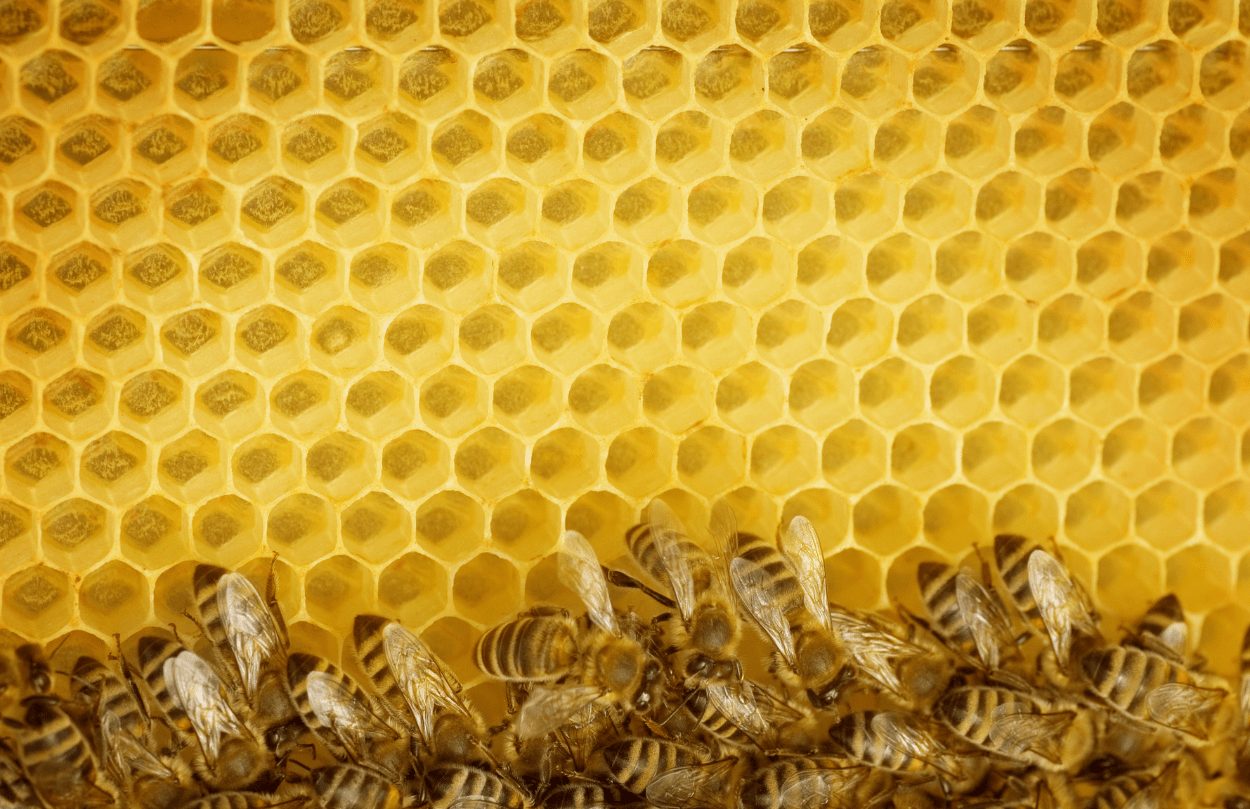
Howler is delighted to feature this first-hand account of an 11-year-old’s journey in Costa Rica learning about bees. Part 1 of the young author’s two-part story takes place at a bee farm, where everything about his perspective changed. This was the inspiration behind the colony he is now starting on his own at his family home.
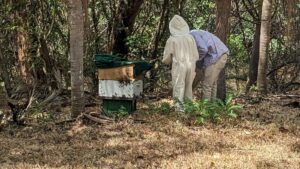
Owww! A bee stung me! A bee — what did I do to it?
Bees usually are nice. But I was collecting honey from the beehive, when sometimes they get mad. But if a bee would not sting me I would not be a beekeeper.
Two months earlier, I got invited to a bee farm. That’s when things changed. They changed a lot. I saw how smart bees are and how they have something to do all the time. So let me explain what they have to do.
The queen bee is responsible for laying eggs, and her pheromones dictate the behavior of the rest of the colony. The drones are male bees that exist solely to mate with the queen bee. They do not have stingers and do not gather food. The workers are female bees that do most of the work in the colony. They are responsible for tasks such as collecting nectar and pollen, building the hive, and caring for the young. Workers have a specialized body part called a pollen basket that they use to carry pollen back to the hive.
When a worker bee finds a source of nectar, she returns to the hive and does a “dance” that tells the other bees where to find the food. This dance is called the waggle dance, and it communicates the direction and distance of the food source.
Bees are also important pollinators, and they play a crucial role in the ecosystem by helping plants to reproduce. When a bee lands on a flower to collect nectar, it picks up pollen on its body and transfers it to the next flower it visits. This process of pollination helps to fertilize the flowers and ensure that they can produce seeds and fruit.
Overall, bees work together in a highly organized and efficient way to ensure the survival and success of their colony.
So now you know bees always have work. But the most important thing I experienced is this: if you are scared when working with bees your body will release certain pheromones, which bees can detect as a threat.
Stay tuned for the rest of my bee story in a future Howler issue.
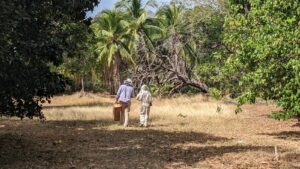

Marek Nahorski was born in Szczecin, Poland in 2011. From the beginning, he was a child who did not play with toys. At the age of 4 he got his first DJ console. He started playing concerts, during the pandemic he gave an interview on Polish breakfast television. Soon after, he very bravely accepted the move to a country so distant from his homeland. With virtually no knowledge of English or Spanish, he started attending school. He opened a business with 3-D printers. Then, with the money he earned, he bought Vending machines, which allowed him to fulfill another dream of having his own bee apiary. So now we are waiting for our first honey!