
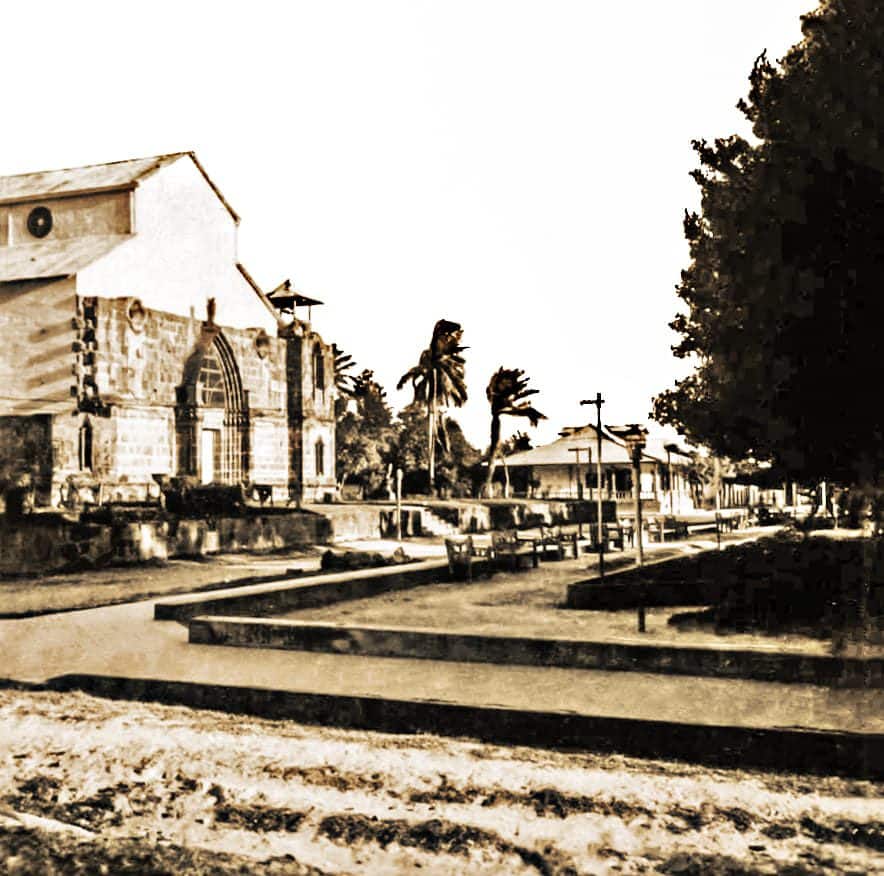
Liberia Costa Rica, the largest city in Guanacaste, was informally founded on Sept. 4, 1769, when a chapel was built there. It was located at a strategic crossroads connecting the cities of Rivas, Bagaces and Nicoya, and it was used primarily as a place of rest by travelers.
The giant trees of the region, popularly known as “guanacaste” trees, provided shade for travelers and cattle, and the village that arose there became known by the name Guanacaste.
In 1812, the Spanish Courts of Cádiz created the provinces of Nicaragua and Costa Rica, both of which gained independence from Spain in 1821. In 1823, Costa Rica became part of the Federal Republic of Central America.
The Party of Nicoya was an administrative unit of this republic, governing what is today most of the province of Guanacaste. The settlements of Nicoya and Santa Cruz were economically linked to Costa Rican territory, while the town of Guanacaste (today’s Liberia) had more ties to Rivas, in what is today Nicaragua.
Under the leadership of the towns of Nicoya and Santa Cruz, the Party of Nicoya voted to annex itself to Costa Rica on July 25, 1824. Residents of Guanacaste (Liberia) voted that same year to remain part of Nicaragua. In 1826, after years of conflict, the Congress of the Federal Republic of Central America added Guanacaste (Liberia) to Costa Rica. Today, both Liberia and Guanacaste celebrate July 25, 1824, as the date of their annexation to Costa Rica.The town of Guanacaste grew in importance, and eventually overtook Nicoya as the most important settlement in the region. In 1836, it formally adopted the name “City of Guanacaste.”
In 1838, as the Federal Republic of Central America began to dissolve, Costa Rica formally seceded and declared itself an independent state. In 1848, Costa Rica divided its territory into provinces, cantons and districts, and the province of Guanacaste was created.
On May 30, 1854, a government decree changed the name of the city from Guanacaste to Liberia. The name of the province of Guanacaste was changed to Moracia in honor of then-President Juan Rafael Mora Porras.
In 1859, Mora was overthrown in a coup d’etat led by Dr. José María Montealegre. In 1860, to avoid honoring a political enemy, the Montealegre government changed the name of the province from Moracia back to Guanacaste.
Liberia continued to grow, and it became a major center of commerce and ranching. The construction of the Inter-American Highway further established the city’s importance and contributed to its growth.
Liberia is often called by its residents “la Ciudad Blanca,” “the White City,” because of white gravel used to build its streets and the color of its colonial homes.
A passion for historical photos
Photos are provided courtesy of José Gerardo Suárez Monge, author of “San José: 280 Years of History.” Suárez is a professional photographer and graphic designer with a degree in electrical engineering from the Tecnológico in Cartago, but his passion is collecting and analyzing historical photos — he has over 14,000. He has six books for sale, which are available at Librería Lehmann and the University of Costa Rica bookstore, or by calling 7062-3086 or 8794-7679.