
If you mention El Codo del Diablo to older Costa Ricans, they hang their heads in shame.
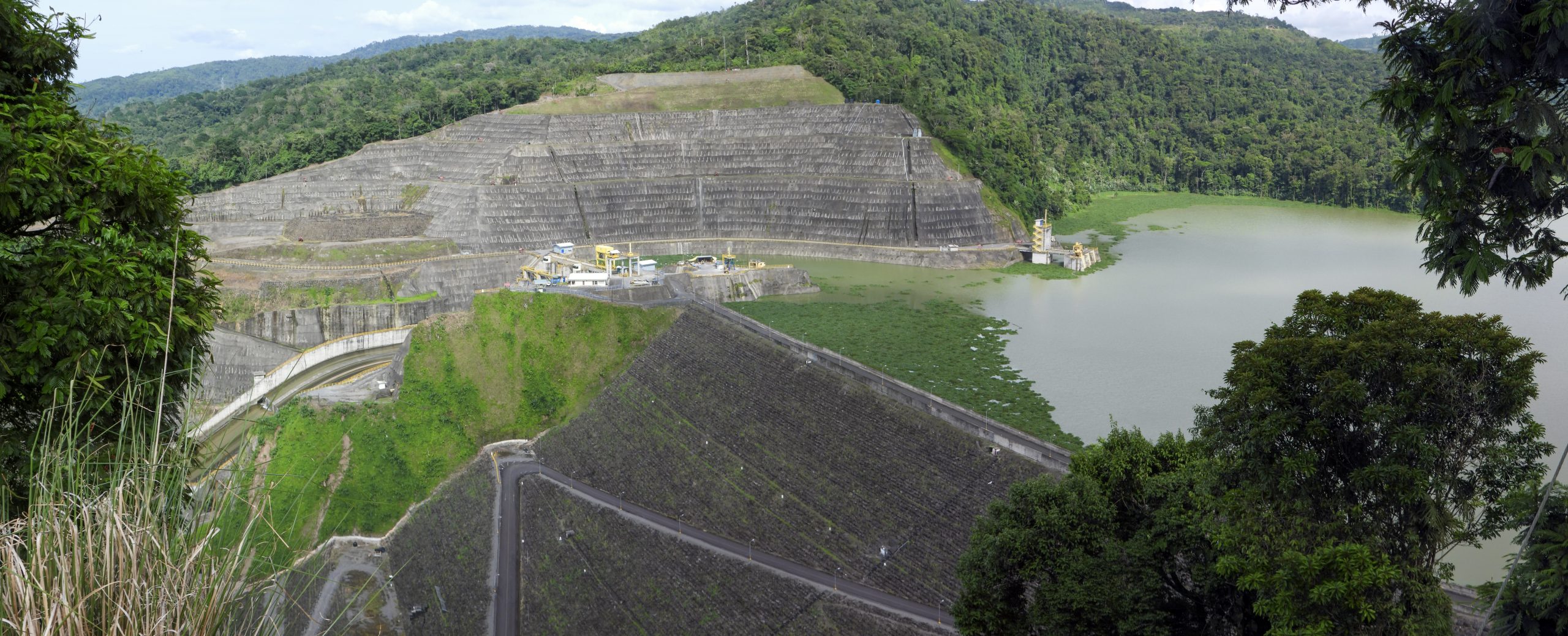
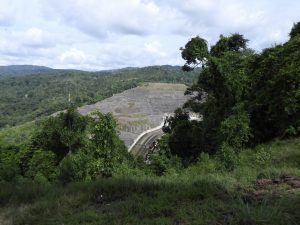
On a recent trip out to the Caribbean side of Costa Rica, we decided to take a side trip to see the new hydroelectric dam, Planta Hidroeléctrica Reventazón.
 The new dam is huge — the largest in Central America — generating over 300 megavolts (enough for 500,000 homes). It dams the Reventazón river, born in the Talamanca mountains and flowing through the Orosi valley through Turralba. Standing above the dam, you can see the new lake formed behind, and below, the flat drainage plain all the way to the Caribbean.
There are a couple of miradors opening to view what the people in the area of Siquirres hope will be the beginning of tourism, similar to what happened in Arenal. We chose one in La Florida, a little town above Siquirres, to visit one of the miradors. While the dam is certainly impressive, the local history provided to us was even more interesting.
FIFCO’s beginnings
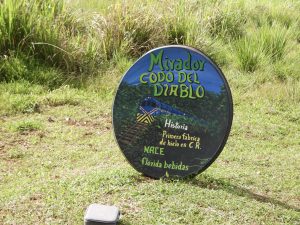 La Florida is the town where the La Florida ice company started. If that does not ring a bell, Florida Ice and Farm Company (FIFCO) today is one of the largest companies in Costa Rica. Every time you drink an Imperial or an imported Heinkein beer, a Tropical iced tea or a Pepsi, you are being supplied by FIFCO. The same is true each time you put Kerns ketchup on your burger, go to a Musmanni store, stay at the Hotel Westin Golf Resort & Spa in Reserva Conchal, or even drink Genesee beer in the U.S.
Florida Ice and Farm got its start in 1908, founded by four brothers of Jamaican origin. They focused on making ice and supplies for the trains carrying bananas to the coast to be shipped mainly to the U.S. In 1912, when the German brewery Traube was selling its interest in Costa Rica, the brothers bought it … and the rest is history. But this next part of history takes a dark turn.
The location where the ice could be loaded was a sharp turn in the river, and hence the railroad, called El Codo del Diablo (the Devil’s Elbow). If you mention El Codo del Diablo to older Costa Ricans, they hang their heads in shame.
Persistent conflict
It was right before Christmas in 1948, eight months after the civil war in Costa Rica and before the new constitution was written. The country’s de facto government was led by the “Figueristas.” They were the right-leaning winning side of the conflict led by José Figueres Ferrer, defeating the “Calderón communists” led by Rafael Ángel Calderón Guardia.
Six members of local unions (Calderón supporters) were rounded up and kidnapped, put on the train at El Codo del Diablo and then executed. Their bodies were thrown off the train into the river cuffed together, but one fell on the side and was discovered the next morning. Three Figueristas, members of the military, were accused of the crime, but somehow “escaped” justice. The Devil’s Elbow murders, as they are known, did become one of the drivers for reconciliation, a new constitution and government, along with the abolishment of the military, in 1949.
A 2014 documentary about the murders, “El Codo Del Diablo,” may be viewed on YouTube.
So, the next time you head to the Caribbean, take a side trip to a pretty little town with a big dam and a lot of history.
 JTNDaWZyYW1lJTIwc3JjJTNEJTIyaHR0cHMlM0ElMkYlMkZ3d3cuZ29vZ2xlLmNvbSUyRm1hcHMlMkZlbWJlZCUzRnBiJTNEJTIxMW0xOCUyMTFtMTIlMjExbTMlMjExZDYyODQ5LjIxOTc3OTU0MjIlMjEyZC04My42MDg0MDMxNTkzODUwMyUyMTNkMTAuMDkyODM5NDMzODQ1MzMlMjEybTMlMjExZjAlMjEyZjAlMjEzZjAlMjEzbTIlMjExaTEwMjQlMjEyaTc2OCUyMTRmMTMuMSUyMTNtMyUyMTFtMiUyMTFzMHg4ZmE3MzM2YTljZTk0NzM3JTI1M0EweDc5NTU5YWJhYWU1Y2RjMjAlMjEyc0xpbSUyNUMzJTI1QjNuJTI1MjBQcm92aW5jZSUyNTJDJTI1MjBGbG9yaWRhJTIxNWUwJTIxM20yJTIxMXNlbiUyMTJzY3IlMjE0djE2NjE3OTA1NjEzMDQlMjE1bTIlMjExc2VuJTIxMnNjciUyMiUyMHdpZHRoJTNEJTIyNjAwJTIyJTIwaGVpZ2h0JTNEJTIyNDUwJTIyJTIwc3R5bGUlM0QlMjJib3JkZXIlM0EwJTNCJTIyJTIwYWxsb3dmdWxsc2NyZWVuJTNEJTIyJTIyJTIwbG9hZGluZyUzRCUyMmxhenklMjIlMjByZWZlcnJlcnBvbGljeSUzRCUyMm5vLXJlZmVycmVyLXdoZW4tZG93bmdyYWRlJTIyJTNFJTNDJTJGaWZyYW1lJTNF