
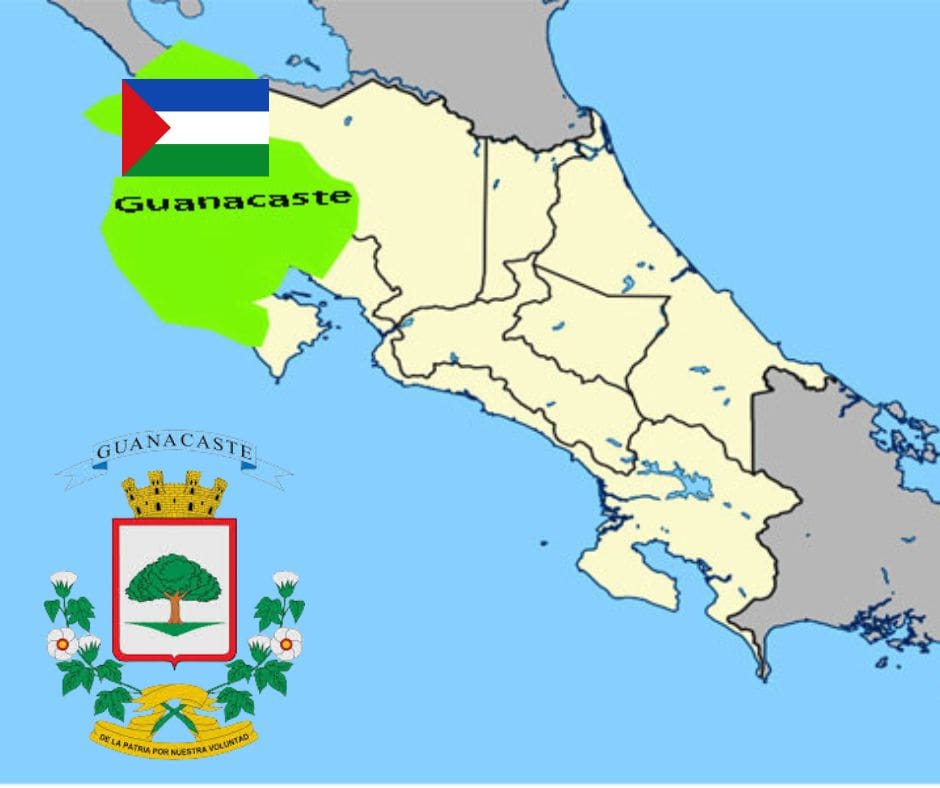
Guanacaste, is an integral part of Costa Rica today. However, its journey to becoming a Costa Rican province is a tale of historical significance, shaped by political shifts and local aspirations. The story of Guanacaste’s annexation on July 25, 1824, reflects a pivotal moment in the region’s history, driven by the will of its people.
Pre-Colonial and Colonial Context
Before the Spanish conquest, the area now known as Guanacaste was inhabited by indigenous groups, including the Chorotega and Nicoya. The region was initially part of the Nicaraguan territory during the Spanish colonial period due to its proximity and administrative convenience. However, the cultural and economic ties of the people in the Nicoya Peninsula leaned more towards Costa Rica, especially the Central Valley, fostering a sense of shared identity and community interests.
Independence and Decision
Following the broader Central American independence from Spain in 1821, the territories that comprised modern-day Costa Rica and Nicaragua faced new administrative challenges. In 1823, after the establishment of the Federal Republic of Central America, the provinces were granted the right to decide their affiliations freely. This political change set the stage for Guanacaste’s pivotal decision.
The Plebiscite of 1824
The decision to annex Guanacaste to Costa Rica was not made by external authorities but by the people of Guanacaste themselves. On July 25, 1824, a referendum was held in the towns of Nicoya, Santa Cruz, and Canas, where the residents voted overwhelmingly to join Costa Rica. The reasons were multifaceted, ranging from cultural affiliations and economic interests to political stability offered by the Costa Rican government, which contrasted with the turbulent political climate in Nicaragua at the time.
Impact of the Annexation
The annexation significantly impacted the development of Guanacaste. It facilitated greater political and economic integration with Costa Rica, contributing to the region’s prosperity and stability. The cultural blend of indigenous and Spanish influences enriched Costa Rican culture, making Guanacaste a vibrant symbol of national diversity.
Guanacaste Today
Today, Guanacaste thrives as a beloved part of Costa Rica, and it is celebrated annually on Guanacaste Day. It is a testament to the region’s enduring spirit and its choice to shape its destiny within the broader framework of Costa Rican sovereignty. The integration has fostered developmental benefits, conservation efforts, and tourism, reinforcing the region’s unique identity and importance within Costa Rica.
The annexation of Guanacaste is more than a historical event; it is a narrative of self-determination and community. It highlights the importance of cultural and political identity in shaping the destinies of regions and nations. Guanacaste’s journey from a peripheral part of Nicaragua to a central piece of Costa Rica’s national identity is a testament to the power of people’s will to define their future.