

Historical Context of the Annexation
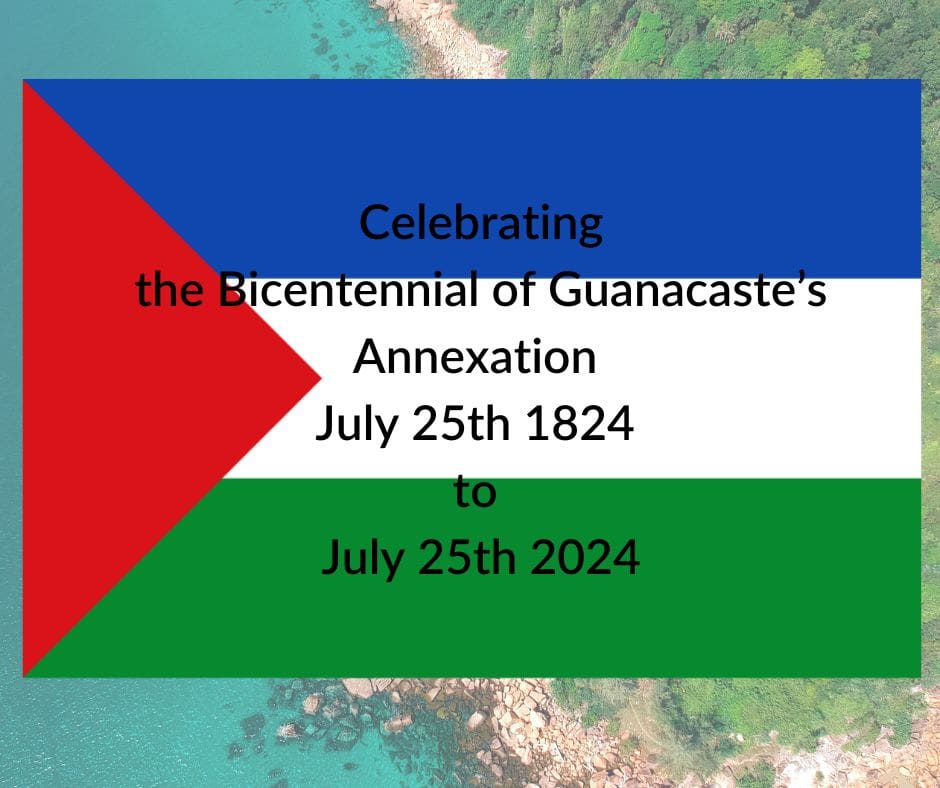
The bicentennial of the Annexation of Guanacaste marks a monumental milestone in the history of Costa Rica. This significant event occurred when the region, originally a part of Nicaragua, voted to become part of Costa Rica on July 25, 1824. This decision was driven by a strong cultural affinity and a shared vision for political stability, embodied in the resonant phrase “de la patria por nuestra voluntad” (of the homeland by our will).
The Path to Annexation
During the early 19th century, the territories of Central America were navigating the tumultuous waters of newfound independence following the decline of the Spanish Empire. Regional instability and conflicts were rampant after the provinces declared independence in 1821, forming the Federal Republic of Central America. In this context, the Nicoya, Santa Cruz, and Liberia provinces in Guanacaste saw a more stable and democratic future with Costa Rica, leading to their historic vote in favor of annexation.
The Act of Integration
The annexation process reached its culmination when Nicoya held a cabildo (town council meeting) on July 25, 1824, which decided to join Costa Rica. This day, now celebrated as Guanacaste Day, is a testament to the region’s deliberate choice to align with Costa Rica’s political and cultural ethos.
The Bicentennial Significance
The 200th anniversary of this event offers a profound opportunity to reflect on Guanacaste’s transformation and its contributions to the national identity of Costa Rica. The region not only expanded Costa Rica’s geographic and economic horizons but also enriched its cultural tapestry. Guanacaste has become synonymous with vibrant folklore, distinctive music, and a strong sense of community—integral to the Costa Rican cultural landscape.
The legacy of the annexation underscores the importance of unity and democratic values in Costa Rica. It highlights how decisions made with collective consensus can lead to enduring stability and prosperity. Guanacaste’s journey from a conflicted frontier region to a thriving part of Costa Rica is a compelling narrative of integration and growth.
Legacy and Modern Impact
Today, as Costa Rica celebrates two centuries of Guanacaste’s annexation, the region stands as a beacon of tourism, agriculture, and cultural richness. The bicentennial is not just a commemoration of a historical date but a celebration of ongoing cultural integration and economic development that has propelled Costa Rica towards a unified and prosperous future.
The story of Guanacaste is a vivid chapter in Costa Rica’s history, serving as a reminder of the enduring impact of historical decisions and the power of community will in shaping the destiny of a nation.