Costa Rica has long presented itself to the world as a country defined by civilian democracy, diplomacy and peace. That identity is not just branding. Article 12 of the Constitution outlawed the permanent army, and the country has spent decades building an international reputation around the idea that security can exist without militarisation. (Constitute Project)
That is why recent U.S. anti-drug actions near Costa Rica’s Pacific coast have stirred such intense debate. In March 2026, Costa Rican authorities confirmed that a U.S. strike on a suspected drug-smuggling vessel off the country’s coast left two people dead and one person critically injured. U.S. Southern Command described the action as a “lethal kinetic strike,” while Costa Rican authorities handled the recovery and transfer of the bodies and the survivor. (southcom.mil)
The incident has forced a difficult national conversation. It is not only about narcotics trafficking, maritime enforcement or bilateral cooperation. It is also about sovereignty, political identity and whether Costa Rica’s historic commitment to peace is being reshaped by security partnerships that increasingly carry a military character. (AP News)
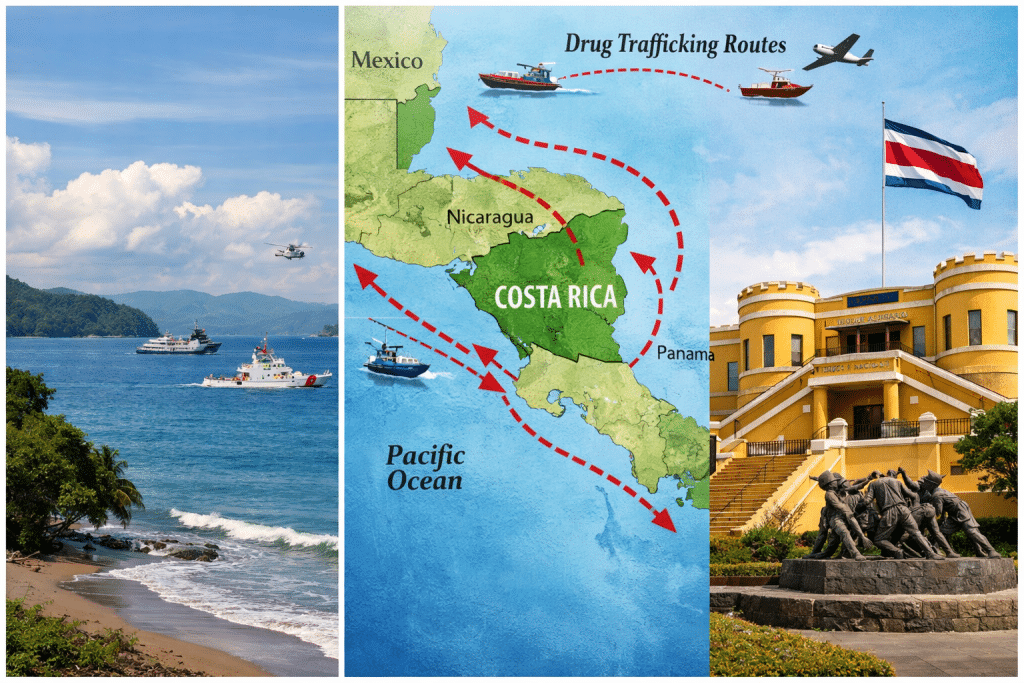
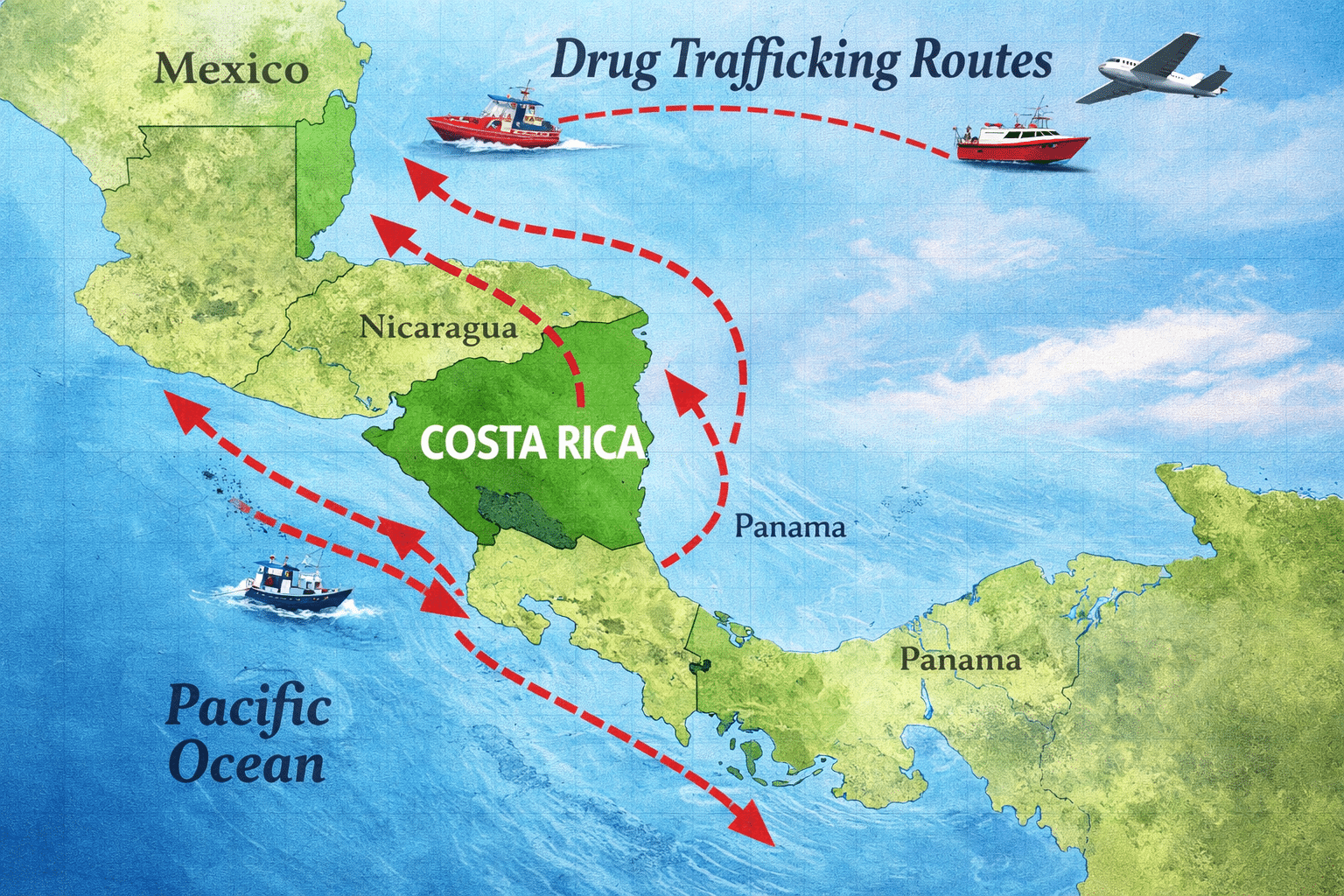
Supporters of close cooperation with the United States argue that Costa Rica faces a real and growing threat from transnational organised crime. Drug-trafficking routes through the eastern Pacific have expanded, criminal networks have become more sophisticated, and Costa Rica’s own institutions have shown vulnerabilities. In February 2026, local reporting detailed a corruption scandal tied to Costa Rica’s Coast Guard, underscoring how deeply trafficking networks can penetrate security structures. From this perspective, foreign operational support is not a surrender of sovereignty but a practical response to a regional criminal economy that no single country can manage alone. (Tico Times)
That argument has political backing. Costa Rica’s Legislative Assembly approved the entry of up to 195 U.S. Coast Guard vessels into national ports for 2026 anti-drug operations, continuing a framework of cooperation that has existed for years in different forms. Proponents see this as lawful, transparent and necessary. They argue that the country is not building an army, but strengthening police and maritime enforcement through partnerships aimed at interdiction. (Tico Times)
Critics, however, see something more troubling. They ask whether repeated authorisations for foreign armed presence, paired with lethal force in waters linked to Costa Rica’s territory and security agenda, amount to a gradual militarisation by proxy. Costa Rica may not be rearming itself, but the visible reliance on foreign force raises questions about who sets the terms, who bears the consequences and where decision-making power truly lies. (AP News)
This is where the sovereignty debate becomes sharper. Formally, Costa Rica remains a sovereign state that authorises cooperation through legal and political channels. Yet sovereignty is not only a matter of paperwork. It is also a matter of control, perception and accountability. When foreign forces carry out lethal operations linked to Costa Rica’s anti-drug environment, many citizens will naturally ask whether cooperation is still on Costa Rica’s terms, or whether national security priorities are being absorbed into Washington’s wider regional strategy. (southcom.mil)
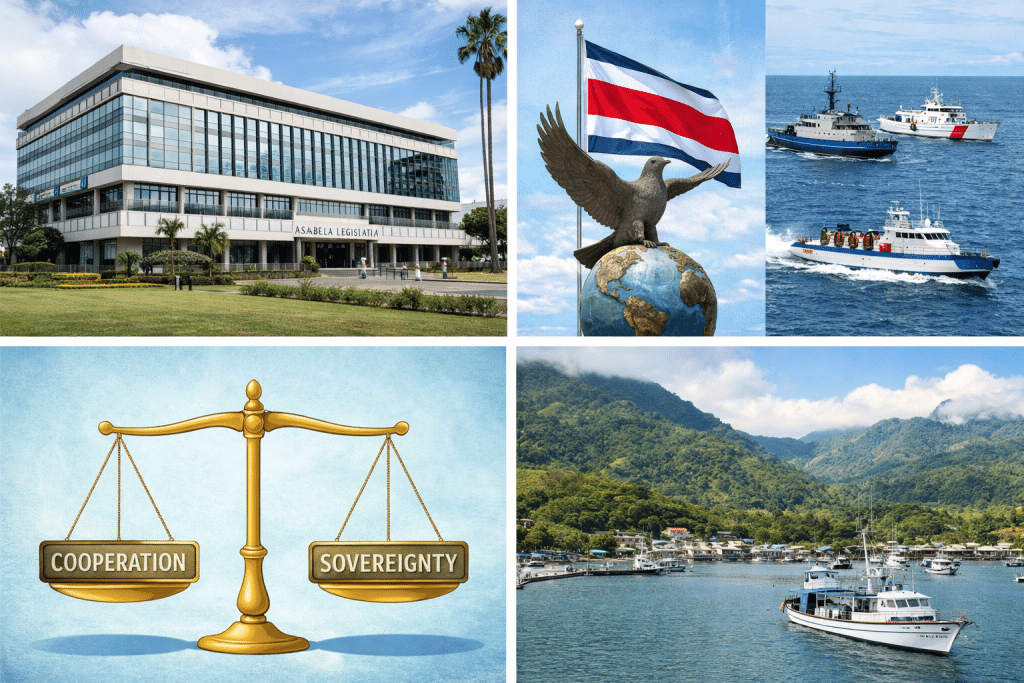
There is also a symbolic contradiction that cannot be ignored. Costa Rica’s no-army identity has always been more than a constitutional clause. It is part of the country’s moral authority abroad and its civic self-image at home. When anti-drug cooperation starts to resemble wartime language and tactics, that identity comes under pressure. The issue is not whether Costa Rica should combat organised crime. Few would dispute that need. The issue is whether the methods now being used fit the values the country claims to defend. (UNESCO)
A neutral reading of the moment suggests that both realities can be true at once. Costa Rica faces legitimate security threats that demand international coordination. At the same time, those partnerships can blur the line between assistance and dependency if they are not publicly debated, tightly limited and democratically supervised. The real test is not whether Costa Rica works with the United States. It is whether Costa Rica can do so without hollowing out the civilian, peaceful identity that has distinguished it for generations. (State.gov)
That is the question now hanging over the country’s coastline: not simply how to stop drug trafficking, but how to do it without becoming something Costa Rica has long insisted it is not.
#howlermag #howlermagazine
FAQ
What happened off Costa Rica’s coast?
In March 2026, a U.S. operation targeted a suspected drug-smuggling vessel in the eastern Pacific near Costa Rica, leaving two people dead and one critically injured, according to Costa Rican authorities and U.S. Southern Command. (AP News)
Does Costa Rica have an army?
No permanent army. Article 12 of Costa Rica’s Constitution outlawed it as a permanent institution, which is central to the country’s peace-based identity. (Constitute Project)
Why does Costa Rica cooperate with the U.S. on anti-drug operations?
Because trafficking routes through the Pacific are regional and highly organised. Costa Rica has relied on international cooperation, especially maritime support, to strengthen interdiction efforts. (State.gov)
Why are people worried about sovereignty?
The concern is that foreign security operations, especially lethal ones, may push Costa Rica toward militarisation through partnership, even without re-establishing its own army. (AP News)Is this legally authorised?
Costa Rica has continued to authorise U.S. Coast Guard access for joint anti-drug operations through legislative approval, but the broader political and ethical debate remains active. (Tico Times)