

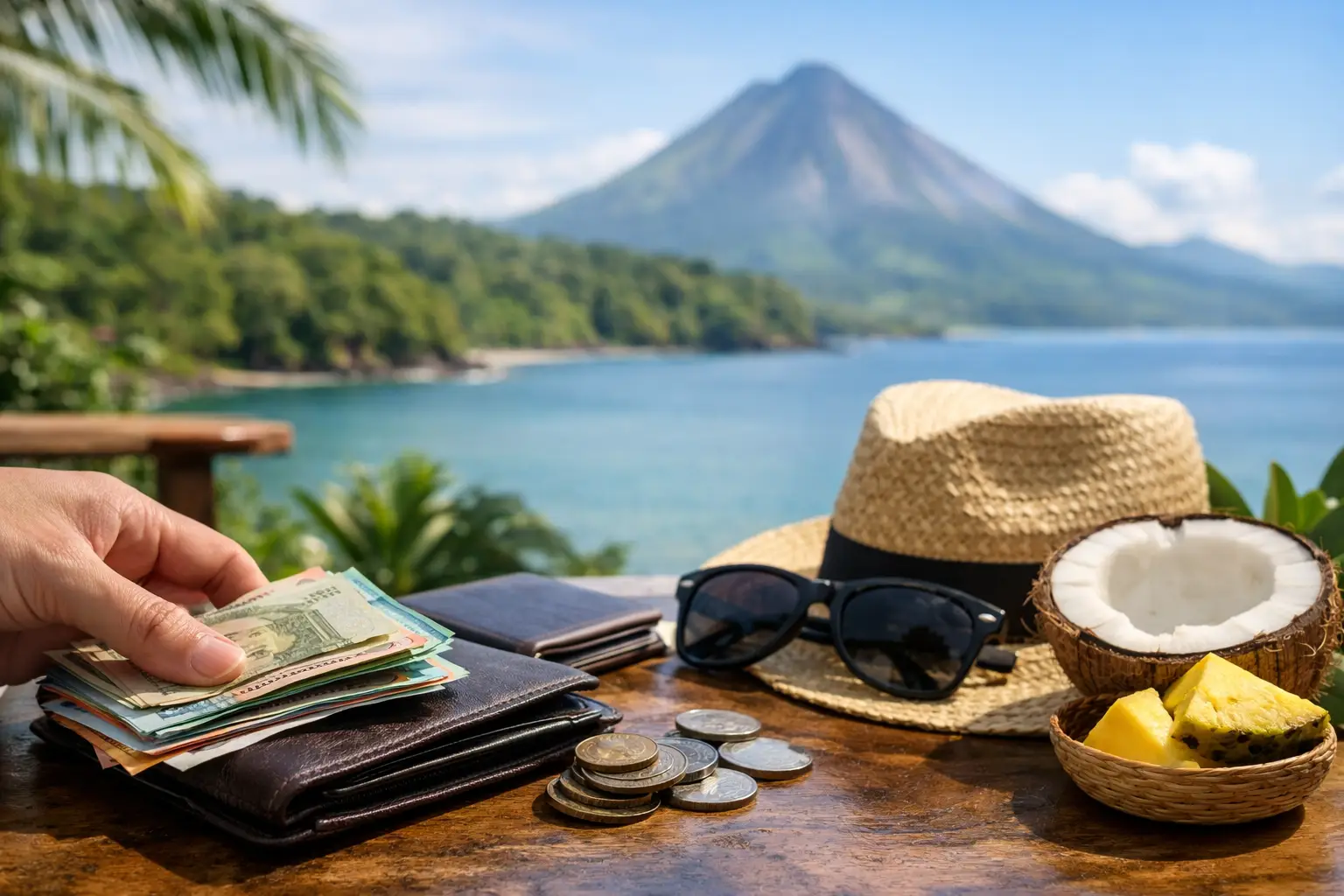
You are standing in a beach town at sunset, your sandals dusty from a long walk, your phone signal fading, and the server smiles kindly when you ask to pay by card. Then comes the phrase many travelers remember: cash only. So, do I need cash in Costa Rica? Yes – but probably not as much as you think.
Costa Rica sits in that very practical middle ground where modern banking and old-school daily life share the same table. In San Jose, upscale restaurants, grocery chains, pharmacies, hotels, and many tour operators happily take cards. In a mountain village, at a roadside fruit stand, in a small soda, for parking, tips, bus fare, or a quick coconut on the beach, cash can still save the day. The trick is not choosing one or the other. The trick is knowing when each makes sense.
Do I Need Cash in Costa Rica for Everyday Travel?
For most visitors, cards will handle a large part of the trip. Credit cards are widely accepted in tourist areas, especially Visa and Mastercard. You can usually pay for hotels, rental cars, larger restaurants, supermarkets, and many activities without much drama. If your Costa Rica plan includes established destinations, boutique hotels, and organized excursions, you may go several transactions in a row without touching your wallet’s cash pocket.
But Costa Rica is also a country of spontaneous moments. You stop for empanadas from a tiny bakery. You buy mangoes from a roadside stand. You pay an unofficial parking attendant near a popular beach. You leave a small tip for someone who helped with your bags. These are the places where cash remains part of the rhythm of the day.
That is why the better question is not whether you need cash, but how much cash you should carry and where you are likely to use it.
Where Cash Still Matters
Costa Rica’s tourism infrastructure is strong, but it is not uniform. The farther you move from polished tourism corridors, the more likely cash becomes useful. Small family-run businesses often accept cards, but not always. Sometimes the machine is down. Sometimes the internet is weak. Sometimes there is a minimum purchase. Sometimes the answer is simply, not today.
Local buses are one of the clearest examples. If you are using public transportation, cash is often essential. Small taxis may also prefer cash, although ride apps and larger transport services can be more flexible in certain areas. Beach vendors, farmers markets, toll booths, and tiny rural shops are other places where bills and coins still do quiet, reliable work.
Even in places where cards are accepted, cash can smooth over small interactions. A modest tip for housekeeping, a contribution to a local guide, or a bottle of water at a roadside stop is easier with small denominations than with a card and a hopeful smile.
Small towns, sodas, and spontaneous stops
Some of the best Costa Rica moments do not happen in glossy settings. They happen in a roadside soda with the ceiling fan turning slowly overhead, where lunch arrives on a simple plate and the bill is refreshingly low. Many of these places do take cards now, but not all. If you are exploring rural Guanacaste, the Nicoya Peninsula, the Osa region, mountain towns, or lesser-known surf villages, carrying some cash feels less like caution and more like common sense.
When card systems fail
This is the part many travelers overlook. Even businesses that normally accept cards depend on electricity, internet, and functioning terminals. Heavy rain, remote geography, and technical glitches can interrupt that system. Costa Rica is modern, but it is also tropical, mountainous, and occasionally unpredictable. A backup stash of cash can turn a frustrating delay into a non-event.
Colones or US Dollars?
Costa Rica’s local currency is the colon, and for most everyday purchases, colones are the easiest option. Prices in local shops, buses, markets, and many restaurants are often listed in colones. Paying in local currency usually makes transactions cleaner and helps avoid fuzzy exchange math at the counter.
US dollars are widely recognized in many tourist areas, especially for hotels, tours, shuttles, and some larger purchases. But that does not mean dollars are always the best tool. If you pay in dollars, your change may come back in colones, and the exchange rate used may not be the one you had in mind. Small bills in US currency can be handy, but relying on dollars for everything usually creates more friction than convenience.
A simple approach works best: use colones for day-to-day spending and keep a small amount of US dollars only if it makes you feel prepared.
How Much Cash Should You Carry?
This depends on how you travel. If you are staying in full-service hotels, using private transportation, and booking most things in advance, you may only need enough cash for tips, snacks, and small purchases. If you prefer local buses, small guesthouses, roadside meals, and off-the-map adventures, you will want more breathing room.
Most travelers do well carrying the equivalent of roughly $40 to $100 in colones for daily flexibility, then replenishing as needed. You do not need to walk around with a thick wad of bills. In fact, you should not. Carry what you are likely to use in a day, keep a little extra secured separately, and leave the rest in a hotel safe or another secure place if available.
Small bills matter. Handing over a large note for a tiny purchase is not always appreciated, and in some places, change can be limited.
ATMs, Banks, and Fees
ATMs are easy to find in cities, airports, and most major tourist towns. They are the simplest way to get colones once you arrive. Many machines also offer US dollars, though colones are generally more practical. If your bank reimburses international ATM fees, even better. If not, try to make fewer, larger withdrawals rather than several small ones.
Use ATMs attached to banks or in secure, well-lit places. That advice is not unique to Costa Rica, but it is worth following. Notify your bank before travel, bring at least two payment methods, and do not assume your favorite card will work everywhere.
One thing that catches some visitors off guard is dynamic currency conversion. If an ATM or payment terminal asks whether you want to be charged in US dollars or in colones, choosing colones is often the better move. Your own bank usually gives a fairer exchange rate than the machine offering to “help.”
Using Cards in Costa Rica
Cards are convenient, but they come with their own fine print. Some small businesses add a processing fee, though this is not universal. Some places have minimum amounts for card payments. American Express is less widely accepted than Visa or Mastercard. Contactless payment is becoming more common, particularly in urban areas, but you should not count on your phone replacing your wallet in every corner of the country.
If you are renting a car, booking lodging, or reserving excursions, a credit card is often more useful than debit. It offers stronger consumer protections and is commonly required for deposits. For daily spending, though, a debit card plus a credit card plus some cash is often the most balanced setup.
A quick word on tipping
Costa Rica often includes a 10 percent service charge in restaurant bills, so tipping is not exactly the same dance travelers may know from the United States. That said, extra cash tips for excellent service are appreciated, especially by guides, drivers, housekeeping staff, and others in hospitality. Cash is the cleanest way to make sure it reaches the right hands.
So, Do I Need Cash in Costa Rica or Not?
Yes, you do need some cash in Costa Rica, but not for every transaction and not in huge amounts. Think of cash here as your travel buffer. It covers the beautiful in-between spaces of the trip – the unscripted snack stop, the beach parking fee, the village café, the moment when technology shrugs and takes a break.
Costa Rica rewards travelers who stay flexible. Bring cards for the big pieces. Carry colones for the small ones. Respect the fact that this is a country where world-class resorts and roadside casados belong to the same landscape, and both are part of the experience.
The smartest wallet in Costa Rica is not the fullest one. It is the one ready for both the boutique hotel check-in and the fresh pineapple bought from the back of a pickup truck on a sunny afternoon.
FAQ’S
Do I need cash in Costa Rica?
Yes. You need some cash in Costa Rica for small purchases, tips, local buses, roadside food, parking, rural shops, and places where card machines may not work.
Can I use credit cards in Costa Rica?
Yes. Credit cards, especially Visa and Mastercard, are widely accepted in tourist areas, hotels, supermarkets, larger restaurants, rental car companies, and many tour businesses.
Should I bring US dollars or colones to Costa Rica?
Colones are best for everyday purchases. US dollars are accepted in many tourist areas, but using colones is usually easier for small transactions and local businesses.
How much cash should I carry in Costa Rica?
Most travellers do well carrying the equivalent of about $40 to $100 in colones per day for small purchases, tips, food stops, and backup payments.
Are ATMs available in Costa Rica?
Yes. ATMs are common in cities, airports, and major tourist destinations. Use bank-affiliated ATMs in secure locations whenever possible.
Do local buses in Costa Rica take cards?
Local buses often require cash, so travellers using public transportation should carry colones in small denominations.
Is tipping expected in Costa Rica?
Restaurants often include a 10% service charge, but extra cash tips are appreciated for excellent service, especially for guides, drivers, housekeeping, and hospitality workers.
Is American Express accepted in Costa Rica?
American Express is accepted in some places, but it is less common than Visa and Mastercard. Travellers should not rely on it as their only card.
What happens if a card machine does not work in Costa Rica?
If a card machine fails because of weak internet, power issues, or technical problems, cash becomes the easiest backup. Carrying some colones helps avoid delays.
What is the best payment strategy for Costa Rica?
Use cards for hotels, restaurants, tours, rental cars, and supermarkets, but carry colones for small purchases, local stops, tips, buses, and rural travel.