
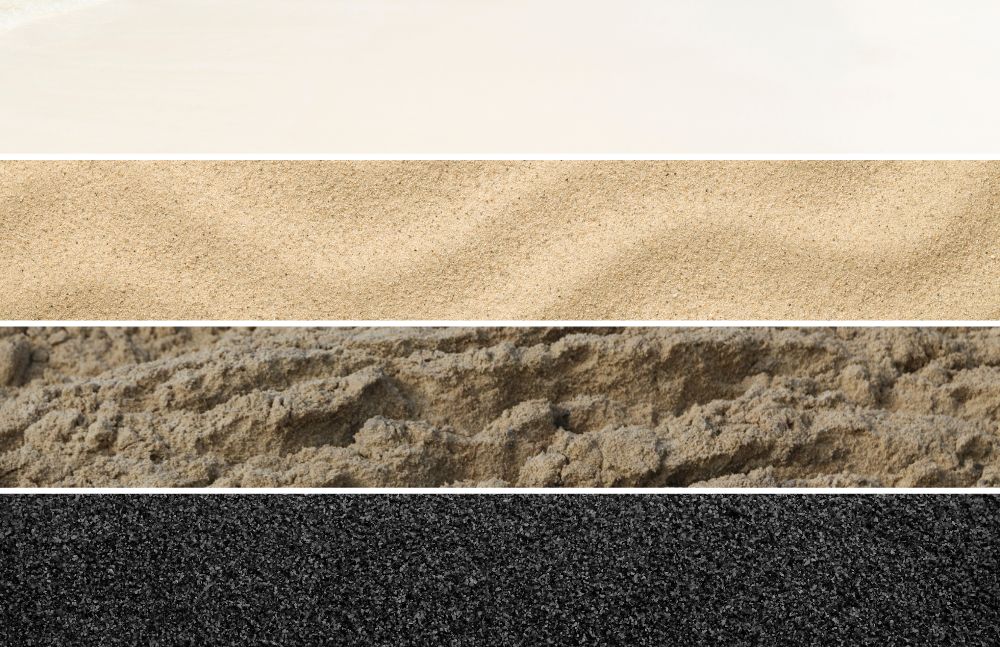
You may wonder as you see the many beaches here in Costa Rica what causes the many different colors of sand. Here is a great explanation of the differences.
The color of sand on Costa Rica’s beaches, as well as on beaches around the world, is primarily influenced by the geological composition of the surrounding land and the processes that have shaped the landscape over time. Several factors contribute to the different colors of sand found on Costa Rican beaches:
- Mineral Content: The mineral composition of the rocks in the nearby mountainous areas affects the color of the sand. For example, volcanic activity in Costa Rica has contributed to the presence of dark-colored volcanic rocks like basalt, which can create black or dark-colored sand when eroded and broken down over time.
- Coral Reefs and Marine Life: Coastal areas with coral reefs can have white sandy beaches. The white sand comes from the remains of tiny organisms like coral, mollusks, and foraminifera, which have calcium carbonate skeletons. When these organisms die, their remains contribute to the formation of the fine white sand found on some beaches.
- Weathering and Erosion: Over time, rocks and minerals are broken down by various natural processes, including weathering (such as wind and water erosion), which can lead to the formation of different-sized particles. Different minerals and rocks will erode at different rates, leading to varied colors of sand on the beaches.
- Location and Geography: The location of the beach and its geographical features can also influence the sand color. Beaches near cliffs or rocky areas may have different-colored sand due to the presence of distinct rock formations.
- Human Influence: While natural factors are the primary drivers of sand color, human activities can also contribute to beach sand coloration. Pollution, construction, and coastal development can introduce human-made materials and alter the natural color of the sand.
In Costa Rica, you can find a variety of sand colors, ranging from white to golden, black, and even reddish tones, depending on the specific geological makeup of the region and the processes that have occurred over time. The diverse landscapes of the country, including volcanic regions, coastal areas with coral reefs, and different types of rocks, contribute to the array of sand colors found on its beaches.BLACK
- Playa Negra, Guanacaste
- Playa Montezuma, Nicoya Peninsula.
- Playa Hermosa, Jaco
- Playa Matapalos, Northern Puntarenas
- Playa Pavones, Southern Puntarenas
- Playa Negra, Limón
WHITE