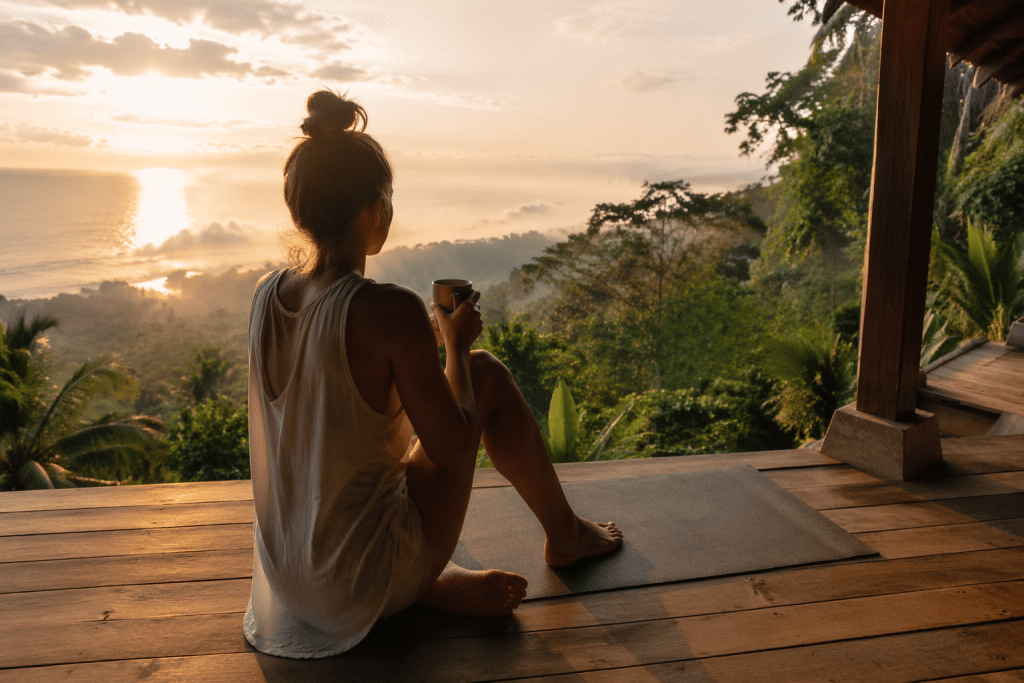

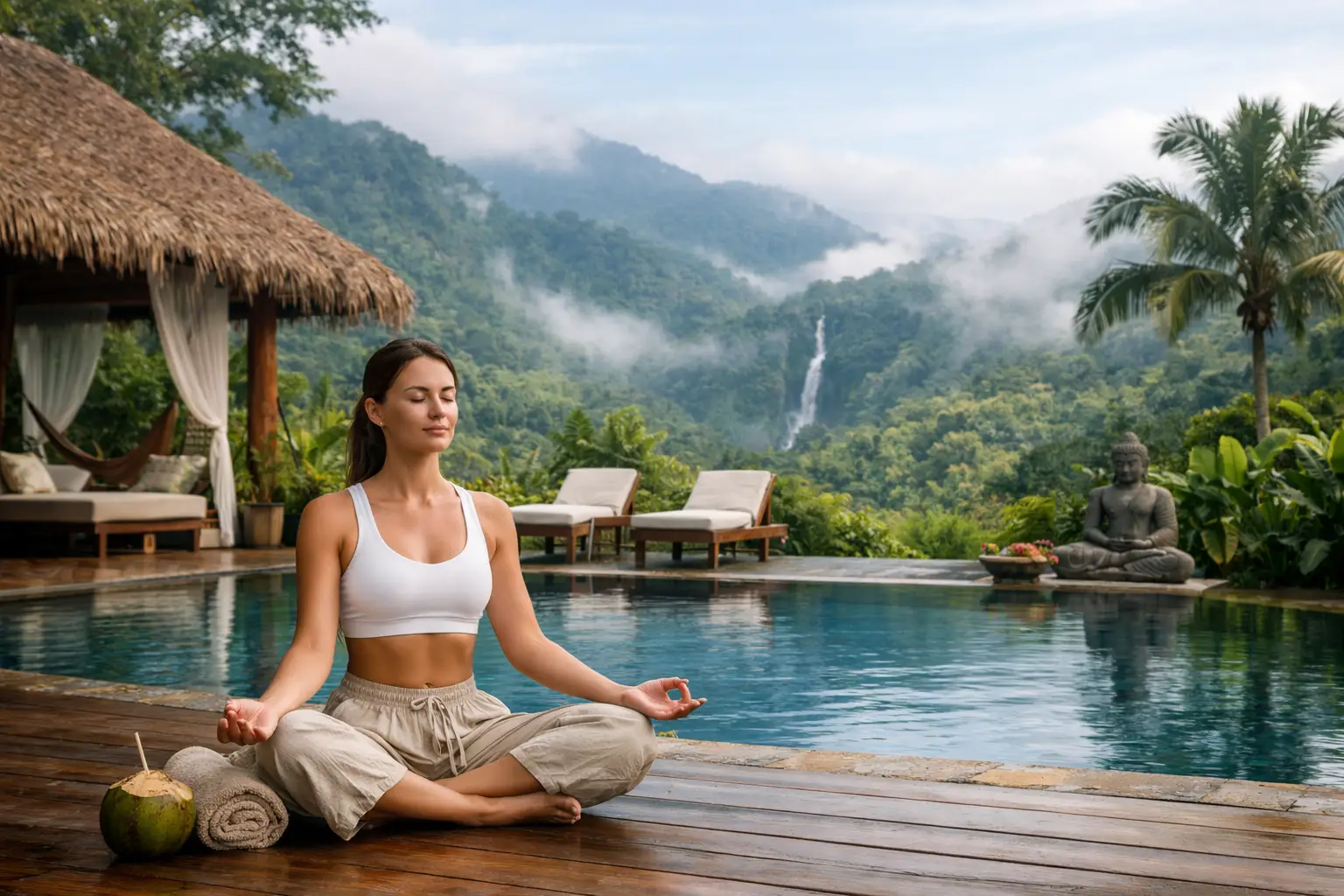
The fastest way to waste money on a retreat in Costa Rica is to book the prettiest place you see on social media. A strong Costa Rica wellness retreat guide starts somewhere less glamorous – with the honest question of what you need when you get here. Rest is different from healing. Healing is different from fitness. And a week of sunrise yoga near the beach may be exactly right for one traveler and completely wrong for another.
Costa Rica earns its reputation as a wellness destination for reasons that go well beyond marketing. The country gives retreat planners a rare mix of biological richness, warm water, mountain air, fresh food, and a culture that generally values outdoor living and human connection. But not every retreat delivers the same experience, and not every region feels the same once you arrive. The real art is matching your intention to the right place.
How to use this Costa Rica wellness retreat guide
Think of Costa Rica as several wellness destinations in one. The Pacific coast offers surf, sunsets, salt air, and a laid-back social rhythm. The mountains offer cooler temperatures, cloud forest stillness, and a sense of removal that can make deeper rest easier. The rainforest and jungle zones feel immersive and sensory, which some travelers find transformative and others find overstimulating.
Before comparing properties, decide what kind of reset you are seeking. If you want movement and energy, a retreat near Santa Teresa, Nosara, Dominical, or Tamarindo may suit you. If you want quiet, reflective time, inland areas around the Central Valley, Atenas, or mountain communities may feel more restorative. If your goal is emotional healing, trauma-informed support, or serious therapeutic work, the setting matters less than the qualifications and ethics of the facilitators.
That distinction is where many retreat searches go off course. Costa Rica is rich in beauty, but beauty is not a credential.
Choose the retreat by outcome, not by trend
Wellness has become a broad umbrella. Some retreats are essentially luxury vacations with yoga on the schedule. Others are structured programs with bodywork, nutrition planning, mindfulness practice, and strong professional guidance. Neither is automatically better. It depends on what you are asking the experience to do.
If you are burned out from work and decision fatigue, simplicity matters more than intensity. Look for a retreat with spacious scheduling, comfortable rooms, nourishing meals, and easy access to nature. The best version of wellness for you may be fewer inputs, not more programming.
If you are looking for physical renewal, examine the balance between activity and recovery. Surf and fitness retreats can be exhilarating in Costa Rica, especially along the Pacific, but they can also leave you exhausted if the heat, travel logistics, and daily schedule are more demanding than expected. A strong retreat should build in downtime, hydration support, and realistic options for different fitness levels.
If your focus is inner work, ask harder questions. Who leads the sessions? What training do they have? Is there psychological safety? Are there clear boundaries, health screening, and informed consent practices? Costa Rica attracts serious wellness professionals, but it also attracts people who are good at branding themselves. In this category, discernment matters.
Regions that shape the experience
A costa rica wellness retreat guide would be incomplete without geography, because location changes the entire emotional tone of a stay.
Nosara is often associated with polished yoga culture, healthy food, and a wellness scene that is well established and internationally fluent. It can be a strong fit for travelers who want retreat structure with comfort and community. It can also feel expensive and socially visible, which is not ideal if you want privacy or a less curated atmosphere.
Santa Teresa has a magnetic, youthful energy built around surf, movement, style, and ocean living. Many visitors love that mix. Others find it less restful than expected because roads can be rough, logistics can take time, and the social scene can be lively. If your version of wellness includes excellent classes, beautiful beaches, and a fashionable edge, it delivers. If you want early nights and deep quiet, maybe not.
Dominical and Uvita tend to feel greener, looser, and a little less performative. This part of the southern Pacific offers jungle-meets-ocean intensity and a strong draw for travelers seeking nature immersion, alternative healing spaces, and a slower pace. It can feel deeply restorative, though weather and humidity are part of the package.
The Arenal and mountain regions offer a different kind of reset. Cool mornings, volcano views, thermal waters, and forest landscapes can be ideal for travelers who want nervous system relief without the salt-and-sun intensity of the coast. For some people, especially first-time visitors who are sensitive to heat, this is the smartest place to begin.
The Nicoya Peninsula carries one of Costa Rica’s strongest wellness reputations, not just because of resorts and retreats, but because of lifestyle. It is one of the world’s Blue Zones, and that idea still shapes how many travelers perceive the region – healthy food, active living, sun, community, and a certain unhurried rhythm. That reputation is meaningful, but it should not be romanticized. Blue Zone wisdom is rooted in local life, not luxury branding.
What good retreat planning looks like
A well-run retreat is clear before you ever board a flight. The schedule should be easy to understand. The accommodation should be honestly described. Transportation details should be specific, especially if the property is remote. You should know whether meals are included, whether dietary needs are truly supported, and whether the program has optional versus mandatory activities.
Watch for vague promises. Words like transformation, detox, and healing can mean almost anything. Ask what a typical day looks like. Ask how much free time you will have. Ask whether there is Wi-Fi if you need to stay lightly connected for work or family. Ask about heat, insects, walking distances, and accessibility. Costa Rica is beautiful, but beauty often comes with stairs, gravel paths, humidity, and wildlife.
That is not a downside. It is simply part of being in a real place instead of a sealed resort bubble.
Budget, luxury, and what you are actually paying for
Costa Rica has wellness options across a wide range of price points, but retreat pricing is not always intuitive. A higher rate may reflect expert facilitation, quality food, small group size, and thoughtful design. Or it may reflect branding, imported aesthetics, and a premium zip code. A lower rate may be a great value, or it may come with hidden transportation costs and a thin program.
The smartest way to read pricing is to separate the experience into parts. What are you paying for in lodging quality, food quality, instruction, treatments, excursions, and logistics support? Once you do that, comparisons become easier.
For travelers coming from the US or Canada, Costa Rica can feel either surprisingly accessible or surprisingly expensive, depending on where you stay and how much is included. Wellness travelers often do best when they budget for fewer extras and choose a retreat that already covers the core pieces well. Constant add-ons can make a supposedly restorative trip feel transactional.
Seasons matter more than many first-timers expect
Green season and dry season create different retreat experiences. Dry season usually brings easier beach access, more predictable sunshine, and higher demand. It also tends to mean higher prices and a busier atmosphere in popular areas.
Green season can be excellent for wellness travel if you do not mind some rain. The landscapes are lush, the pace can feel softer, and there is often a greater sense of intimacy. Afternoon storms can actually support a retreat rhythm, encouraging slower lunches, naps, journaling, and early evenings. The trade-off is that transportation can be trickier and outdoor schedules may need flexibility.
This is where a seasoned Costa Rica publisher like Howler Media has long offered value to readers – not by selling fantasy, but by helping travelers understand the country on its own terms.
The cultural piece travelers should not skip
A retreat in Costa Rica is not just a wellness product. It happens within communities, ecosystems, and a national culture with its own cadence and values. The most meaningful retreat experiences usually respect that. They source food locally when possible, employ local staff fairly, and give guests a sense of place rather than isolating them from it.
That does not mean every retreat needs to feel rustic or intensely local. Comfort is not the enemy of authenticity. But there is a difference between being held by Costa Rica and merely using it as a backdrop. Travelers feel that difference, even when they cannot immediately explain it.
If you care about sustainability, ask practical questions. How does the property handle water use, waste, and energy? How does it relate to the surrounding community? In a country celebrated for biodiversity and conservation, those questions are not side notes. They are part of the wellness conversation.
Who Costa Rica is best for
Costa Rica works especially well for travelers who want nature to be part of the treatment plan. If your body relaxes when you hear birds at dawn, if you think better after a walk in humid air, if fresh fruit and ocean time genuinely change your mood, the country has a lot to offer.
It may be less ideal if you want urban convenience, tightly controlled luxury, or a highly medicalized wellness experience. Even top-tier retreats here still operate within a tropical environment where roads, rain, wildlife, and geography shape the day. For many people, that is the point. For others, it is a reason to choose carefully.
The best retreat is not the one with the most striking photos. It is the one that lets you return home feeling more like yourself, and a little more connected to the remarkable country that hosted the process.
FAQ
What is a Costa Rica wellness retreat?
A Costa Rica wellness retreat is a travel experience designed to support rest, healing, fitness or renewal in a natural setting.
Why is Costa Rica good for wellness retreats?
Costa Rica is good for wellness retreats because it combines beaches, mountains, forests, fresh food and a naturally outdoor lifestyle.
Which area of Costa Rica is best for a wellness retreat?
The best area depends on your goal, with beach towns suited to yoga and movement and mountain regions better for quiet rest.
Is Costa Rica good for solo wellness travellers?
Yes, Costa Rica is a strong destination for solo wellness travellers because many retreats are welcoming, safe and community-friendly.
Are Costa Rica wellness retreats expensive?
Some are expensive, but costs vary widely depending on location, comfort level, meals, facilitation and what is included.
What should I check before booking a wellness retreat in Costa Rica?
You should check the schedule, facilitator qualifications, transport, accommodation, meals, free time and environmental realities of the location.
Is a beach or mountain retreat better in Costa Rica?
A beach retreat is better for energy and movement, while a mountain retreat is often better for cooler weather and deeper calm.
When is the best time to go on a wellness retreat in Costa Rica?
Dry season offers easier logistics and more sunshine, while green season offers lush scenery and a softer, quieter rhythm.
Are retreat leaders in Costa Rica always qualified?
No, qualifications vary, so it is important to ask about training, experience and safety practices before booking.
Can I find luxury wellness retreats in Costa Rica?
Yes, Costa Rica offers luxury wellness retreats, mid-range options and simpler retreats depending on the region and style.
Do retreats in Costa Rica usually include healthy food?
Most do, and many focus on fresh produce, nourishing meals and flexible dietary support.
How long should a Costa Rica wellness retreat be?
Five to seven days is often enough to settle in properly, though shorter and longer retreats can both work well.