
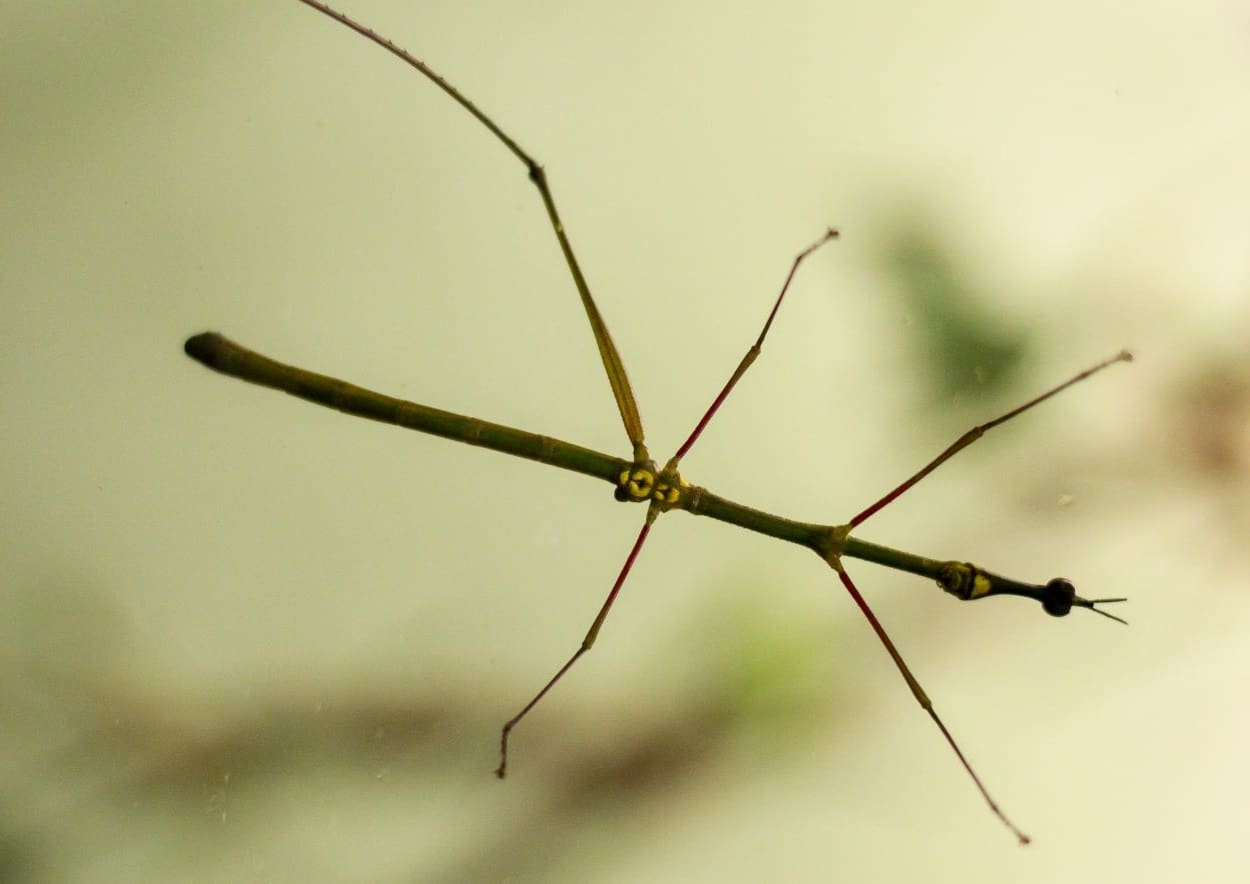
Stick bugs or walking sticks, are among the most remarkable creatures in Costa Rica’s diverse ecosystem, epitomizing nature’s ingenuity in camouflage and adaptation. These insects, belonging to the Phasmatodea order, are masters of disguise, seamlessly blending into their surroundings. This ability is not just a marvel to behold but plays a crucial role in the broader ecological tapestry.
The Art of Camouflage
Stick bugs have evolved to mimic the appearance of sticks and leaves so perfectly that even a keen eye might miss them perched on a tree or shrub. This camouflage serves as their primary defense mechanism against predators. Some species even have the ability to sway in the breeze, mimicking vegetation’s movements. The level of detail in their mimicry, including the imitation of moss or lichen on bark, is astounding and highlights the complexity of evolutionary adaptations.
Contribution to the Ecosystem
In the grand scheme of the ecosystem, stick bugs play a vital role. Firstly, they act as a food source for various birds, reptiles, and mammals. Their presence, therefore, supports the food web, contributing to its stability. Additionally, as herbivores, stick bugs aid in plant pruning, which can stimulate new plant growth and contribute to the health of the forest. This seemingly small role underscores the interconnectedness of ecosystems, where every organism, no matter how small, has its place and importance.
Ecological Indicators
Stick bugs are also valuable as indicators of environmental health. A rich and diverse population of stick bugs signifies a healthy, undisturbed habitat. Conversely, their absence or decline can signal environmental issues like habitat loss or pollution. Monitoring their population can provide essential clues about the health of an ecosystem.
Respecting and Protecting Stick Bugs
In Costa Rica, as in other parts of the world, it is crucial to respect these incredible creatures. Killing or disturbing them not only disrupts the delicate balance of the ecosystem but also robs us of the opportunity to learn from their extraordinary adaptations. Eco-tourism, when practiced responsibly, can play a significant role in their conservation by raising awareness and generating funds for habitat protection.
The stick bug is a silent but significant contributor to Costa Rica’s rich biodiversity. Its ability to camouflage is a fascinating example of nature’s ingenuity. More importantly, it serves as a reminder of the intricate connections within ecosystems and the importance of every creature, no matter how small or seemingly insignificant. As we marvel at these creatures, let us also commit to their protection and the preservation of the environment they call home.
Remember, next time you’re in the forests of Costa Rica, keep an eye out for these masterful mimics. You might just be lucky enough to spot one!
—
This fascinating look into the world of Costa Rica’s stick bugs reminds us to cherish and protect all forms of life, no matter how small. For more intriguing stories and insights about Costa Rica’s wildlife and nature, stay connected with #howlermag and #howlermagazine. Let’s celebrate and preserve the wonders of our natural world together.