

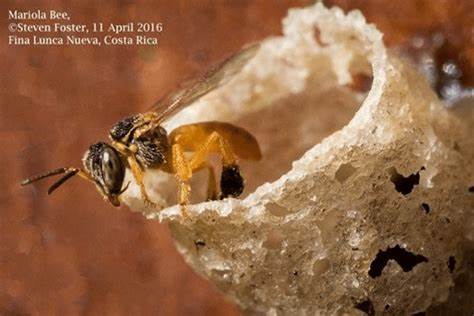
As the sun peeks through the lush greenery of Costa Rica, a buzz of activity unfolds in the most serene and unexpected way. We’re talking about the Mariola stingerless bees, a delightful and remarkable species native to this vibrant land. Known for their gentleness and the uniquely medicinal honey they produce, these bees are more than just tiny winged creatures; they’re integral to the natural harmony and health of the environment.
First things first, let’s address the elephant in the room – or rather, the bee without the sting. Yes, the Mariola bees are indeed stingerless! This fascinating trait makes them a friendly neighbor in the rich tapestry of Costa Rican wildlife. Unlike their more aggressive cousins, these bees are known for their peaceful demeanor, allowing nature enthusiasts, gardeners, and even casual observers to watch them up close without fear.
But their stingless nature is just the tip of the iceberg. The Mariola bees are renowned for their production of a special kind of honey, one that’s not just sweet but packed with medicinal properties. This honey, often referred to as ‘green gold,’ is a treasure trove of benefits. It’s believed to possess anti-inflammatory and antibacterial qualities, making it not only a delightful treat but also a natural remedy for various ailments.
The charm of these bees extends beyond their honey-making prowess. They are vital pollinators, playing a crucial role in the health of the ecosystem. By fluttering from flower to flower, they ensure the continuation of many plant species, some of which are unique to the Costa Rican landscape. In a world where the importance of biodiversity is ever-increasing, the role of the Mariola bees cannot be overstated.
But perhaps what’s most captivating about these creatures is the sense of tranquility they bring to their surroundings. Observing these diligent bees at work is a surprisingly calming experience. The gentle hum of their wings and the sight of them flitting about in a dance of productivity and purpose is a reminder of nature’s intricate beauty and efficiency.
For those in Costa Rica, the presence of Mariola bees is a blessing that enriches the environment and provides a unique connection to nature. Whether you’re a seasoned bee enthusiast or a curious observer, the experience of being near these gentle pollinators is something truly special.
In a world where the buzz is often about speed and noise, the Mariola stingerless bees of Costa Rica invite us to slow down, observe, and appreciate the quieter, gentler rhythms of nature. They remind us that sometimes the most fascinating aspects of our world are not the loudest or the most obvious, but those that hum softly in the background, crucial and captivating in their unique way.
See these amazing Bees at JyG Furniture and Coffee Gifts in Huacas, Guanacaste. They are truly amazing and you can get your own hives and produce your own honey here. website with location here: www.coffeegiftscostarica.com
#howlermag #howlermagazine