

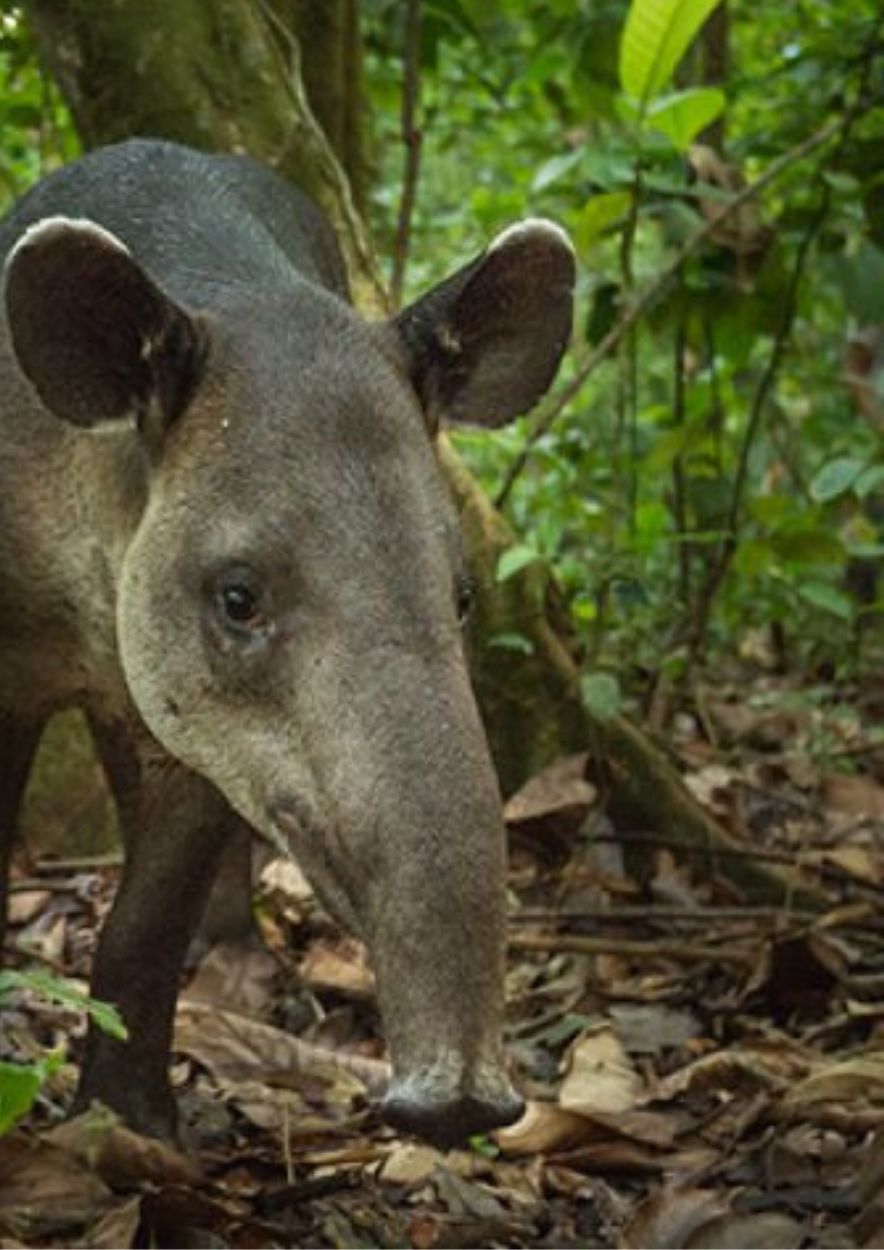
The Baird’s tapir—Costa Rica’s very own jungle mascot. These lumbering and somewhat adorably awkward creatures might not win a beauty contest against jaguars or toucans, but they hold a special charm that’s hard to resist. One of Central America’s largest land mammals, Baird’s tapirs weigh between 500 to 800 pounds and sport a long, snout-like proboscis that’s a mix between an anteater and an elephant. Despite their imposing size, they’re experts at remaining elusive, preferring the quieter life that comes with avoiding human interaction.
You can find Baird’s tapirs in fragmented populations stretching from southern Mexico to Colombia, but they have a special place in the heart of Costa Rica. They’re highly adaptable creatures that feel at home in various ecosystems, from lowland wet forests to high-altitude mountainous regions. Some of the best places to spot them include Corcovado National Park, La Amistad International Park, and Tortuguero National Park. However, it’s not just about where you can see them; it’s also about what they do. Known as “gardeners of the forest,” these tapirs are crucial for their ecosystems. They eat a variety of plants and fruits, dispersing seeds through their droppings, which in turn helps with forest regeneration and biodiversity.
But here’s the catch: These charming animals are pretty hard to find. They’re nocturnal and quite shy, so if you’re planning to go tapir-watching, you’ll need a mix of luck and local knowledge. Guided tours in any of the aforementioned parks are your best bet. Preferably go on tours that last a couple of days and nights to maximize your chances of spotting one of these elusive animals. Unfortunately, Baird’s tapir is on the endangered list, largely due to deforestation, habitat fragmentation, and poaching. The good news is that Costa Rica is making strides in conservation efforts. Through strict anti-poaching laws and eco-tourism, the country is actively engaged in preserving this unique creature.
So, the next time you’re trekking through the Costa Rican jungles, keep an eye out. The Baird’s tapir is not just an adorable oddity; it’s a cornerstone of its environment. And if you happen to spot one, consider yourself doubly lucky—not just for the rare sighting but also for witnessing one of the guardians of Costa Rica’s lush and diverse landscapes.
So you ask, where did this Tapir get its name? “Baird’s Tapir”
The Baird’s tapir is named after the American naturalist Spencer Fullerton Baird. Baird was a 19th-century zoologist and the Secretary of the Smithsonian Institution. He was a significant figure in the world of American science and made numerous contributions to the study of natural history. Naming the tapir after him is a nod to his influence and dedication to the field of zoology. Spencer Baird had a broad interest in North American fauna, and his work paved the way for many future studies in the natural sciences. Given his contributions, it’s fitting that this unique and essential creature carries the name of someone who was so instrumental in broadening our understanding of the animal kingdom.