
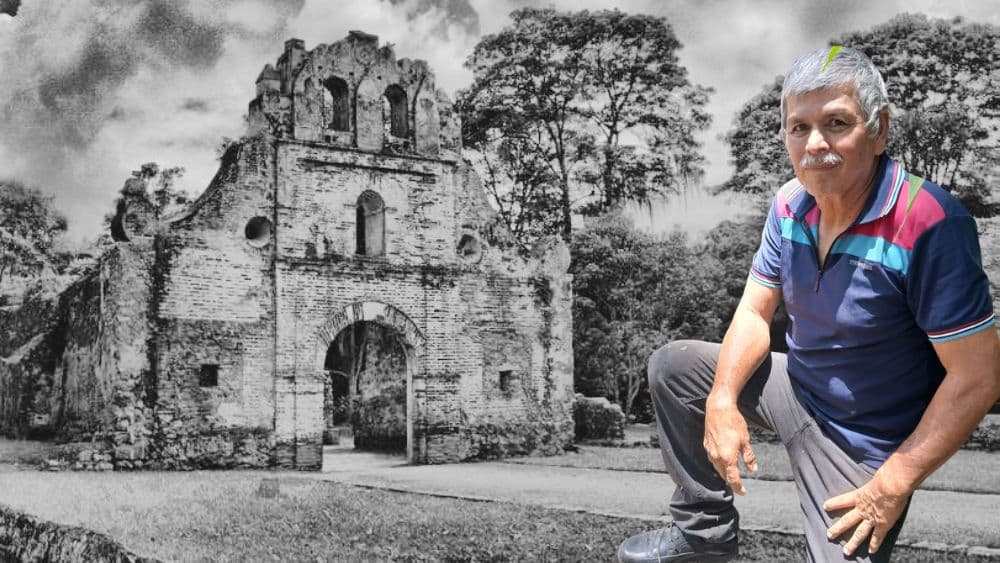
Editor’s note: The Ujarrás (or Ujarrada) are an indigenous nation with deep historical roots in the central valley region of Costa Rica, specifically near the present-day Cartago area. While often associated with the broader Ujarrás region, they are historically linked to the Ujarrás and surrounding areas, which is now a location where the Bribri indigenous group also resides. Photo: The ruins of one of the oldest churches in Costa Rica is located in Ujarrás, the church of “Nuestra Señora de la Limpia Concepción del Rescate de Ujarrás”, which was built in colonial times between 1686 and 1693. Pastor Didier photo also.
Interview with Pastor Didier Sanchez by Terry Carlile
Life in Ujarrada revolves primarily around rural people, so they make their living through agriculture. They plant cocoa and beans, and they grow small amounts of coffee and cassava.
Consequently, the majority of the people subsist on this, often by working on local farms. Others work for pineapple companies in Buenos Aires, planting pineapples. They commute from Ujarras to Buenos Aires to work either in packing plants or out in the fields.
So, that is essentially how they make a living there. They preserve certain traditions, such as their language and typical foods—like *pozol*, which they prepare using pig’s head or corn. There is also a dish they call *chocado*, which is made from bananas prepared with either water or milk.
They also make tamales; however, the tamales they make are not like the traditional tamales—the kind we know as *picos*—which are made with corn masa. Instead, they make theirs with rice; they use rice in place of the masa. Everything else is the same, but the key ingredient they use is rice.
That is the typical tamale found here in the Buenos Aires area. Generally, here in Buenos Aires—whether you are buying them in Ujarras or in the town center—the tamales sold are made with rice. So, those are essentially their traditions.
Furthermore, some people still consult what they call *suquias*—or witch doctors—and this practice remains quite common among them. Some of them continue to uphold these customs to this day. Regrettably, alcoholism is also a significant problem in the community.
They produce a beverage they call *chicha*. This is a deeply traditional practice—one that is very common throughout all the reservations. And it is truly a difficult situation, because they consume this drink, and it has a profound negative impact on their families.
It is something that is deeply ingrained in their culture. It is brewed in their homes; some people sell it, while others produce it solely for their own consumption. Consequently, navigating this situation is quite complicated.
The challenges they frequently face revolve around health issues. Education has also proven to be quite difficult. Furthermore, there is a certain degree of discrimination directed toward indigenous people.
Most people—or at least popular opinion—perpetuates the stereotype that indigenous people are lazy. These, then, are some of the challenges they face collectively as a people. Another challenge is the effort to preserve their traditions.
In many reservations and communities, they have already lost their native dialect—their traditional language. It is gone. Therefore, a great deal of work is required to address this issue.
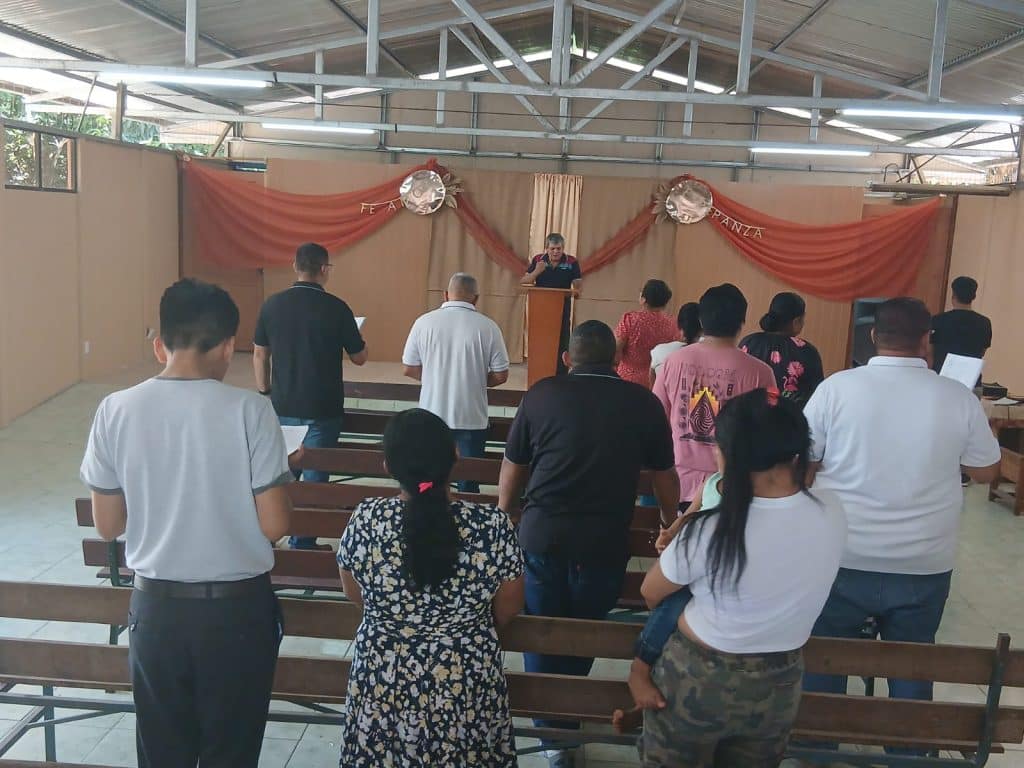
We have now been serving in indigenous reservations for 25 or 26 years. It has been quite an experience. We didn’t know what we were getting ourselves into; nothing like this had ever been attempted before.
Consequently, we had absolutely no idea how to go about working with them. But, thanks be to the Lord, He has enabled us to continue working in Ujarrás for these 26 years. And it has been a tremendous blessing to work alongside these people.
However, it is also difficult due to the issues I mentioned earlier—the struggles they are grappling with. Another major problem is that they receive a great deal of aid from the government. As a result, they sometimes view the church merely as another institution meant to provide for all their needs, or as a resource to be exploited.
Thus, it is sometimes difficult to shift that mindset—to help them change their perspective and think differently. We try to show them that they shouldn’t simply wait for everything to be handed to them, but rather that they, too, can give back and participate in various ways. But, in essence, that pretty much sums it up.
But yes, it has been a true blessing to work in both Ujarrás and the Cabagra region. The latter is a completely different area—a distinct zone altogether. As I mentioned earlier, they speak a different language—a different dialect.
Furthermore, the terrain and the entire environment there are vastly different. But we are still at it.
(The Ujarrada mission is sponsored by the Association of Iglesia Bíblica Bautista Costa Rica)



Former Navy Journalist, published author and international speaker. Howler executive since 2019.