

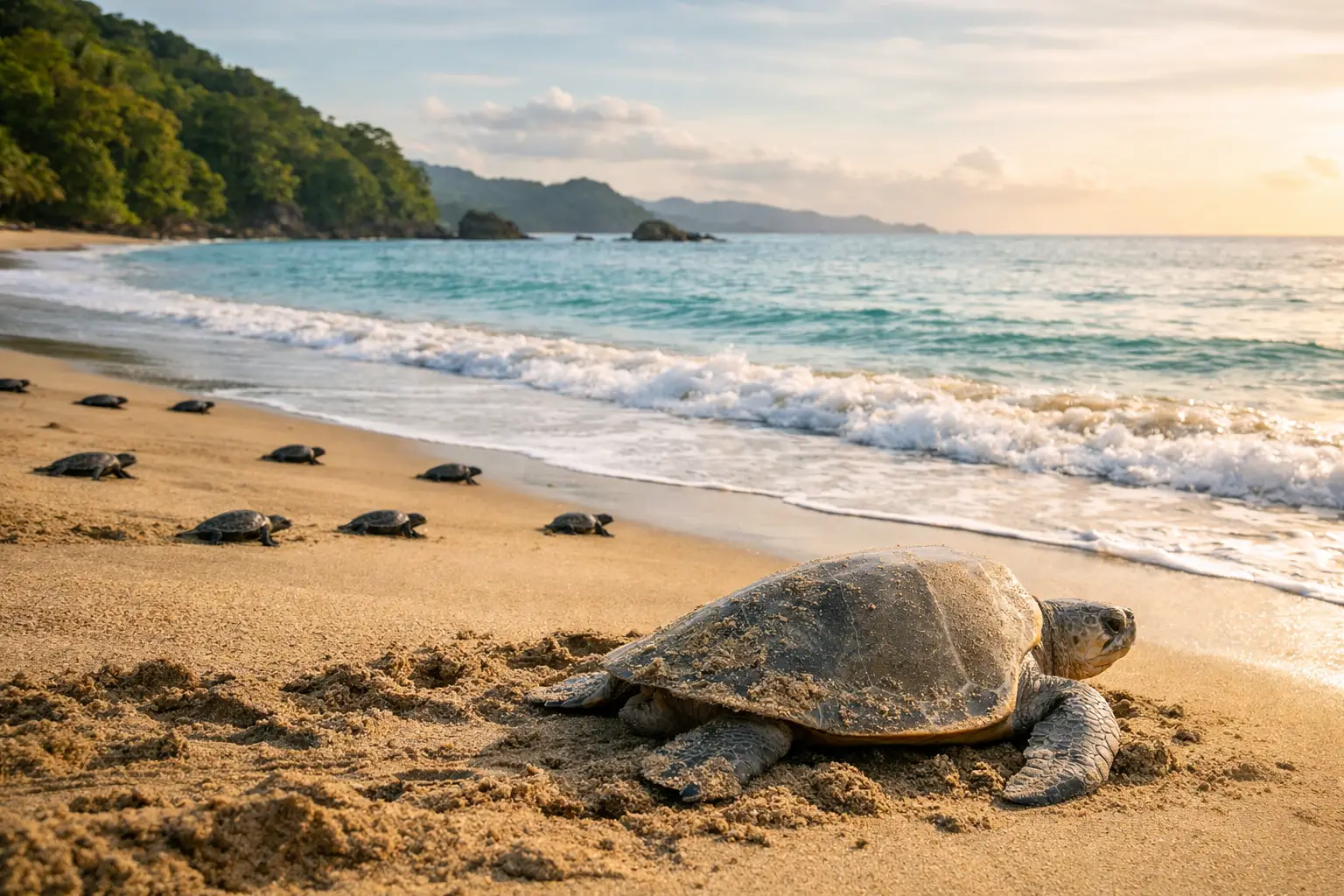
Moonlight changes everything on a turtle beach. What looks quiet and empty by day can turn into one of the most moving wildlife scenes in Costa Rica after dark – a slow, determined procession from sea to sand, repeated in near silence except for waves and wind. Costa Rica turtle nesting is not a staged attraction or a neat postcard moment. It is ancient, physical, messy, vulnerable, and unforgettable.
For travelers who come to Costa Rica for rainforest hikes, surf breaks, and boutique eco-lodges, seeing a sea turtle nest can become the memory that outlasts all the rest. It also comes with a little responsibility. These beaches are not just beautiful destinations. They are critical habitat, and the line between a magical encounter and a harmful one is thinner than many visitors realize.
Why Costa Rica turtle nesting matters
Costa Rica sits in a remarkable position between two oceans, and that geography gives the country an outsized role in sea turtle conservation. Several species arrive on its shores, including olive ridley, green, hawksbill, leatherback, and loggerhead turtles. Some beaches host a steady trickle of nesters through the season, while others become famous for mass nesting events known as arribadas, when thousands of olive ridleys come ashore over a few nights.
That spectacle draws global attention, and rightly so. But the deeper story is about survival. Sea turtles face pressure from coastal development, artificial lighting, fishing gear, climate change, erosion, egg poaching, and marine pollution. A nesting female that reaches the beach has already beaten serious odds. The hatchlings that eventually emerge will face even longer ones.
That is why a turtle tour in Costa Rica can feel so personal and so political at the same time. You are witnessing wild nature at work, but you are also stepping into a conservation story shaped by local guides, park rangers, community patrols, researchers, and tourism choices.
Where to see turtle nesting in Costa Rica
Costa Rica offers more than one version of this experience, and choosing the right beach depends on timing, species, and how remote you want the trip to feel.
Tortuguero on the Caribbean coast
Tortuguero is the name many travelers know first, and for good reason. Reached by boat or small plane, this lush canal-lined region feels wonderfully removed from ordinary schedules. Green turtles are the headline species here, with nesting season generally peaking from July through October. Leatherbacks and hawksbills also appear in smaller numbers.
The atmosphere in Tortuguero is special because the wildlife experience extends beyond the beach. You might spend the morning floating past caimans and monkeys, then head out after dark with a certified guide for a carefully managed turtle watch. It is one of the best places for travelers who want the full nature immersion, not just one nighttime excursion.
Ostional on the Nicoya Peninsula
Ostional is famous for arribadas, and if timing is on your side, few wildlife events in the world compare. During these mass arrivals, olive ridley turtles cover the beach in astonishing numbers. The sight is raw and overwhelming in the best way, with turtles climbing over incoming tracks and the surf delivering more by the minute.
But Ostional is also a place where nuance matters. Arribadas do not happen on a fixed schedule. They are influenced by lunar cycles and other natural conditions, so there is always some uncertainty. That makes this destination ideal for flexible travelers who understand that nature does not work on demand.
Las Baulas National Marine Park
On the Pacific coast near Playa Grande, leatherback turtles are the stars. These giants are the largest sea turtles on Earth, and seeing one haul herself onto the sand is hard to forget. Nesting season generally runs from October through February, with some variation.
This area is especially important because leatherbacks are under significant pressure globally. It is also one of the clearest examples of how conservation and development can collide. The surrounding region is popular, accessible, and attractive to visitors and investors alike, which makes habitat protection all the more urgent.
Other beaches worth knowing
Costa Rica has smaller or less-publicized nesting areas as well, including beaches in the South Caribbean and parts of the Osa region. These can be rewarding for travelers who prefer quieter destinations, but access, timing, and tour options may be more limited. Sometimes the best experience is not the most famous one. It depends on whether you want certainty, remoteness, or the chance to combine turtle watching with a broader itinerary.
When to go for the best chance of seeing turtles
There is no single turtle season for the whole country. Costa Rica turtle nesting varies by species and coastline, which is good news for travelers because it means there are opportunities across much of the year.
Tortuguero is best known for green turtle nesting from mid-year into early fall. On the Pacific side, Playa Grande draws travelers during leatherback season in the late fall and winter months. Ostional’s olive ridley arribadas usually happen in the rainy season, often from July through November, though exact timing shifts.
If your trip is built around this experience, plan conservatively. Stay at least a few nights near the nesting area instead of trying to fit it into a rushed one-night stop. Weather, tides, and natural timing all matter. The travelers who leave happiest are usually the ones who treat turtle watching as a privilege, not a guaranteed performance.
What a turtle tour is really like
Many first-time visitors imagine a dramatic scene with bright views and easy photos. The reality is quieter and more restrained. Most tours happen at night under strict rules. You may wait in the dark for a while. You may walk a beach without seeing anything at first. Then, suddenly, there she is – a dark shape at the waterline, pushing upward with slow, ancient determination.
A good guide does more than point out the turtle. They read the beach, explain behavior, manage distance, and protect the animal from human interference. You learn to notice the stages: emergence, body pit, egg chamber, laying, covering, camouflage, return to sea. Each one matters because access rules often depend on what stage the turtle is in.
The emotional effect catches many people off guard. There is something deeply humbling about watching an animal do something it has been doing for millions of years while a small group of humans stands back, whispering and careful not to intrude.
How to watch responsibly
The best turtle encounter is the one that leaves the beach exactly as wild as you found it. That means going only with authorized guides in places where tours are regulated. It means accepting rules even when they limit your view.
Flashlights, phone screens, flash photography, loud voices, and crowding can all disrupt nesting turtles. In many places, guides will control light carefully or ask you to walk without it. Dark clothing is often preferred. On some beaches, touching turtles, standing in front of them, or blocking their path is strictly prohibited, as it should be.
This is also where your travel dollars matter. Community-based conservation projects and properly managed tours can create real incentives to protect nesting beaches. Poorly managed tourism can do the opposite. The difference is not abstract. It shows up in hatchling survival, reduced disturbance, and stronger local stewardship.
The trade-offs behind the beauty
Sea turtle conservation in Costa Rica is a success story in some places, but not a simple one. Protected areas help, science helps, tourism helps when done well. Yet the pressures are real. Brighter beachfronts can confuse turtles. New roads and construction can fragment habitat. Even well-meaning visitors can create stress if the beach becomes a social event instead of a sanctuary.
That tension is part of modern Costa Rica. The country is admired for its environmental leadership, but it is also a place where tourism growth, real estate interest, and conservation goals sometimes pull in different directions. The encouraging part is that many communities, researchers, and conservation groups have spent years working through those conflicts with creativity and persistence.
For travelers, the takeaway is simple: choose the experience that protects the resource. If that means fewer people on a tour, stricter rules, or a higher-quality guide, it is worth it.
A wildlife moment that stays with you
Long after the beach walk ends, people tend to remember small details. The patterned tracks in the sand at dawn. The soft thud of flippers throwing sand backward. The strange mix of power and fragility in a creature built for the open ocean, struggling a little on land to complete an essential task.
That is the gift of turtle season in Costa Rica. It does not ask you to consume nature. It asks you to slow down enough to witness it.
FAQs
What is the best place to see turtle nesting in Costa Rica?
It depends on the species and season. Tortuguero is best known for green turtles, Ostional for olive ridley arribadas, and Playa Grande for leatherbacks.
What time of year is best for Costa Rica turtle nesting?
Different beaches peak at different times. Tortuguero is strongest from July to October, Playa Grande from about October to February, and Ostional often from July to November.
Can you see turtles year-round in Costa Rica?
Some species nest in different regions throughout the year, but specific sightings depend on season, beach, weather, and natural cycles. There is no guaranteed year-round experience in one place.
Are turtle tours safe for families?
Yes, in most destinations, as long as children can follow instructions, stay quiet, and handle nighttime conditions. Some tours involve walking on dark, uneven beaches, so age and mobility matter.
Can you take photos of nesting turtles?
Usually with strict limitations, and often not at all during key moments. Flash is harmful and should never be used. Always follow your guide’s rules.
Do arribadas happen every month at Ostional?
No. Arribadas are natural events influenced by environmental conditions and are not fixed on a simple public calendar. Flexibility improves your odds.
Have you ever seen a sea turtle nest in the wild, or is this still on your Costa Rica wish list? Which experience would you choose – the remote canals of Tortuguero or the wild drama of an Ostional arribada?
If Costa Rica’s wildlife stories are the reason you travel, keep following Howler for more insider guidance, seasonal highlights, and meaningful ways to experience the country well.