

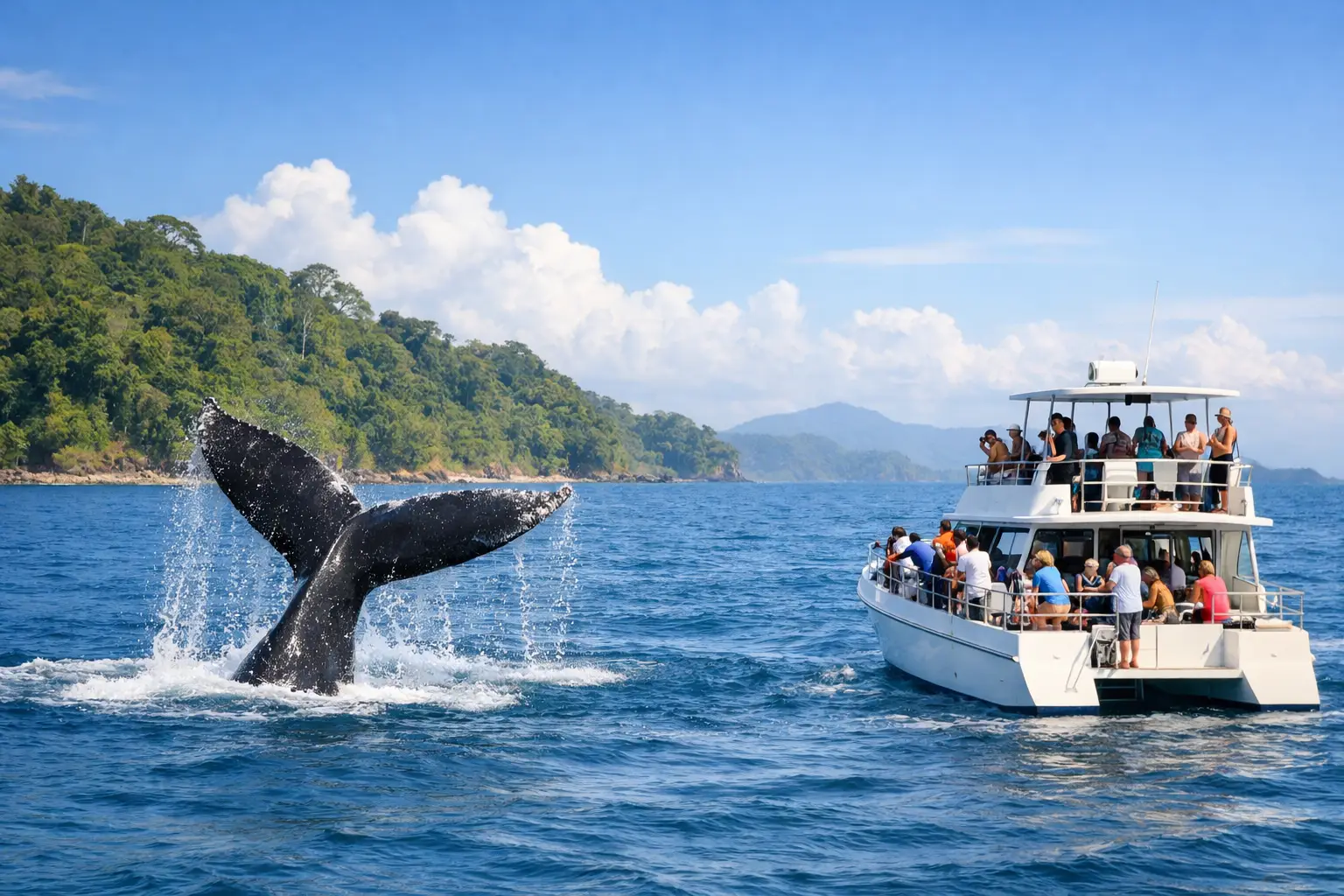
A still Caribbean morning off Costa Rica can feel almost staged – glassy water, rainforest pressing down to the shoreline, frigatebirds circling overhead. Then a humpback rises, broad-backed and unhurried, and the whole scene changes scale. For travelers searching whale watching Caribbean experiences, this corner of the region offers something special: warm water, dramatic coastal scenery, and the rare thrill of seeing giants where jungle meets sea.
Costa Rica is often celebrated for Pacific wildlife encounters, but the Caribbean side has its own rhythm. It is quieter, less publicized, and more intimate. That matters when the goal is not only to spot a whale, but to feel present in the habitat where it appears.
Why whale watching Caribbean trips feel different here
The Caribbean is not one uniform whale-watching destination. Conditions vary widely from island to island and coast to coast. Some places are known for seasonal migrations offshore, while others offer occasional sightings that depend heavily on weather, luck, and local knowledge. Near Costa Rica’s Caribbean coast, the appeal is not sheer volume. It is the atmosphere.
This is a place where marine life exists within a wider story of mangroves, coral systems, sea turtles, Afro-Caribbean culture, and rainforest biodiversity. A whale sighting here feels connected to an entire coastal ecosystem, not a single attraction on a checklist. That distinction matters to travelers who want more than a boat ride and a photo.
There is also a practical advantage. The Caribbean side of Costa Rica tends to attract visitors who prefer a slower pace. If you are already spending time around Puerto Viejo, Cahuita, or the southern Caribbean coast, adding a marine excursion can fit naturally into a broader trip built around wildlife, beach time, and local culture.
When to go whale watching in the Caribbean near Costa Rica
Timing always shapes the experience. In Costa Rica, humpback whales are best known on the Pacific coast because the migration windows there are well documented and sightings are more consistent. On the Caribbean side, whale activity is more variable, but that does not mean it is absent. It means expectations need to be smarter.
In the wider Caribbean, humpbacks are generally associated with winter breeding and calving grounds, especially from roughly January through April. Some areas see stronger seasonal activity than others. Near Costa Rica’s Caribbean waters, sightings can happen during migration periods, but they are typically less predictable than in the Pacific. If your trip is built entirely around whales, the Pacific may offer better odds. If your trip is already centered on the Caribbean side and you are open to a broader marine wildlife outing, the chance becomes part of the magic.
That trade-off is worth saying clearly. Travelers sometimes hear “Caribbean whale watching” and assume daily guaranteed sightings. Nature does not work that way, and the better operators will tell you so upfront.
What you’re most likely to see
Humpback whales are the headliners, but the Caribbean coast can offer much more than a single species. Depending on season and sea conditions, boat excursions may also reveal dolphins, rays, reef fish, seabirds, and sea turtles. On some days, the water itself is the show – changing shades of blue and green under a dense tropical coastline.
That is one reason these outings appeal to couples, families, and nature-focused travelers. Even if a whale does not breach on cue, the day rarely feels wasted when the setting is this rich.
Best areas for whale watching Caribbean adventures
Costa Rica’s southern Caribbean coast makes the most sense as a base. The waters near Cahuita and Puerto Viejo are where many travelers begin asking about ocean wildlife tours, and for good reason. The scenery is beautiful, the communities are full of character, and the trip can pair easily with snorkeling, beach exploration, or a stay inside one of the region’s small boutique hotels or eco-lodges.
Cahuita has the advantage of marine biodiversity and a strong connection to conservation-minded travel. Puerto Viejo brings energy, food, music, and easy access to nearby coastal habitats. The sea here is not always calm, and weather can shift quickly, so flexibility helps. Morning outings are often the better choice when conditions are more stable.
For travelers willing to think beyond Costa Rica while staying in the same broader region, the Caribbean also includes stronger-known whale destinations elsewhere. Yet for readers of Howler, the appeal here is clear: you can experience a whale-watching outing without leaving a trip that is already rooted in Costa Rica’s extraordinary natural range.
How to choose the right tour
A good whale-watching trip is not about speed or crowd size. It is about the quality of the guide, the condition of the boat, and the respect shown to wildlife. The best operators frame the outing honestly. They talk about seasonality, sea state, and the fact that sightings are never guaranteed. That honesty is usually a sign you are in good hands.
Look for guides who understand marine behavior and keep a responsible distance. If a captain rushes too close, cuts across an animal’s path, or treats the sighting like a chase, the experience loses its value fast. Ethical observation is not a side detail. It is the whole point.
It also helps to ask what the tour includes besides whale watching. Some excursions combine coastal interpretation, birdlife spotting, reef discussion, or cultural context about the region. Those details can turn a pleasant morning into a memorable one, especially for travelers who care about place as much as spectacle.
What to bring on board
Keep it simple. Sun protection matters even on cloudy days, and lightweight clothing works better than overpacking. A waterproof bag, motion sickness prevention if you need it, and a camera you can use quickly are all smart choices. Binoculars can help, but they are not essential. Often the first sign of a whale is not the body – it is the blow, a flash of movement, or the sudden stillness on the boat when everyone realizes something large is surfacing nearby.
The conservation side of whale watching Caribbean tourism
There is a reason this topic deserves more than pure romance. Whale watching can support marine conservation when it is done well. It creates economic value around living wildlife, encourages habitat protection, and gives travelers a direct emotional stake in ocean health. But poor practices can stress animals and damage the very ecosystems visitors come to admire.
That is especially true in coastal regions under pressure from tourism growth, pollution, and climate shifts. Warmer seas, reef stress, noise, and vessel traffic all affect marine life. Responsible tourism cannot solve all of that, but it can help shape incentives in the right direction.
Costa Rica has long built part of its global identity around protecting nature. On the Caribbean side, that ethic feels especially tangible because the ecosystems are so close together. A day that begins with whales can end in a wildlife refuge, a cacao farm, or a beach cleanup conversation with locals who know exactly what is changing along the coast. That layered experience is part of what makes the region memorable.
Is whale watching Caribbean worth it if sightings are less predictable?
Yes – if you choose it for the right reasons.
If your only goal is the highest possible chance of seeing multiple humpbacks, there are better-timed destinations and better-known seasons, including Costa Rica’s own Pacific coast. But if you are drawn to the Caribbean for its atmosphere, its culture, and its wilder, less scripted feel, then a whale-watching outing can be deeply worthwhile.
There is a pleasure in not overengineering every encounter. You head out on warm water. You watch the coastline slip by. You listen to a guide who knows the currents, the birds, and the moods of the sea. Maybe you see a humpback roll in the distance. Maybe a dolphin pod steals the show. Maybe the memory that stays with you is the color of the water against the jungle after rain. Travel does not always need a guarantee to be meaningful.
For many visitors, that is the real luxury now – room for surprise.
FAQs
What is the best time for whale watching Caribbean trips near Costa Rica?
The broader Caribbean humpback season is generally strongest from January through April, but sightings near Costa Rica’s Caribbean coast are less predictable than on the Pacific side.
Can you see humpback whales on Costa Rica’s Caribbean coast?
Yes, humpback whales can be seen in Caribbean waters near Costa Rica, especially during migration periods, but sightings are not as consistent as in the Pacific.
Where should I stay for whale watching on the Caribbean side of Costa Rica?
Cahuita and Puerto Viejo are the most practical bases. Both give you access to coastal tours, wildlife-rich scenery, and a strong local travel experience.
Is whale watching in the Caribbean good for families?
It can be, especially when sea conditions are calm and the tour is run by an experienced, safety-focused operator. Families should check the boat type and trip length in advance.
What if I do not see a whale?
That is always possible. The best way to approach the trip is as a marine wildlife and coastal nature experience, with whale sightings as the highlight if conditions align.
A good day on the Caribbean Sea does not always announce itself in advance. Sometimes it begins as a boat ride and ends as the story you tell for years.
Have you ever chosen a wildlife excursion knowing the sighting was not guaranteed? Would you pick Costa Rica’s Caribbean coast for its quiet charm, or head to the Pacific for better odds?
If Costa Rica’s wild places are the reason you travel, keep following Howler for more stories, local insight, and practical guidance that brings the country closer before you even arrive.