
A sunrise boat leaves the dock before the heat settles in, and the guide does something that says everything about where Costa Rica is headed. He cuts the motor near the mangroves. No rush, no roar, just the sound of birds waking up and travelers noticing that silence is part of the experience. That small choice captures the future of sustainable travel Costa Rica is steadily shaping – not less travel, but better travel.
For a country that built much of its global identity around biodiversity, protected land, and the phrase pura vida, this next chapter matters. Costa Rica is no longer simply selling scenery. It is working out, in real time, how to welcome more visitors without eroding the very ecosystems and communities that drew them here in the first place. That tension is not a problem to hide. It is the story.
Why the future of sustainable travel in Costa Rica matters now
Costa Rica has long been held up as a model for eco-conscious tourism. National parks, reforestation success, renewable energy leadership, and a culture that often values outdoor life over excess have given the country real credibility. But popularity changes the equation.
More flights, more rental cars, more luxury development, and more short-term demand in beach and mountain towns all create pressure. Water use becomes a local issue, not an abstract one. Waste management stops being a side topic when high season fills a destination faster than its infrastructure can handle. Wildlife corridors do not care whether a new project markets itself as green if habitat gets fragmented anyway.
That is why the future of sustainable travel in Costa Rica will not be decided by branding alone. It will be shaped by practical choices – from zoning and transit to hotel design, guide training, and whether tourism dollars stay in local hands.
The next traveler will want more than a green label
There was a time when adding the word eco to a brochure could do a lot of heavy lifting. Today’s traveler, especially the kind of globally minded visitor who returns to Costa Rica more than once, is asking better questions.
Who owns the lodge? Where does the water come from? Are tours run in a way that respects wildlife behavior? Are local people employed in meaningful roles or only seasonal service jobs? Is this place helping preserve cultural identity, or packaging it?
That shift is healthy. It pushes the market beyond surface-level sustainability and toward accountability. It also favors businesses that have been doing the work for years, often quietly. In Costa Rica, some of the strongest examples are not the loudest. They are the small hotels restoring native habitat, the surf schools organizing beach cleanups without turning them into photo ops, the tour operators who cap group size even when demand is high, and the communities building tourism around place rather than spectacle.
Growth is coming, but smarter growth has to win
Costa Rica is still attractive to investors, retirees, remote workers, and travelers willing to spend for quality. That can be good news. Higher-value tourism can reduce the pressure to chase volume alone. A visitor who stays longer, spends locally, and travels with intention often leaves a lighter footprint than a quick wave of bargain traffic.
Still, there is a catch. Upscale development is not automatically sustainable. Large homes in dry coastal areas, energy-heavy resorts, and projects disconnected from local planning can strain roads, water systems, and housing markets. When workers cannot afford to live near the places where tourism thrives, the model starts to wobble.
The most promising future is not anti-growth. It is selective growth. Think smaller-scale hospitality, better land-use planning, stronger building standards, and tourism projects designed with community benefit built in from the start. That means listening to municipalities, conservation groups, long-time residents, and business owners who understand the rhythm of a region beyond high season.
Transportation may become the biggest sustainability test
One of the least glamorous parts of travel is also one of the most important. How people move around Costa Rica will say a lot about how serious the country is about sustainable tourism.
Anyone who has spent time here knows the contradiction. You can stay at a beautiful eco-lodge with refillable amenities and farm-to-table meals, then spend hours in traffic behind a line of gas-powered vehicles heading to the same beach. Cleaner accommodations matter, but transportation remains a major challenge.
Electric vehicles are gaining visibility, and that is encouraging. So is the slow expansion of charging infrastructure. But the future likely depends on a broader mix: more efficient shared transfers, better regional transport planning, low-impact tour operations, and travel itineraries that encourage staying longer in one area instead of racing across the country to collect highlights.
That last point may be the simplest and the hardest. Slower travel asks visitors to trade quantity for depth. In Costa Rica, that trade is often worth it. A week spent getting to know one coastline, one cloud forest town, or one rural valley tends to leave a stronger memory than a packed schedule built around checkpoints.
Wildlife protection will separate serious operators from the rest
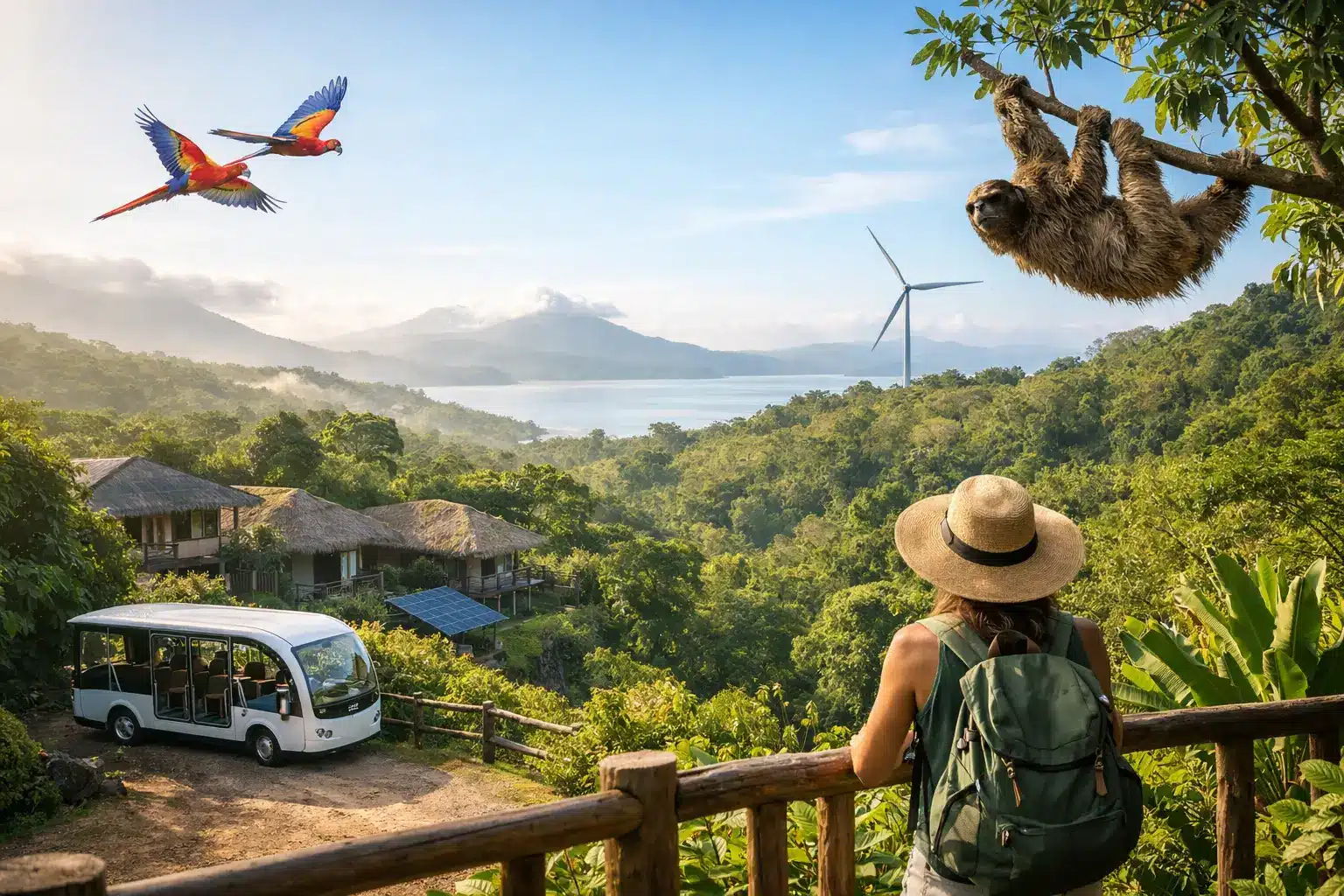
Costa Rica’s wildlife is not a backdrop. It is one of the main reasons people come. Monkeys crossing overhead, scarlet macaws flashing above the trees, sea turtles arriving under moonlight – these are not side attractions. They are part of the national inheritance.
That is exactly why wildlife tourism needs constant guardrails. Feeding animals, crowding nesting sites, approaching marine life too closely, or building too near sensitive habitat can damage what visitors came to admire. And some of the damage is subtle. Animals change behavior long before a destination notices a crisis.
The better operators understand this. They train guides to interpret nature without disturbing it. They set viewing distances. They refuse certain encounters, even when guests ask. In the future, those decisions will matter more, not less. Travelers are becoming savvier, and responsible standards will increasingly shape reputation.
Community-led tourism could define the strongest model
For all the conversation around infrastructure and climate, one truth remains easy to miss: sustainable travel is not only about carbon, water, or architecture. It is also about who gets to benefit.
The most resilient tourism economies in Costa Rica will be the ones where local communities are not standing on the sidelines. When a destination supports local guides, family-run hotels, farmers, artisans, transport providers, and regional food producers, the value of tourism spreads. That creates pride, not just profit.
It also creates a better experience for visitors. People remember the meal cooked with local ingredients, the conversation with a guide who grew up in the area, the story behind a festival, a fishing tradition, or a conservation effort. Those moments feel rooted. They turn a trip into a relationship.
This is where Costa Rica still has an edge. The country’s warmth, environmental awareness, and strong local identity give it a foundation many destinations would envy. But that advantage has to be protected. If tourism becomes too polished, too imported, or too detached from local life, it loses something essential.
What travelers can do next
The future of sustainable travel Costa Rica will not be built by government policy and business decisions alone. Visitors shape it every day. Where you stay, how long you remain, what tours you book, whether you respect water use in dry season, and how you behave around wildlife all have consequences.
That does not mean travel has to become joyless or morally exhausting. It means paying attention. Choose places that show their values in action. Ask good questions. Spend money where it clearly supports people and landscapes. Be wary of anything that feels too easy, too close, too performative. Real sustainability is often quieter than marketing.
Costa Rica has never been at its best when it imitates other destinations. It stands out when it leans into what it already understands – conservation with teeth, hospitality with heart, and travel that leaves room for the living world to breathe. That future is possible, but it will require discipline from everyone involved.
Howler Media has spent decades telling the stories behind Costa Rica’s places, people, and changes. This is one of the most important stories now unfolding, because it asks a simple question with high stakes: can a beloved destination stay beloved without being loved to death?
The answer will come from thousands of daily choices, some made in boardrooms, some made on dirt roads, and some made by a traveler deciding whether to rush on or stay still long enough to understand where they are.
FAQs
What does sustainable travel mean in Costa Rica?
In Costa Rica, sustainable travel means visiting in a way that protects ecosystems, respects wildlife, supports local communities, and reduces strain on natural resources such as water, energy, and land.
Is Costa Rica still considered a leader in eco-tourism?
Yes, but leadership now depends on follow-through. Costa Rica has strong environmental credentials, yet rising tourism and development pressure mean the country must keep improving infrastructure, planning, and enforcement.
What are the biggest threats to sustainable tourism in Costa Rica?
The biggest pressures include overdevelopment in high-demand areas, water scarcity in some regions, traffic and transportation emissions, poor waste management, and tourism that sidelines local communities.
How can travelers make a positive impact?
Stay longer in fewer places, book with responsible local operators, respect wildlife rules, be mindful of water and energy use, and spend money with businesses that clearly invest in their communities.
Will luxury travel and sustainable travel work together in Costa Rica?
Sometimes yes, sometimes no. Luxury can support sustainability when it funds conservation, uses resources carefully, and employs people well. It fails when it consumes too much land, water, or energy without local benefit.
What do you think Costa Rica must protect most carefully as tourism grows?
Have you seen a tourism experience here that felt truly sustainable, not just well marketed?
Join the conversation and share this story with someone planning a trip, a move, or an investment in Costa Rica. The future will be shaped by informed choices.