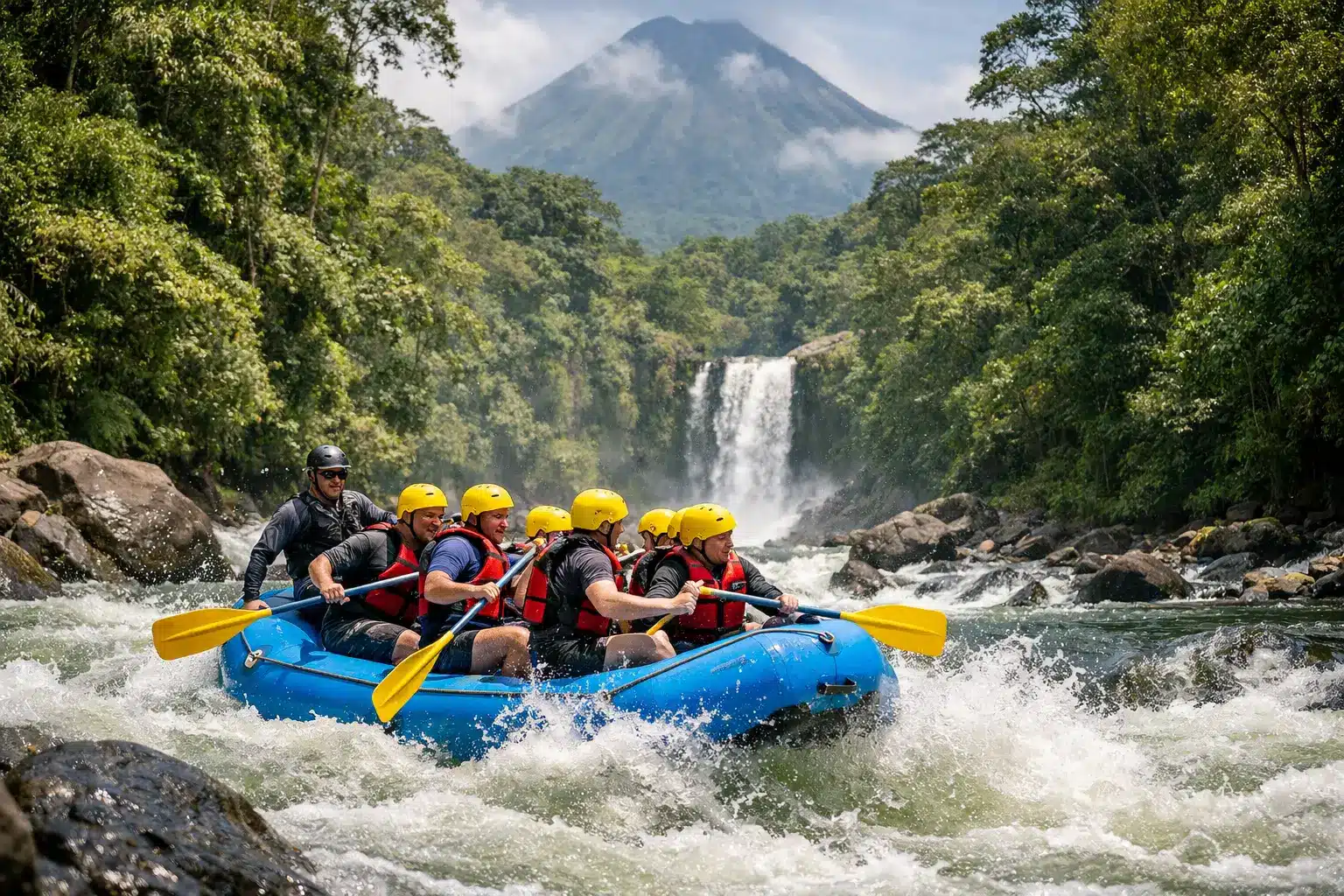
By the time the raft noses into the first rapid, the river has already made its point. The air is warm, the canyon walls are thick with green, and somewhere above the rush of water you catch the call of a bird you can’t name fast enough. Whitewater rafting in Costa Rica is not a theme-park version of adventure. It feels wilder than that, more intimate, more alive, and often more beautiful than first-time visitors expect.
This is one of those experiences that changes the pace of a trip. Beach days and sunset cocktails still have their place, of course, but a day on the river adds a different kind of memory – one built from teamwork, nerves, laughter, and the kind of scenery you usually only see from a bridge, if at all. In Costa Rica, rivers cut through rainforest, farmland, volcanic foothills, and remote valleys, which means rafting is never just about the rapids. It is also about seeing the country from a moving corridor of water.
Why whitewater rafting feels different here
Costa Rica has the right ingredients for rafting almost year-round: mountains, heavy seasonal rains, healthy watersheds, and a network of rivers with dramatically different personalities. That range matters. Some rivers are friendly enough for families and first-timers, while others are the sort that experienced paddlers talk about with a grin that is equal parts joy and respect.
What makes the experience stand out, though, is the setting. A rafting trip here often begins with a drive through small towns, banana fields, or misty hills and then suddenly drops you into a river corridor where the modern world seems very far away. You may float past herons, iguanas, or troops of monkeys between rapids. You may stop for fruit on the riverbank or eat lunch beside water that still feels untamed. That contrast – comfort nearby, wilderness all around – is part of the appeal.
The best rivers for whitewater rafting
If you ask guides which river best captures whitewater rafting in Costa Rica, many will mention the Pacuare. It has earned its reputation honestly. The Pacuare combines exciting Class III and IV rapids with one of the most scenic river canyons in the country. Dense rainforest leans over the banks, waterfalls slip down steep walls, and the stretches between rapids are so beautiful they can briefly make you forget your sore arms.
The Pacuare works well for adventurous first-timers in good health and for experienced rafters who want scenery with substance. It is thrilling without being reckless when conditions are right and when you are with a reputable outfitter. For many travelers, it becomes the story they tell first when they return home.
Then there is the Sarapiquí River, often favored by people staying closer to the Central Valley, Arenal, or the northern zone. Sarapiquí can be a smart choice if you want an accessible day trip with lively rapids, rich birdlife, and a little less intensity than the bigger-name runs. It is a lovely introduction to the sport and a strong option for families with older children.
The Savegre River, near Manuel Antonio and the central Pacific region, offers another flavor entirely. It is often considered one of the cleanest rivers in Central America, and its upper sections can feel serene and emerald before the pace picks up. Savegre trips are ideal for travelers who want adventure but also value the softer details – the lush banks, the sense of remoteness, and the quieter rhythm between rapids.
More advanced rafters may hear about the Reventazón or other technical runs, but those are less about broad appeal and more about conditions, experience level, and specialized guiding. This is where the phrase it depends really matters. Rainfall changes rivers. Water levels shift. A run that is excellent one month may be too high, too low, or simply not the best match for your group another month.
Who should try it, and who should think twice
One of the nice surprises about rafting is how many people can enjoy it. You do not need to be an athlete. You do not need previous experience. You do need a basic comfort level around water, a willingness to listen, and enough mobility to paddle, brace, and stay secure in the raft.
Families often do well on Class II and III trips, especially with children who are old enough to follow directions and enjoy the splash factor. Couples love it because it mixes shared excitement with long scenic stretches. Friend groups tend to turn the raft into a cheering section. Solo travelers usually find it easy to connect with others by the second rapid.
Still, rafting is not for everyone on every day. If you are pregnant, recovering from an injury, dealing with significant back or neck issues, or traveling with very young children, another soft-adventure experience may be a better fit. If a company seems vague about age limits, safety protocols, river classification, or guide certification, take that as a warning sign, not a minor detail.
What a day on the river actually looks like
Most rafting days begin early. You meet at a lodge, adventure center, or shuttle point, sign waivers, get fitted with a helmet and life jacket, and listen to a safety briefing that matters more than many people realize. Good guides are usually part coach, part comedian, and part river reader. They know how to keep the mood light while making it very clear that paddling commands are not suggestions.
Once on the water, the first few minutes are often a mix of practice strokes and anticipation. Then the river starts speaking more clearly. A gentle bend becomes a tongue of fast water. The raft lifts, drops, and slaps into a wave. Someone screams. Someone laughs. Usually, it is the same person.
The flow of the day alternates. There are bursts of adrenaline, then calm sections where everyone catches their breath and looks around. This rhythm is one reason rafting appeals to such a wide audience. It is active, but not nonstop. There is space to absorb the landscape, ask questions, and notice details beyond the rapid ahead.
What to wear and what to bring
Dress for full immersion, because you will get wet. Quick-dry clothing works best, along with secure water shoes or sandals with a heel strap. A swimsuit under lightweight shorts and a rash guard is often enough. Avoid cotton if possible. It stays heavy and chilly once soaked.
Bring sunscreen, but apply it before you gear up and choose one that is reef- and river-conscious when possible. A change of clothes for afterward is essential, and a dry bag can be useful if the outfitter allows one. Leave valuables behind unless they are fully waterproof and securely attached. Rivers have a way of claiming phones, sunglasses, and overconfidence.
Safety is part of the experience, not a footnote
The best rafting companies in Costa Rica treat safety as the foundation of the day, not the boring part before the fun begins. That means well-maintained equipment, trained guides, support kayakers when appropriate, clear communication, and honest decisions about conditions. If a river is running too high or storms make a trip questionable, a good operator will cancel or reroute without apology.
Travelers sometimes assume the biggest rapids make for the best day. Not always. A river that matches your comfort level, fitness, and appetite for excitement usually creates the stronger memory. Terror is overrated. Confidence, challenge, and joy are a better combination.
The bigger story behind the adventure
In Costa Rica, outdoor recreation and conservation are closely tied. Healthy rafting rivers depend on healthy forests, responsible land use, and long-term water protection. That does not mean every river corridor is free from pressure. Development, infrastructure projects, and changing weather patterns all affect the landscape. Choosing operators who respect the environment and work responsibly with local communities matters more than many visitors realize.
That is part of what gives rafting here its deeper resonance. You are not just passing through scenery. You are moving through ecosystems that require care, policy, and public will to remain vibrant. Adventure in Costa Rica is often at its best when it sharpens appreciation as much as adrenaline.
FAQ’s
Is whitewater rafting in Costa Rica good for beginners?
Yes, many rivers and sections are suitable for beginners. The key is choosing the right class of rapids and going with an experienced outfitter that matches trips to your comfort level.
What is the best time of year for whitewater rafting?
Rafting is available much of the year, but conditions change with rainfall. The green season often brings fuller, faster rivers, while some dry-season trips may feel more moderate. Ask about current water levels when booking.
What are the main rapid classes visitors will encounter?
Most popular trips for travelers fall in the Class II to IV range. Class II and III are generally ideal for beginners and families, while Class IV is better for those who want a more intense ride.
Can kids go whitewater rafting?
Often, yes. Minimum ages vary by river and water level. Some family-friendly runs welcome children, while more technical rivers require older teens or adults.
Do you need to know how to swim?
Strong swimming skills are helpful, but many outfitters do not require expert swimmers for beginner-friendly trips. You do need to be comfortable in the water and able to follow safety instructions.
What should you avoid bringing on the raft?
Avoid loose jewelry, non-waterproof phones, passports, and anything you would be upset to lose. Bring only what is necessary and secure.
A good river day stays with you because it strips travel down to something simple and rare: a paddle in your hands, a team in the boat, and a living landscape rushing forward one bend at a time.