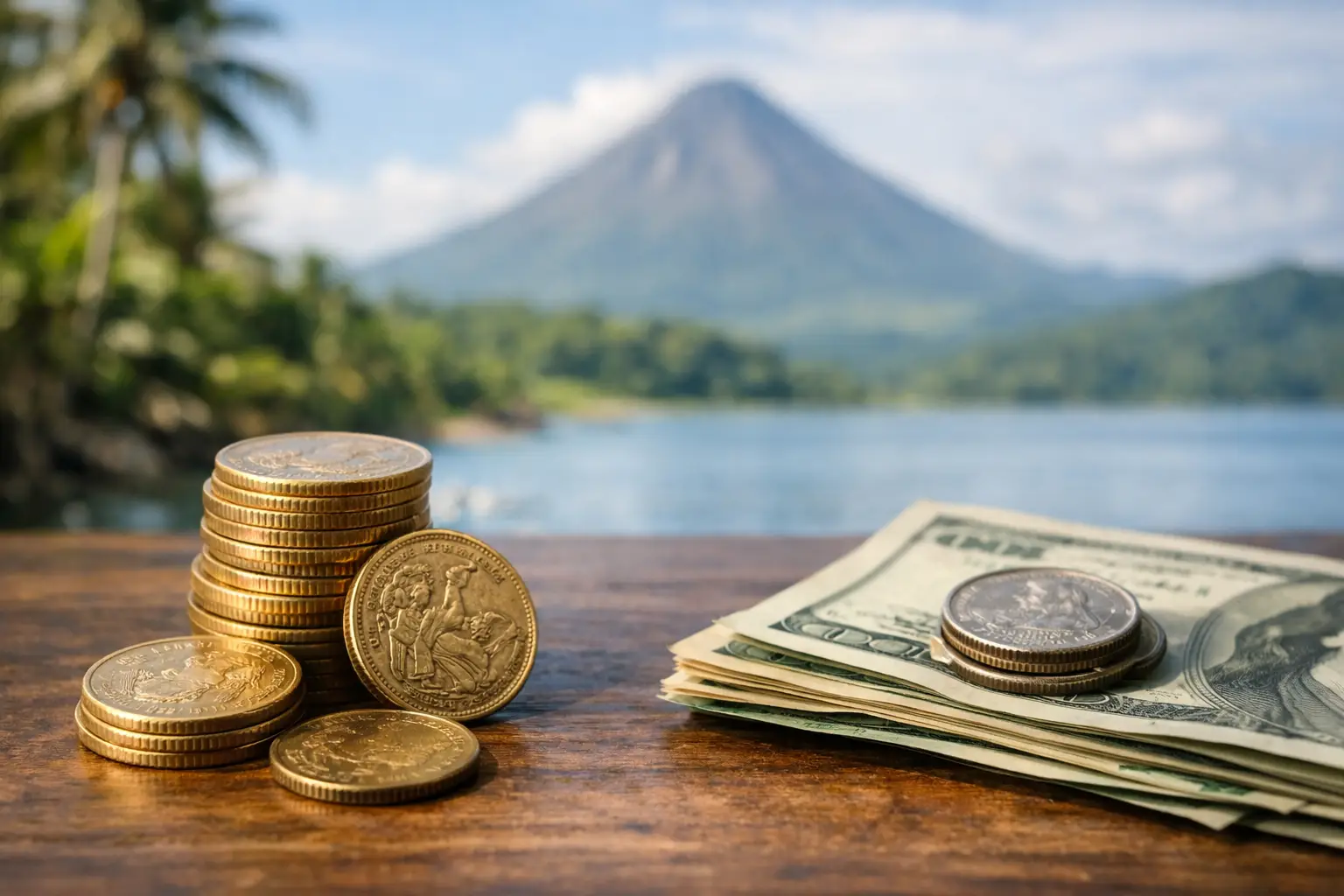
You feel it almost immediately in Costa Rica – not in the jungle air or the first sip of coffee, but at the cash register. A lunch special looks like a bargain in colones, your credit card statement lands in dollars, and suddenly the question of colone vrs the dollar is no longer abstract. It becomes part of how you travel, budget, invest, and settle into life here.
For visitors, the exchange rate can shape the cost of a week at the beach. For expats, it can stretch or squeeze retirement income. For business owners and property buyers, it can quietly change margins, rents, labor costs, and long-term planning. In Costa Rica, both currencies are part of the rhythm of everyday life, and understanding that rhythm helps you move through the country with more confidence and fewer surprises.
Why colone vrs the dollar matters here
Costa Rica is unusual in the most practical way. The local currency, the Costa Rican colón, is central to daily life, yet the US dollar is also widely accepted in many parts of the economy, especially those shaped by tourism, real estate, and international business. That dual-currency reality creates convenience, but it also creates misunderstanding.
Walk through a surf town, a mountain village, or a city neighborhood and you will notice the pattern. A local soda may price everything in colones. A vacation rental may quote rates in dollars. A grocery receipt might be in colones, while a legal service or home sale may be discussed in dollars. None of this is strange once you have spent time here, but for newcomers it can be disorienting.
The real issue is not which currency is better. It is when each one works in your favor, when it does not, and how exchange shifts affect your spending power.
The everyday reality of the colón
For most routine expenses in Costa Rica, the colón still tells the truest story. Utilities, local transportation, many restaurant tabs, pharmacy purchases, public services, and wages are often grounded in the national currency. If you are staying more than a short vacation, paying attention to prices in colones gives you a clearer picture of what life actually costs.
That matters because dollar thinking can distort your sense of value. A visitor may convert every amount back into US currency and feel reassured. A resident quickly learns that the more useful habit is understanding the local price level on its own terms. Once you know what a taxi ride, a supermarket run, or a handyman visit should roughly cost in colones, you are less likely to overpay and more likely to spot sudden changes.
There is also a cultural dimension here. Using colones when appropriate is not just practical. It shows awareness of how the country functions beyond the visitor economy. Costa Rica may be globally connected, but its day-to-day heartbeat still runs in its own currency.
Where the dollar has real power
The dollar, of course, has a strong presence for good reason. Costa Rica attracts North American travelers, investors, retirees, remote workers, and second-home buyers, so many businesses quote in dollars to reduce friction. Hotels, tours, luxury rentals, imported goods, private services, and property listings often lean on the currency foreign clients know best.
For someone earning in dollars, that can be an advantage. If the colón weakens against the dollar, your income may go further locally. Rent, food, and services priced in colones can feel more affordable. For retirees on fixed US income or remote workers paid by an American company, exchange movement can have a direct effect on quality of life.
Still, the dollar is not a magic shield. Some businesses that quote in dollars still calculate costs against local expenses. Others may use their own internal exchange rate, which is not always favorable to the customer. Convenience sometimes comes with a hidden premium.
Colone vrs the dollar for travelers
If you are visiting Costa Rica for a week or two, the smart move is balance. Bring a modest amount of cash, ideally in small, clean US bills, but expect to use a card and receive change in colones. It is common. Hand over a $20 bill for a small purchase and your change may come back in local currency at the business’s chosen rate.
That is where many travelers lose money without noticing. Not in one dramatic moment, but in a series of tiny conversions. Airport exchanges, informal calculations, poor card rates, and casual overpayment add up. The scenic waterfall and sunset catamaran may be worth every cent, but the unnecessary exchange losses are not.
For most travelers, the best approach is simple. Understand the current exchange rate before you arrive. Pay in colones when possible if the transaction is local. Use cards that do not punish foreign purchases. And keep enough flexibility to handle places that prefer one currency over the other.
For expats and retirees, it depends on income source
This is where the conversation gets more personal. If your pension, Social Security, investment income, or remote salary is paid in dollars, your monthly life in Costa Rica is partly a currency strategy whether you think of it that way or not.
When the dollar is strong against the colón, local spending tends to feel lighter. When the colón strengthens, the same grocery cart, utility bill, or contractor payment can cost more in dollar terms. Over time, that shift can affect where you choose to live, whether you rent or buy, and how comfortably you handle healthcare, home maintenance, or travel back to the States.
This is why seasoned residents do not build a Costa Rica budget on best-case exchange rates. They leave room for movement. The country rewards flexibility. A family that cooks more local food, adjusts energy use, and lives slightly outside the hottest tourism zones may ride out currency swings with less stress than someone committed to a fully dollarized lifestyle in a premium beach town.
Real estate and business: the quiet influence of exchange rates
Property and business decisions add another layer. Real estate in Costa Rica is often marketed in dollars, especially in areas with strong international demand. That makes sense on the surface, but many operating costs tied to ownership still happen in colones – maintenance labor, local services, municipal costs, some materials, and day-to-day management expenses.
So a buyer looking only at a dollar purchase price may miss the bigger picture. A favorable exchange moment can make a closing look attractive, yet ongoing ownership costs may move differently over time. The same goes for business. A hotelier, restaurant owner, or tour operator may earn revenue in dollars from foreign guests while paying many local obligations in colones. That can help margins in one season and compress them in another.
This is where Costa Rica stops being a postcard and starts being a living market. Beautiful, yes. Stable in many ways, yes. But never static.
How to think about colone vrs the dollar without overcomplicating it
The healthiest approach is not obsession. It is awareness. You do not need to watch exchange movements every morning with your coffee. You do need to understand which parts of your life are exposed to currency changes.
If you are a traveler, that means knowing how you will pay and where conversion fees hide. If you are relocating, it means comparing your income currency to your core living expenses. If you are investing or running a business, it means tracking revenue in one currency and expenses in another with clear eyes.
Costa Rica tends to reward people who stay practical. Romantic ideas about tropical living are lovely around sunset. They are less useful when you are reviewing a construction estimate, signing a lease, or trying to figure out why two neighboring businesses quote prices in different currencies for nearly the same service.
There is no permanent winner in colón versus dollar. There is only context.
Some months, the dollar gives foreigners breathing room. At other moments, the colón holds stronger than expected and reminds everyone that Costa Rica is not just a destination layered on top of the US economy. It is its own country, with its own financial dynamics, institutions, and logic.
That is part of what makes life here interesting. The same place that offers rainforest mornings, Pacific sunsets, and long lunches under a ceiling fan also asks you to pay attention. Not anxiously, just honestly. Money works differently here because Costa Rica works differently here. And once you understand that, you stop treating currency as a nuisance and start seeing it for what it is – one more local language worth learning.
The more comfortably you can move between colones and dollars, the more naturally Costa Rica opens up around you.
confidently you can enjoy the country, whether you are here for a week, a season, or a lifetime.
FAQ
Can I use US dollars everywhere in Costa Rica?
No, you cannot rely on US dollars everywhere in Costa Rica. Dollars are accepted in many tourist areas, hotels, and larger businesses, but smaller shops, buses, local restaurants, markets, and public services usually prefer colones.
Is it better to pay in colones or dollars in Costa Rica?
It is usually better to pay in the currency shown on the price. If something is priced in colones, pay in colones to avoid unfavourable exchange rates. If something is quoted in dollars, paying in dollars may be simpler.
Should I exchange money before travelling to Costa Rica?
You do not need to exchange a large amount before travelling. Bring some small US bills, withdraw colones locally from a reputable ATM, and use cards where accepted.
Are credit cards widely accepted in Costa Rica?
Yes, credit cards are widely accepted in many parts of Costa Rica, especially in cities and tourist areas. However, cash is still useful for rural towns, roadside vendors, taxis, tips, and small businesses.
Why are Costa Rica property prices often listed in dollars?
Costa Rica property prices are often listed in dollars because many buyers are international. Real estate in beach towns, luxury areas, and expat communities is commonly marketed to people earning or investing in US dollars.
Does the exchange rate affect the cost of living in Costa Rica?
Yes, the exchange rate can affect the cost of living, especially for people earning in dollars and spending in colones. A stronger dollar can make local expenses feel cheaper, while a stronger colón can make the same expenses feel more expensive.
What is the best currency strategy for living in Costa Rica?
The best currency strategy is to understand your income, expenses, and exposure to exchange rate changes. Keep track of core costs in colones, avoid relying on best-case rates, and maintain some flexibility in your budget.