Are there mammals only found in Costa Rica?
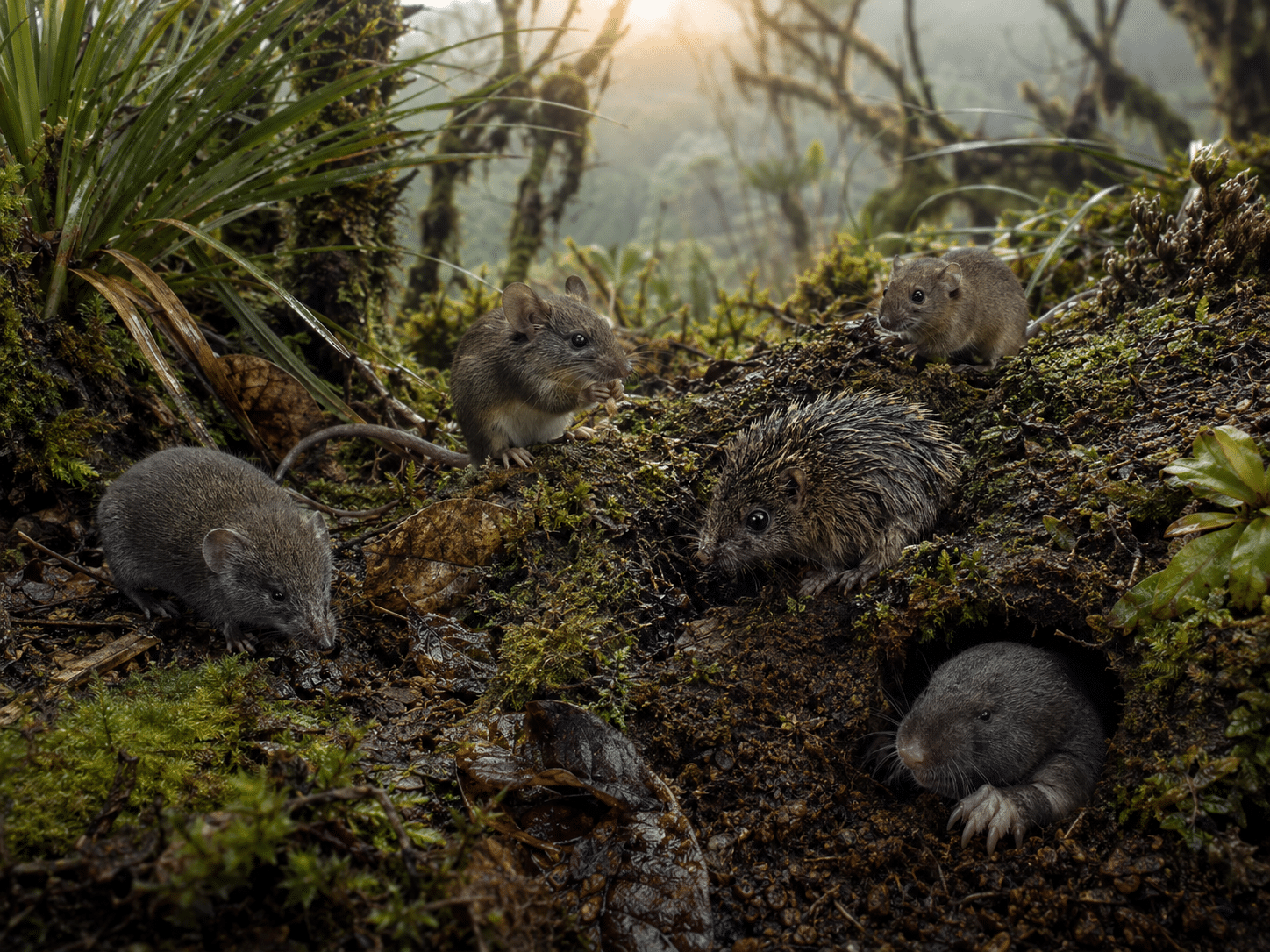
Yes, Costa Rica has mammals found only within the country, but most are small, shy and rarely seen by visitors. Unlike the famous sloths, howler monkeys, jaguars and tapirs, Costa Rica’s truly country-exclusive mammals are mostly mice, shrews and pocket gophers living in specialised mountain habitats.
That makes them easy to overlook and incredibly important. A tourist may spend two weeks in Costa Rica and never see one. A biologist, however, might spend years trying to understand them properly.
Costa Rica has 256 confirmed mammal species, and researchers report 30 endemic mammals when including species limited to Costa Rica and one neighbouring country; most of these are rodents, with the greatest endemism in high elevations.
Why are Costa Rica’s endemic mammals so hard to spot?
Costa Rica’s endemic mammals are hard to spot because many are nocturnal, small-bodied, and hidden in remote highland ecosystems. They are not the animals posing beside the road or swinging above hotel gardens.
Many live in places such as:
- Cold, wet cloud forests
- Highland páramo habitats
- The Talamanca mountain range
- Mossy forest floors
- Underground burrows
- Dense vegetation near streams and roots
The National Museum of Costa Rica notes that the Talamanca páramo has at least 34 mammal species, including rodents and shrews, and that this region has the country’s highest level of mammal endemism.
Which mammals are found only in Costa Rica?
Some mammals listed as found exclusively in Costa Rica include the Monteverde small-eared shrew, Costa Rican harvest mouse, Musser’s harvest mouse, Rodriguez’s harvest mouse, variable pocket gopher, cloud-dwelling spiny pocket mouse and mountain spiny pocket mouse. These are not household-name animals, which is exactly why they deserve a louder story.
Examples include:
- Monteverde small-eared shrew (Cryptotis monteverdensis)
- Costa Rican harvest mouse (Reithrodontomys cherrii)
- Musser’s harvest mouse (Reithrodontomys musseri)
- Rodriguez’s harvest mouse (Reithrodontomys rodriguezi)
- Variable pocket gopher (Heterogeomys heterodus)
- Cloud-dwelling spiny pocket mouse (Heteromys nubicolens)
- Mountain spiny pocket mouse (Heteromys oresterus)
A Costa Rica endemic mammal checklist based on the Mammal Diversity Database lists these species as exclusive to the country.
Why do so many endemic mammals live in the mountains?
Many endemic mammals live in Costa Rica’s mountains because elevation creates natural islands of habitat. The Talamanca range, cloud forests and páramo zones are cooler, wetter and more isolated than the surrounding lowlands.
Over long periods of time, these conditions can shape species that are highly adapted to one type of place. A mouse living in cold, mossy highlands may become very different from its relatives in warmer forests below.
These mountain habitats create:
- Natural isolation
- Cooler temperatures
- Specialised vegetation
- Reduced competition from lowland species
- Unique food sources
- Protected pockets where evolution works quietly
Researchers identify the high parts of Costa Rica’s mountain ranges, especially the Talamanca region, as the main centres of mammal endemism.
Are Costa Rica’s endemic mammals important?
Yes, Costa Rica’s endemic mammals are important because they help maintain soil, forests and food webs in habitats found nowhere else. They may be small, but small animals often do the invisible work that keeps ecosystems functioning.
They can help by:
- Moving seeds through the forest
- Turning and aerating soil
- Feeding owls, snakes and small wild cats
- Supporting predator-prey balance
- Indicating the health of cloud forest and páramo habitats
- Revealing how climate and geography shape wildlife
A mouse may not sell postcards like a sloth, but the forest does not measure importance by cuteness.
What threats do these mammals face?
Costa Rica’s endemic mammals face threats from climate change, habitat loss, limited research and shrinking highland ecosystems. Their biggest danger is not being famous enough to be noticed.
The risks include:
- Warmer temperatures pushing suitable habitats uphill
- Forest fragmentation near farms, roads and development
- Loss of páramo and cloud forest conditions
- Predation pressure from domestic animals near forest edges
- Lack of long-term monitoring
- Unclear conservation status for little-studied species
Researchers have warned that many endemic mammals are poorly known and that their conservation status needs careful review because of their reduced global distribution.
Can travellers see endemic mammals in Costa Rica?
Most travellers are unlikely to see Costa Rica’s endemic mammals, but they can visit the habitats where these species survive. The experience is less about snapping a perfect photo and more about understanding that rare wildlife is often hidden under leaves, inside burrows or moving after dark.
Good places to appreciate their world include:
- Monteverde cloud forest region
- Talamanca highlands
- Cerro de la Muerte
- Chirripó National Park
- Cloudbridge Nature Reserve
- Highland trails with certified naturalist guides
Ask your guide: “What mammals here are endemic to Costa Rica?” That one question can turn a walk from pretty scenery into a sharper look at evolution.
FAQ: Mammals Only Found in Costa Rica
What is an endemic mammal?
An endemic mammal is a mammal naturally found in one specific geographic area and nowhere else in the wild. In this article, it refers to mammals whose natural range is limited to Costa Rica.
Are sloths only found in Costa Rica?
No, sloths are not only found in Costa Rica. They also live in other parts of Central and South America.
Are howler monkeys endemic to Costa Rica?
No, howler monkeys are not endemic to Costa Rica. They are widespread through parts of Central and South America.
What is the most famous mammal only found in Costa Rica?
There is no widely famous Costa Rica-only mammal in the way there are famous birds or frogs. The country’s endemic mammals are mostly small rodents and shrews, which makes them scientifically fascinating but less visible to tourists.
Where is the best place to learn about Costa Rica’s endemic mammals?
The Talamanca highlands and Monteverde region are excellent places to begin. Museums, research reserves and expert naturalist guides can also help explain these rarely seen species.
Why should people care about tiny endemic mammals?
People should care because tiny endemic mammals are part of Costa Rica’s natural identity. If they disappear, the world loses a species that existed in only one place.