At sunrise in Manuel Antonio, the rainforest is already awake. Scarlet macaws cut across the sky in pairs, white-faced capuchins test their luck near breakfast tables, and the Pacific throws a silver glow over coves that look almost too perfect to be real. It is one of those rare places in Costa Rica that feels famous for a reason – not because it has been overhyped, but because it compresses so much of the country’s magic into one compact stretch of coast.
That popularity, of course, comes with complications. Manuel Antonio is beautiful, accessible, and packed with experiences, which also means traffic, development pressure, and a constant balancing act between tourism and conservation. If you are deciding whether it belongs on your itinerary, your relocation radar, or even your investment map, the honest answer is yes – with a few important caveats.
Why Manuel Antonio still stands out
Costa Rica has no shortage of beach towns with jungle views. What makes Manuel Antonio different is the density of the experience. In a single day, you can walk a national park trail under towering trees, spot sloths and toucans, swim in warm water, have lunch with an ocean view, and still be back in time for a sunset catamaran or a quiet dinner in the hills.
That range matters for travelers who do not want to spend hours moving between attractions. It also matters for families, retirees, and second-home buyers who want natural beauty without total isolation. Manuel Antonio sits near Quepos, giving the area a practical backbone. There are banks, medical services, a marina, supermarkets, tour operators, and enough hospitality infrastructure to make life easier than in more remote beach destinations.
At the same time, it still delivers the sensory richness people imagine when they picture Costa Rica. The air smells green after a short rain. Howler monkeys rumble from the canopy. Even the drive through the area has that cinematic quality – steep jungle slopes, flashes of sea, villas tucked into the trees, and small local businesses sharing the same winding road as boutique hotels.
Manuel Antonio National Park is the heart of it
You cannot talk about Manuel Antonio without talking about the national park. It is the anchor, the image-maker, and the reason so many people arrive expecting something special. The park is relatively small by Costa Rican standards, but what it lacks in size it makes up for in concentration. Wildlife sightings are common, beaches are strikingly beautiful, and the trail system is manageable for a wide range of visitors.
This is where expectations need a little shaping. If you are dreaming of solitude, Manuel Antonio National Park may not be your favorite park in the country. It can be busy, especially in high season and around holidays. The more accessible a place is, the more people it attracts. That is simply the trade-off.
Still, there is a reason people keep coming. The park is one of the easiest places in Costa Rica to see wildlife without needing hours of hiking or a hardcore adventure mindset. Sloths often seem to appear exactly when someone is about to give up looking. Monkeys are common. Iguanas, deer, frogs, and an impressive variety of birds can all become part of a morning walk. For first-time visitors, it feels like the country showing off.
Hiring a guide often makes the experience dramatically better. What looks like an ordinary knot on a branch can turn out to be a sleeping sloth with a baby. A patch of bark suddenly becomes a perfectly camouflaged lizard. In a place this biodiverse, expert eyes matter.
Beaches, views, and the rhythm of the day
One of Manuel Antonio’s great strengths is that it works at multiple speeds. Some visitors want adrenaline – zip lines, offshore fishing, ATV tours, parasailing, waterfall rappelling. Others want slow mornings, a pool overlooking the ocean, and a beach bag that does not need much more than sunscreen and a book.
The area accommodates both.
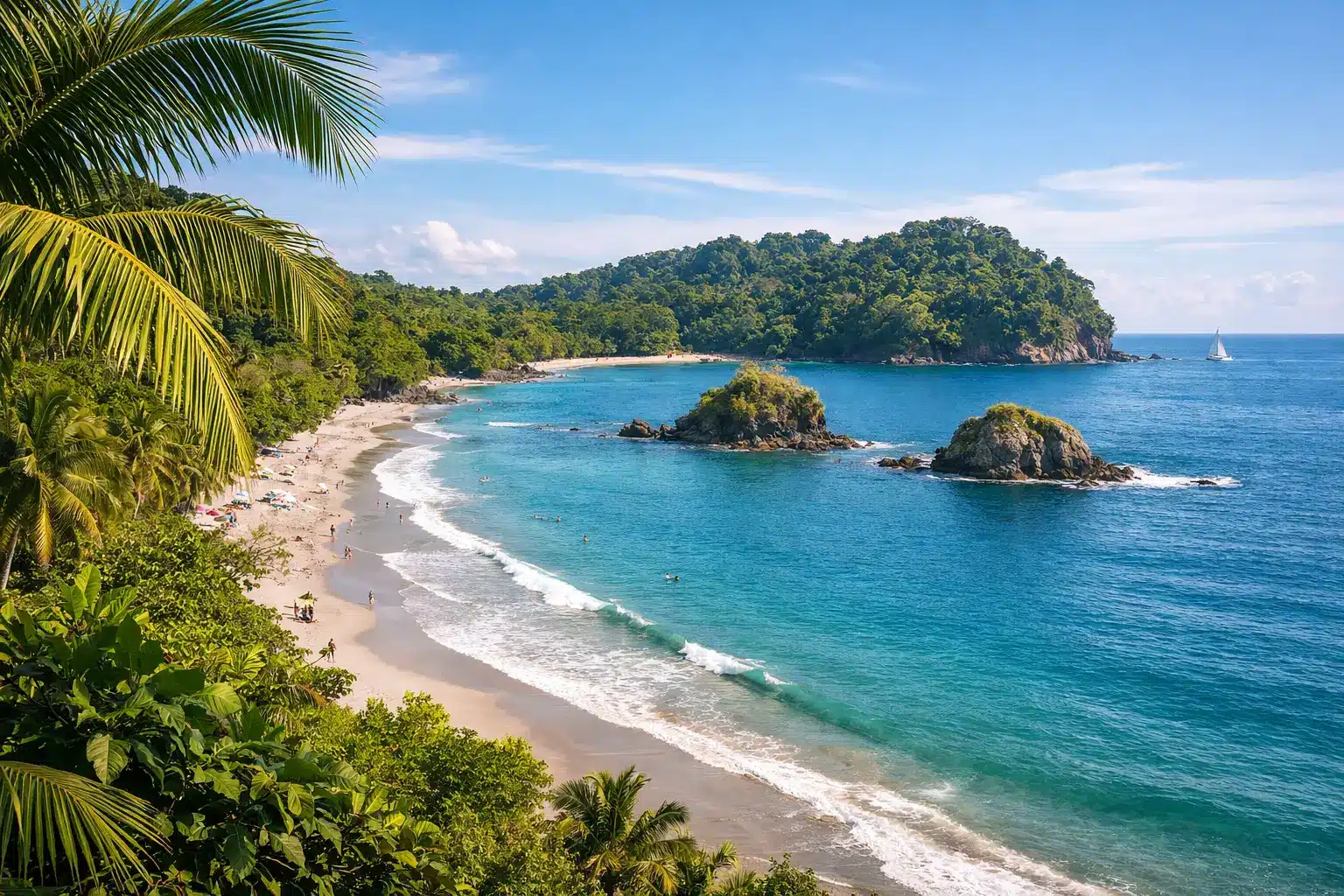
Espadilla Beach has the broad, active energy many travelers enjoy. It is social, scenic, and ideal for long walks. Inside the national park, the beaches feel more enclosed and postcard-ready, with calm turquoise water and jungle pressing close to the sand. Up in the hills, sunset is practically a daily ritual. Restaurants and hotels built into the slope take full advantage of the view, and there are few places in the country where dinner comes with a better chance of spotting monkeys in the trees while the sky turns orange.
That said, topography shapes the experience here. Manuel Antonio is not a flat beach town where everything is a casual stroll away. Roads are steep, curves are tight, and walking can be less charming in the midday heat than it seems on a map. If mobility or convenience is a major concern, where you stay matters a lot.
Where travel dreams meet real-world logistics
This is the part many glossy destination stories skip, but it is often what readers need most.
Manuel Antonio is easy to love and sometimes a little tricky to navigate. Traffic can back up on the main road, especially during peak travel periods. Parking can be confusing for first-timers. Prices are often higher than in less famous destinations nearby. And because the area is so desirable, development has long tested the limits of infrastructure and land-use planning.
None of that makes it a bad choice. It simply makes it a mature destination rather than an undiscovered one.
For travelers, that means planning ahead pays off. Early park entry, reservations where required, realistic expectations about drive times, and some flexibility around weather and crowds will improve the trip. For prospective buyers or relocators, the same principle applies on a bigger scale. A spectacular view may come with a steep access road. A rental property may perform well in high season but require careful management, maintenance, and legal compliance year-round. Beauty is abundant here, but ease is not automatic.
The real estate and lifestyle pull of Manuel Antonio
It is easy to see why Manuel Antonio attracts interest far beyond vacation planning. The area offers a compelling mix of scenery, tourism demand, and lifestyle appeal. Ocean-view homes, hillside villas, boutique hotels, wellness-focused properties, and income-generating rentals all have a natural audience in a destination with strong international visibility.
But this is also where Costa Rica rewards informed decisions over impulsive ones. In a place where terrain, zoning, water access, environmental regulations, title review, and construction practicalities all matter, local expertise is essential. The romance of a jungle-meets-ocean property should always be matched by due diligence.
For remote workers and part-time residents, Manuel Antonio can be a particularly attractive middle ground. It feels tropical and immersive, yet it is not cut off from essential services. Quepos adds functionality that many lifestyle buyers appreciate. You can spend the morning watching toucans from a terrace and still handle practical errands without turning the day into an expedition.
Conservation is not just part of the branding
One reason Manuel Antonio remains so compelling is that nature is not staged here. It is alive, present, and uncomfortably close to the edge of human pressure. Wildlife corridors matter. Responsible waste management matters. Smart development matters. Visitor behavior matters too.
Feeding monkeys may look entertaining for a moment, but it damages animal behavior and can create dangerous patterns. Building without respect for drainage, forest cover, or local regulation has consequences that outlast a tourist season. The future of Manuel Antonio depends on whether growth remains accountable to the ecosystem that made the area valuable in the first place.
That tension is part of the story, and it should be. Costa Rica’s success as a destination has always been tied to stewardship, not just scenery. Manuel Antonio is one of the clearest places to see what is at stake when a beloved natural destination becomes globally visible.
Is Manuel Antonio right for you?
If you want total quiet, bargain pricing, and the feeling of having found a secret beach town, probably not. Costa Rica has other places that fit that mood better.
If you want iconic scenery, strong wildlife viewing, excellent hospitality options, and a destination that combines comfort with genuine natural drama, Manuel Antonio remains one of the best choices in the country. It works especially well for first-time visitors, multigenerational travelers, couples mixing romance with adventure, and anyone considering whether a Costa Rica lifestyle can be both beautiful and practical.
That is the real charm of the place. Manuel Antonio does not ask you to choose between rainforest and convenience, between beach time and biodiversity, between aspiration and reality. It offers all of them at once, and then asks you to appreciate the balance required to keep it that way.
Go early. Look up into the trees. Stay a little longer than you planned. And if Manuel Antonio wins you over, let it also sharpen your respect for the kind of destination that only stays extraordinary when people treat it that way.
FAQ
Where is Manuel Antonio in Costa Rica?
Manuel Antonio is on Costa Rica’s Central Pacific coast, near the town of Quepos. It is known for its national park, beaches, wildlife, and hillside ocean views.
Is Manuel Antonio worth visiting?
Yes, Manuel Antonio is worth visiting if you want wildlife, beaches, rainforest, restaurants, tours, and beautiful scenery in one accessible destination.
What animals can you see in Manuel Antonio?
You may see sloths, capuchin monkeys, howler monkeys, iguanas, deer, toucans, frogs, and many tropical birds.
Is Manuel Antonio National Park crowded?
Yes, Manuel Antonio National Park can be crowded, especially during high season and holidays. Visiting early helps improve the experience.
Do you need a guide in Manuel Antonio National Park?
You do not need a guide, but hiring one can greatly improve your wildlife sightings. Guides know where to look and often carry spotting scopes.
Is Manuel Antonio good for children?
Yes, Manuel Antonio is very good for children because it combines beaches, wildlife, tours, restaurants, and manageable outdoor activities.
Can you live in Manuel Antonio?
Yes, some people live in or near Manuel Antonio, especially remote workers, retirees, hospitality owners, and part-time residents. Nearby Quepos provides useful services.
Is Manuel Antonio expensive?
Manuel Antonio can be more expensive than less famous Costa Rican beach towns because of its popularity, views, tourism demand, and hospitality infrastructure.