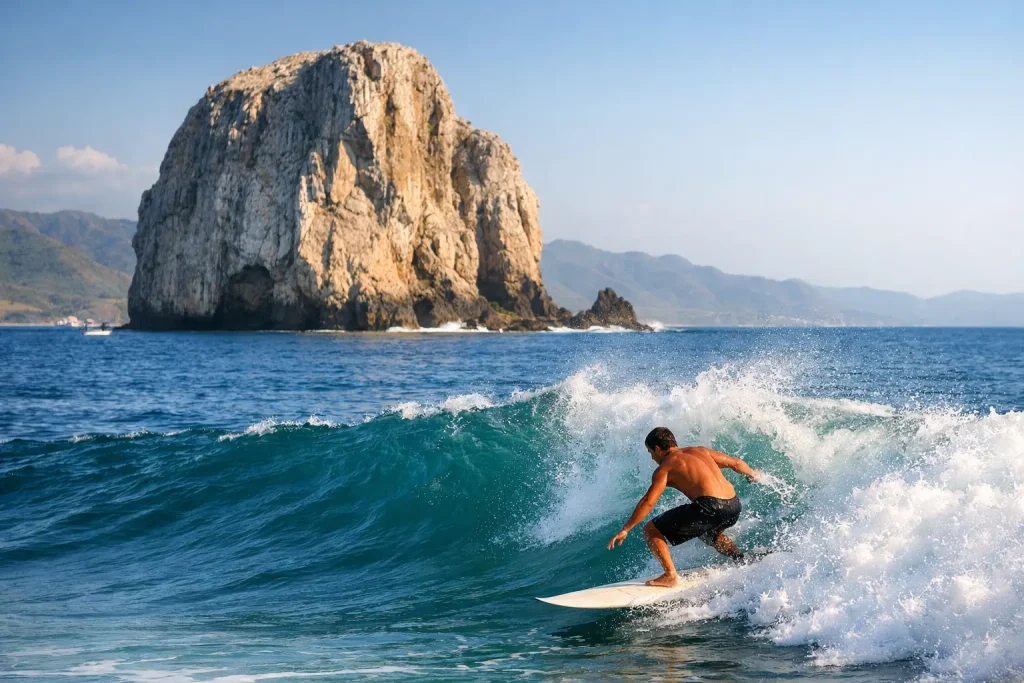

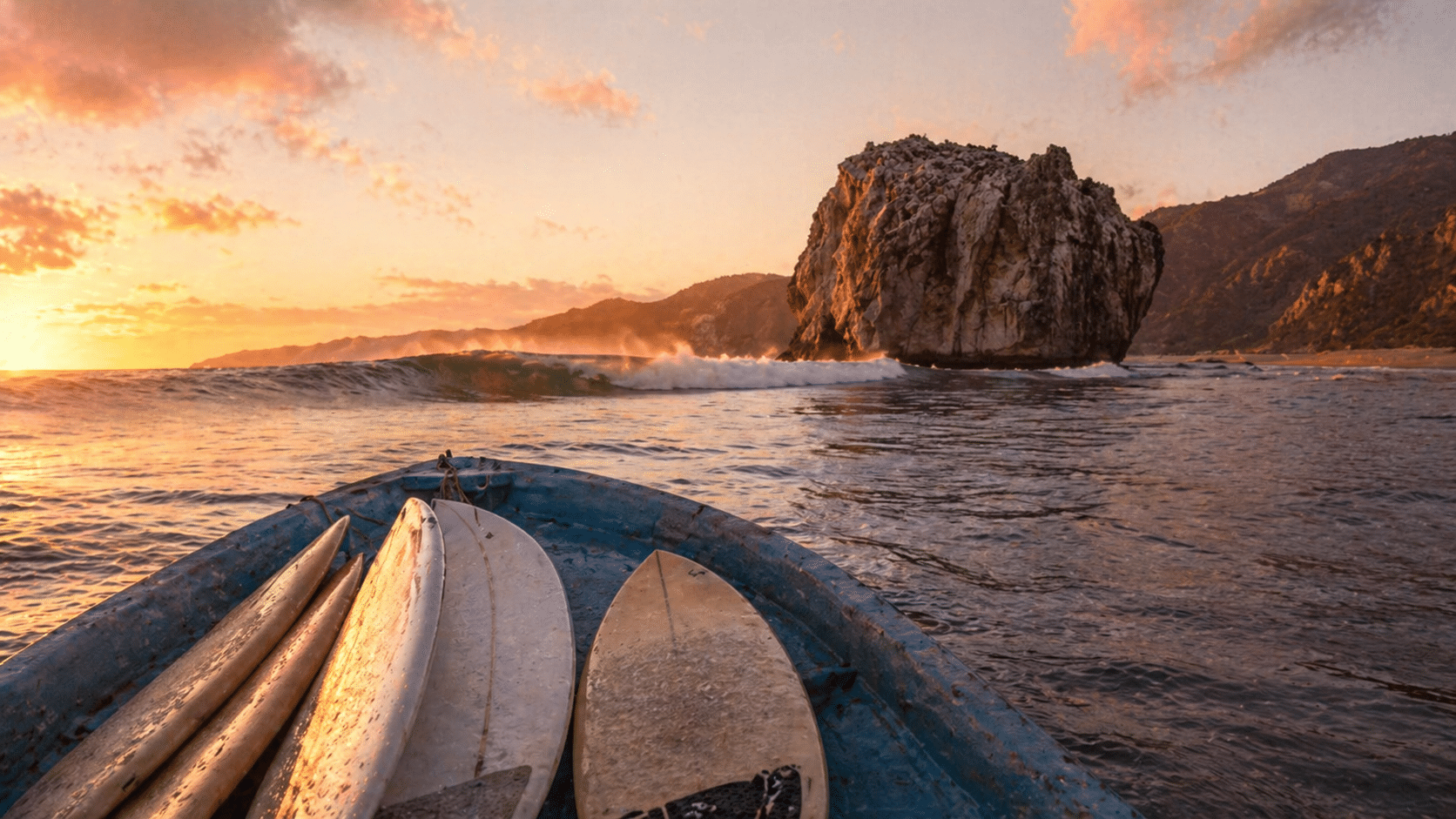
At first light, the lineup off Playa Naranjo can look almost unreal – clean lines marching in from the Pacific, a dark volcanic rock guarding the bay, and long walls of water peeling across a wide sand bottom. Witches Rock surfing Costa Rica is not a casual phrase tossed around by surf travelers. It names one of the country’s most iconic waves, a place that has lived in surf lore for decades and still delivers the kind of session people replay in their minds long after the wax is gone.
This is not the sort of break you wander into by accident. Witches Rock sits inside Santa Rosa National Park in Guanacaste, and getting there has always been part of the story. For years, that remoteness helped build its mystique. Even now, with better boats and more organized surf access, it feels just far enough removed from the daily rhythm of beach towns to keep its wild edge.
Why Witches Rock surfing Costa Rica became legendary
Some waves become famous because they are easy to reach. Witches Rock did the opposite. It became a legend because it offered world-class conditions in a setting that felt almost untouched. The wave breaks over sand, which makes it more forgiving than a shallow reef, but that should not be confused with soft or mellow. On the right swell, this place has real size, speed, and power.
The shape is what surfers remember. Witches Rock can throw up long, workable walls with sections that invite carving, trimming, and, when everything clicks, fast barrels. It is one of those rare breaks that can be appealing to a strong intermediate surfer on a modest day and deeply demanding for advanced surfers when the swell jumps.
There is also the setting, and it matters. Playa Naranjo is part of a protected national park landscape where dry tropical forest meets open coastline. You may see monkeys in the trees before your boat leaves shore, and on the approach, the coast appears broad, rugged, and strikingly undeveloped. That sense of place is a big reason the wave has endured as more than a surf spot. It feels like a Costa Rica story in one frame – adventure, beauty, and nature holding the upper hand.
The wave itself at Witches Rock
On a good day, the break offers A-frame peaks with both lefts and rights, though conditions often favor one direction more than the other depending on sand movement, swell angle, and wind. The bottom is sandy, which changes constantly and keeps the wave from being identical month to month. That variability is part of the charm and part of the challenge.
When it is small to medium, the wave can be playful and open-faced, with enough push to keep things exciting but not overwhelming. When a solid northwest swell arrives, the mood changes. Sections stand up faster, the drop gets more serious, and positioning becomes everything. This is where the fantasy and the reality of Witches Rock separate a bit.
Yes, it is famous. Yes, it can produce dream rides. But it also asks for judgment. A surfer who is comfortable at beach breaks with some consequence may love it. A surfer who is used only to soft, forgiving rollers may find it humbling.
Best conditions and what to expect
The dry season, especially from December through April, is when many visitors aim for Witches Rock. Offshore winds are more common in Guanacaste at that time, thanks to the Papagayo winds, and they can groom the wave beautifully. Mornings often offer the cleanest conditions, although strong wind can also make things trickier later in the day.
Swell direction matters. Northwest and west swells tend to light the place up, and size makes all the difference in who should paddle out. Waist-high Witches Rock is a different conversation from overhead Witches Rock. Tide can also shape the experience. Many surfers like it around mid tide, but local knowledge and current sand setup are worth paying attention to because this is not a machine-made wave with fixed behavior.
Water access is another factor. Most surfers reach Playa Naranjo by boat from the nearby Playas del Coco area or other points in the Gulf of Papagayo. Overland access has historically been limited and can change based on park rules, road conditions, and seasonal restrictions. That means planning ahead is not optional.
Is Witches Rock right for your skill level?
This is where honesty pays off. There is a tendency in surf travel to chase names before matching them to ability. Witches Rock can be wonderful for upper intermediates on smaller, clean days, especially those with solid paddling fitness and confidence in punchier surf. But it is not a beginner wave in the usual sense.
If you are still learning to angle takeoffs, read shifting peaks, or handle fast pop-ups under pressure, there are better places to build your foundation. Costa Rica has plenty of gentler breaks where progression comes with less punishment. Saving Witches Rock for the right day, or for the next trip, is not missing out. It is smart surfing.
Advanced surfers, on the other hand, come here for exactly what can intimidate others – speed, room to move, occasional barrels, and enough raw energy to feel memorable. When conditions line up, the wave offers that clean, powerful canvas surfers travel the world to find.
The full experience goes beyond the lineup
Part of what makes witches rock surfing Costa Rica so compelling is that the trip rarely feels like only a surf session. The journey through protected coastline adds texture to the day. Boats cut across blue water while the hills of Guanacaste rise dry and golden behind the shore. Depending on the season, the air can feel sharp with offshore wind or warm and still before sunrise. Even before paddling out, you know you are not headed to a routine beach break.
There is also a conservation story here, and it should not be ignored. Santa Rosa National Park protects one of the last remaining stretches of tropical dry forest in Central America. That makes the wave’s setting more than scenic background. It is part of a larger ecological system under constant pressure from climate shifts, tourism growth, and coastal development elsewhere in the region.
That tension is familiar in Costa Rica. The country’s global reputation rests in part on preserving exactly the kinds of places people want to visit. Surf tourism can support local economies and deepen appreciation for wild landscapes, but it also requires restraint. Respecting park rules, choosing responsible operators, and treating the beach as protected habitat rather than a private playground are small acts with real weight.
What to bring and what to plan for
Because access is usually by boat and the beach is remote, preparation matters more here than at a town break with shops nearby. Bring enough water, reef-safe sun protection, a hat, and a dry bag for essentials. Even though the wave breaks over sand, the tropical sun and offshore wind can wear you down faster than expected.
Board choice depends on the forecast. On moderate days, many surfers enjoy a performance shortboard or hybrid with enough paddle power to get in early. On larger days, a step-up can make all the difference. This is one of those waves where being slightly over-prepared beats wishing you had more board under your feet.
It also helps to travel with realistic expectations. Nature does not owe anyone a postcard session. The wind may come up. The sand may shift. The swell may miss the mark. But when the conditions are on, few places in Costa Rica combine such a dramatic backdrop with such a high-quality wave.
The place Witches Rock holds in Costa Rica surf culture
Costa Rica has no shortage of famous breaks, and each has its own personality. Salsa Brava has raw reef power on the Caribbean. Pavones is all about length and rhythm. Tamarindo and Nosara have introduced generations of visitors to the country’s surf culture. Witches Rock occupies a different lane. It represents the frontier spirit that helped shape Guanacaste’s surf identity – equal parts destination and expedition.
That is likely why it still carries weight with surfers who have seen plenty of good waves elsewhere. The appeal is not only performance. It is the combination of access, environment, and memory. A session here tends to feel earned.
Howler has spent decades telling Costa Rica stories that hold both beauty and context, and Witches Rock belongs in that tradition. It is thrilling, yes, but also a reminder that the country’s greatest experiences often come wrapped in logistics, humility, and respect for the landscape.
If this wave is on your list, go with open eyes. Watch the forecast, know your limits, and leave room for the place to surprise you. Some sessions are measured in turns and barrels. Others are measured by how small and lucky you feel sitting in a lineup off a legendary rock, waiting for the next set to rise out of the Pacific.
FAQ
Where is Witches Rock located?
Witches Rock is located at Playa Naranjo inside Santa Rosa National Park in Guanacaste, Costa Rica.
What is Witches Rock called in Spanish?
Witches Rock is commonly known as Roca Bruja in Spanish.
Can beginners surf Witches Rock?
Beginners should usually avoid Witches Rock and choose gentler Costa Rica surf breaks first.
What season is best for Witches Rock surfing?
The dry season from December to April is often best because offshore winds are more common in Guanacaste.
Do you need a boat to reach Witches Rock?
Most surfers reach Witches Rock by boat, commonly from Playas del Coco or nearby Gulf of Papagayo departure points.
Is Witches Rock a reef break?
No, Witches Rock is a sand-bottom beach break, although it can still be powerful and challenging.
What level of surfer should go to Witches Rock?
Strong intermediate to advanced surfers are best suited for Witches Rock, depending on the swell size and conditions.