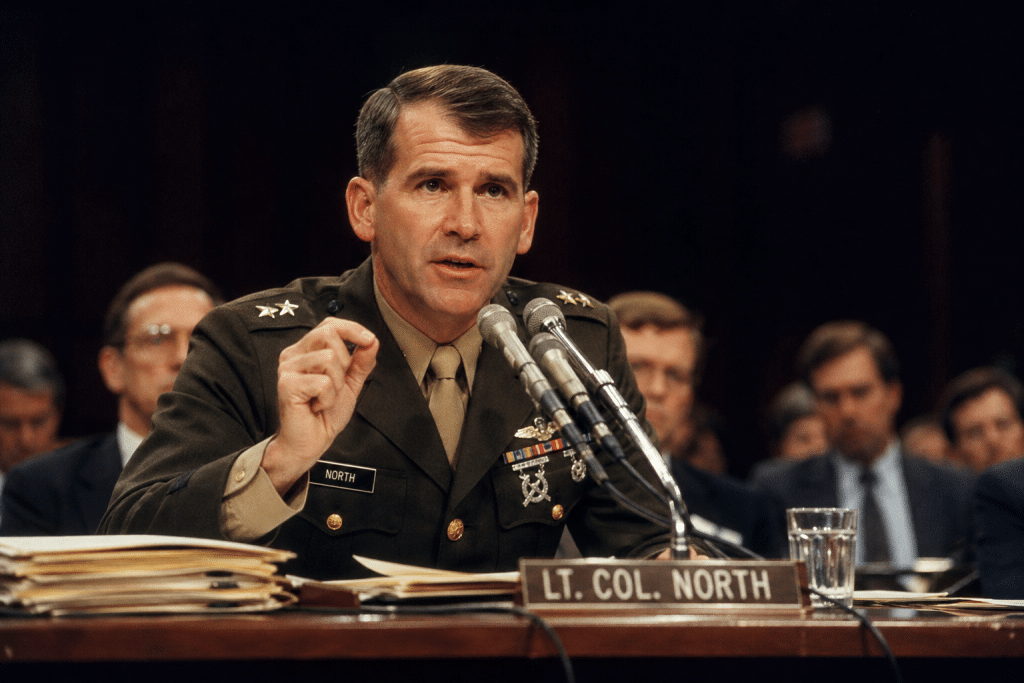

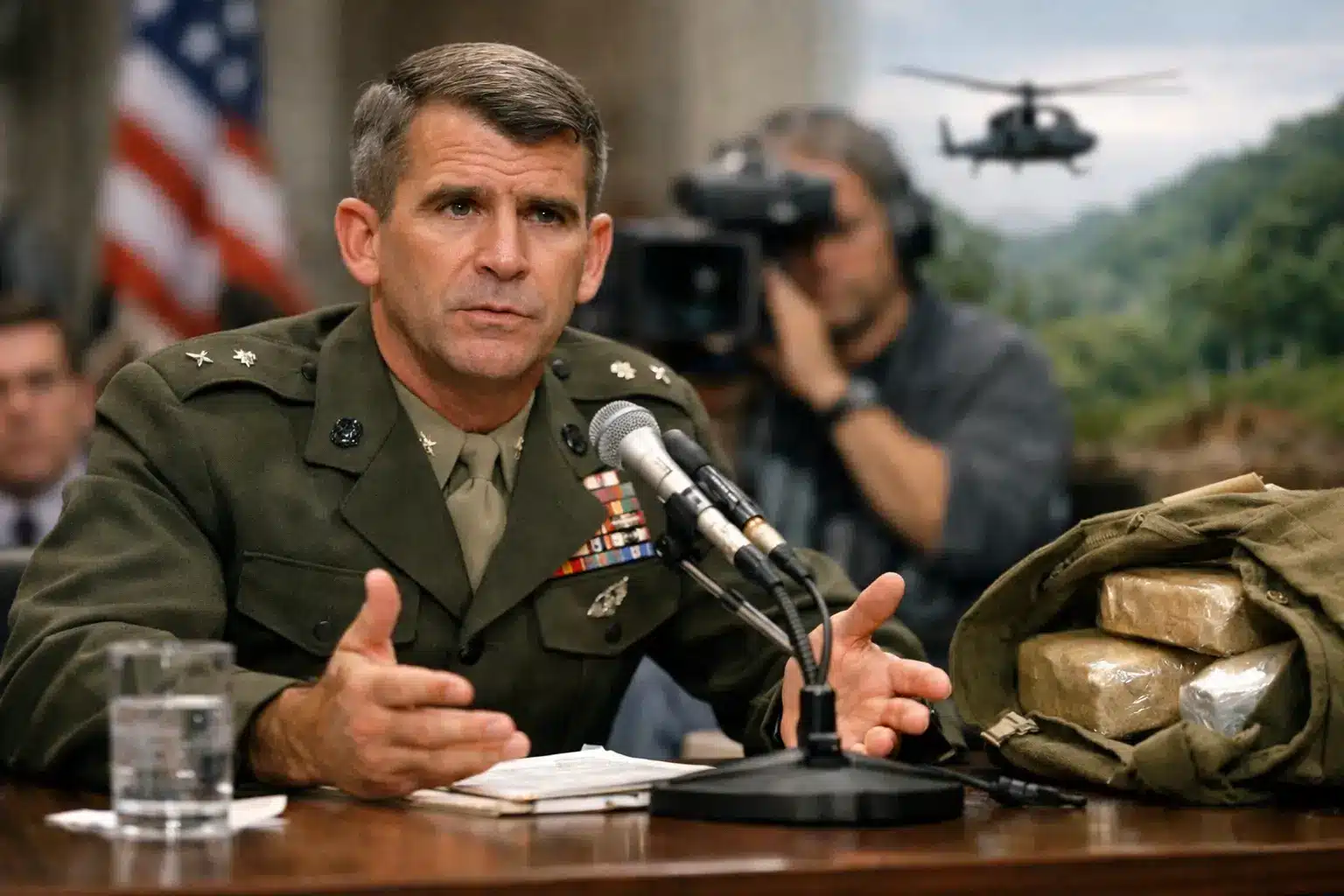
Some scandals fade into the wallpaper of history. The Iran Contra affair never really did. Mention iran contra oliver north, and even people who only vaguely remember the 1980s can picture the uniform, the televised hearings, and the sense that something shadowy had been happening behind the polished façade of Washington power.
For many readers, the name Oliver North sits at the center of the story. That makes sense, but it is only partly true. North was a key operator, a Marine lieutenant colonel working on the National Security Council staff, and he became the public face of the scandal. Yet the affair was bigger than one man, messier than a single conspiracy, and more revealing than the dramatic hearings that turned him into a political lightning rod.
To understand why the story still matters, it helps to see it not as a relic of Cold War theater but as a lesson in what happens when foreign policy goals, ideology, secrecy, and executive power start moving faster than oversight can keep up.
What was iran contra oliver north really about?
At its core, the Iran Contra affair involved two separate but connected policies.
First, senior officials in the Reagan administration facilitated secret arms sales to Iran. That was startling on its own. Iran was officially viewed as hostile to the United States, and the administration had publicly opposed negotiating with terrorists or making concessions through arms deals. The rationale behind the sales was tangled. Some officials hoped to build ties with supposedly moderate elements in Iran. Others believed the deals might help secure the release of American hostages held in Lebanon by groups linked to Iran.
Second, money connected to those arms transactions was diverted to support the Contras, rebel forces fighting the Sandinista government in Nicaragua. This is where the scandal deepened. Congress had placed restrictions on US support for the Contras through a series of measures known as the Boland Amendments. Those limits did not end the administration’s desire to back the anti-Sandinista cause, but they did make direct support legally and politically hazardous.
So the scandal was not just about secret diplomacy. It was about creating an end run around Congress.
Oliver North’s role in the Iran Contra affair
Oliver North did not invent the anti-communist mindset that drove policy in Central America, and he was not the only official involved in outreach to Iran. But he became central because he helped coordinate parts of the operation and maintain the web of private channels, funding streams, and communications that kept it alive.
North worked in a world where official policy and unofficial action blurred together. He dealt with intermediaries, tracked movements of money, and helped sustain support for the Contras when legal restrictions made the normal route difficult. In later testimony, North presented himself as a patriot carrying out a mission he believed served US interests. To his supporters, he was a soldier trapped in a political storm. To his critics, he was part of a deliberate effort to subvert the law.
That tension is one reason his image endured. North looked like the kind of character history likes to preserve – disciplined, camera-ready, certain of his cause. But certainty can hide the more complicated truth. He was both participant and symbol, actor and shield.
Why the scandal exploded
Washington has never exactly been a stranger to covert action. What made Iran Contra explosive was the collision between public statements and private conduct.
The Reagan administration had taken a hard line against terrorism and against the revolutionary government in Iran. It had also framed support for the Contras as morally necessary in the Cold War struggle against leftist expansion in the Western Hemisphere. But when news broke in 1986 that arms had been sold to Iran, the contradiction was immediate and glaring.
Soon the second layer emerged – profits from the arms deals had been redirected toward the Contras. Now the story was not just hypocrisy. It was the possibility that administration officials had worked around Congress after lawmakers had set clear limits.
That is the point where scandal became constitutional drama. In the American system, foreign policy may give presidents wide latitude, but it does not erase checks and balances. Iran Contra raised a blunt question: how far can an administration go in secret before it stops being strategic flexibility and starts becoming contempt for democratic oversight?
The hearings that made Oliver North famous
If you were around in the late 1980s, chances are you remember the hearings almost as vividly as the underlying facts. They turned policy scandal into a national theater.
North’s testimony was the headline act. He appeared in uniform, composed and forceful, and he defended his actions with a mix of loyalty, defiance, and moral conviction. That mattered. Public scandals are never judged on facts alone. They are filtered through personality, performance, and the mood of the country.
North was skilled enough to win admiration from many Americans who saw him as a man taking risks in defense of freedom. Others watched the same testimony and saw something more troubling – an official who seemed to believe good intentions excused bypassing legal limits.
That split reaction tells you a lot about why the affair still echoes. It was not merely a legal controversy. It was a national argument about whether outcomes justify methods when leaders believe the stakes are high enough.
Was Oliver North convicted?
Yes, but the answer needs context.
North was charged and convicted on three counts in 1989, including obstructing Congress and destroying documents. But those convictions were later vacated on appeal. The appellate court found that the testimony he gave under a grant of immunity may have influenced witnesses in his prosecution, making the convictions unsafe.
That legal outcome has fueled decades of confusion. Some people hear that the convictions were overturned and conclude he was fully cleared. Others treat the original conviction as final proof of guilt in every respect. Reality is narrower and more frustrating. The court ruling did not erase the scandal or the evidence that improper conduct occurred. It addressed the fairness of the prosecution process.
That distinction matters because political accountability and criminal accountability are not always the same thing. Iran-Contra exposed a great deal, even where courtroom outcomes remained incomplete.
Why Iran-Contra still matters now
It is tempting to file this away as an artifact of the Cold War, all Nicaragua, Tehran, and grainy hearing footage. But the deeper themes feel current.
First, Iran-Contra is a case study in how secrecy can expand when leaders are convinced their goals are righteous. The people involved were not cartoon villains twirling mustaches in a basement. Many believed they were protecting American interests. That is exactly why the story is useful. Democracies are often tested not by obvious enemies of the law, but by insiders who think the law is too slow, too limiting, or too naive for the moment.
Second, the scandal showed how easily the public can become attached to personalities rather than structures. Oliver North became the face, but focusing only on him can let institutions off the hook. The machinery that made Iran-Contra possible included networks of officials, private actors, intelligence assumptions, and a White House culture that rewarded aggressive workarounds.
Third, it remains a warning about the fragility of trust. Governments need confidentiality in some matters. That is reality, especially in diplomacy and intelligence. But there is a line between necessary secrecy and systematic evasion. Once the public suspects that policy is being made through hidden channels insulated from oversight, trust erodes fast and returns slowly.
The human side of a constitutional scandal
There is also a quieter angle that tends to get lost. Iran-Contra unfolded in a period of intense fear and ambition. The Cold War was still shaping how American leaders saw the map. Central America was not a distant abstraction in Washington thinking. It was treated as strategic ground. Iran, meanwhile, was tied to hostage crises, revolutionary politics, and regional instability.
That pressure does not excuse what happened, but it helps explain why smart, experienced officials made choices that seem astonishing in hindsight. History is rarely powered by one bad decision alone. More often, it moves through layers of rationalization. One exception becomes a tactic. One tactic becomes a system. Soon, the people inside it no longer think they are crossing lines. They think they are carrying the burden of action while others hesitate.
That is why the story endures. The Iran-Contra affair is not just about Oliver North, not just about Reagan-era politics, and not just about a scandal from another decade. It is about the recurring temptation to treat accountability as an obstacle instead of a safeguard.
When that temptation returns, as it often does in every generation, this old story still has fresh teeth. The names may change, the geography may shift, and the justifications may sound more modern, but the warning remains familiar: once leaders decide the mission matters more than the rules, the damage rarely stays secret for long.
FAQ: Iran-Contra and Oliver North
What was Iran-Contra in simple terms?
Iran-Contra was a scandal involving secret US arms sales to Iran and support for Contra rebels in Nicaragua, despite congressional restrictions on that support.
Why is Oliver North linked to Iran-Contra?
Oliver North is linked to Iran-Contra because he helped coordinate parts of the operation while serving on the National Security Council staff and later became the public face of the scandal during televised hearings.
Did Oliver North act alone?
No, Oliver North did not act alone. The affair involved a wider network of officials, intermediaries, policy goals, and private channels.
Why were arms sold to Iran?
Arms were sold to Iran partly in the hope of improving contact with supposed moderate Iranian figures and helping secure the release of American hostages held in Lebanon.
Why was supporting the Contras controversial?
Supporting the Contras was controversial because Congress had passed restrictions limiting US assistance to them. The scandal centred partly on efforts to work around those limits.
What were the Boland Amendments?
The Boland Amendments were congressional measures that restricted the US government’s support for the Contras in Nicaragua.
Was Oliver North convicted?
Yes, Oliver North was convicted in 1989 on three counts, but those convictions were later vacated on appeal because of concerns connected to his immunised congressional testimony.
Did the appeal mean Oliver North was fully cleared?
No, the appeal did not erase the scandal. It addressed the fairness of the prosecution process, not every historical or political question raised by Iran-Contra.
Why were the Iran-Contra hearings so famous?
The hearings were famous because they turned a complicated covert policy scandal into televised national drama, with Oliver North’s testimony becoming the central public moment.
Was Iran-Contra only about the Cold War?
No, Iran-Contra was shaped by the Cold War, but its bigger themes include executive power, secrecy, oversight, and public trust.
Why should people still study Iran-Contra?
People should still study Iran-Contra because it shows how democratic systems can be strained when officials believe their goals justify secret workarounds.
What is the main takeaway from Iran-Contra?
The main takeaway is that democratic oversight matters most when leaders are convinced the stakes are high enough to ignore it.