

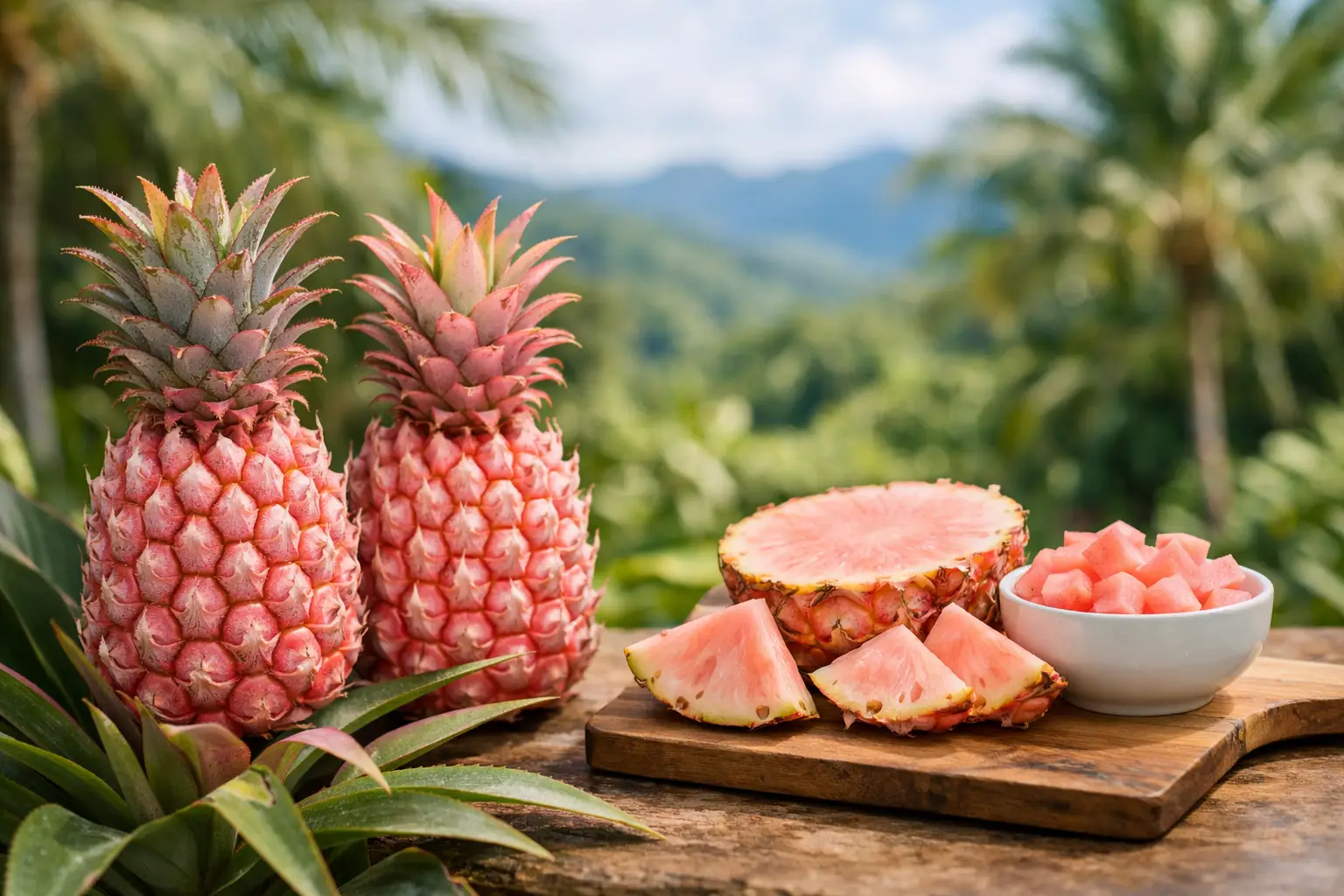
A pineapple with rosy flesh sounds like a market myth, the kind of fruit story travelers swap over breakfast near the beach. But Pink Pineapples are real, and their unusual color has turned them into one of the most talked-about tropical fruits in recent years. The curiosity is understandable. Pineapple is already iconic in warm-climate destinations, and a pink version feels almost too pretty to be natural.
The first surprise is that the pink flesh is not simply a trick of ripeness. It comes from a change in the fruit’s pigment balance. Traditional pineapple gets its golden-yellow color from carotenoids, while pink varieties have reduced conversion of certain pigments, allowing a rosy tone to remain. The result is a fruit that looks dramatic when sliced, especially against the spiky green crown and textured rind that make pineapples so visually distinct in the first place.
Why Pink Pineapples get so much attention
Some food trends are all about appearance and disappear as quickly as they arrive. Pink Pineapples have lasted in the public imagination because they offer more than a photogenic cross-section. People often describe the flavor as sweeter and a little less acidic than standard pineapple. That can make them appealing to anyone who loves tropical fruit but sometimes finds regular pineapple too sharp on the palate.
That said, this is where expectations need a reality check. Not every pink pineapple will taste dramatically different from a high-quality golden one picked at the right stage. Growing conditions, harvest timing, and storage still matter. In other words, color alone does not guarantee a better fruit. It guarantees a different experience, and for many buyers, that is enough.
Are Pink Pineapples natural?
This is the question most readers ask first, and the answer depends on what they mean by natural. Pink Pineapples are not a wild novelty discovered in a hidden tropical valley. They were developed through agricultural science to express their pink interior. For some consumers, that is a fun example of innovation in fruit production. For others, it raises questions about how food is bred, marketed, and regulated.
Those concerns are fair. Tropical agriculture often sits at the intersection of beauty, commerce, and environmental responsibility. A fruit can be eye-catching and still deserve scrutiny about how it is grown, shipped, and sold. For readers who care deeply about sustainability, the better question is not just whether the fruit is pink, but whether the farming practices behind it respect land, water, labor, and biodiversity.
What they taste like
Cut into a Pink Pineapple and you will usually find flesh that ranges from soft blush to deeper salmon pink. The aroma is familiar, but the flavor can lean candy-sweet, with less bite than many conventional pineapples. Some people love that softer acidity. Others miss the bright tang that gives pineapple its classic tropical edge.
This is one of those cases where preference matters more than hype. If you enjoy fruit that balances sweetness with a bit of sharpness, a traditional pineapple may still win. If you want a smoother, sweeter profile for fruit platters, desserts, or cocktails, the pink variety can be a memorable choice.
Pink Pineapples and the tropical fruit obsession
Part of the fascination comes from what the fruit represents. Tropical produce has always carried a sense of place – sunshine, rain, fertile soils, and the sensory richness of warm-climate living. For travelers and expats, unusual fruit often becomes part of the larger dream: the open-air market, the roadside stand, the breakfast table filled with color.
That is also why novelty fruit should be approached with some perspective. In countries celebrated for agricultural abundance, the real story is not usually one rare variety. It is the astonishing diversity already growing there – pineapples, mangoes, papayas, bananas, cacao, citrus, and dozens of lesser-known fruits with long local histories. The pink pineapple may grab headlines, but it belongs to a much bigger tropical food culture.
Should you buy one?
If you come across Pink Pineapples and want the experience, it is easy to understand the appeal. They are conversation-starting fruit. They look beautiful on the table and make a fun gift for anyone who loves tropical flavors. If your interest is culinary adventure, they are worth trying at least once.
If your interest is value, the calculation changes. Pink varieties are often more expensive, and that premium pays for rarity and branding as much as flavor. A perfectly ripe conventional pineapple can still be the better buy. For anyone who shops with both curiosity and common sense, that is the trade-off.
There is room for both reactions: delight at the novelty and caution about the markup. That balance feels especially relevant in places where food is more than trend material. It is agriculture, livelihood, and identity.
In the end, Pink Pineapples are interesting not just because they are pink, but because they reveal how we experience tropical fruit today – through taste, aesthetics, science, and storytelling all at once. If you get the chance to try one, enjoy the surprise, then keep exploring the wider fruit world that made pineapple famous long before blush-colored flesh entered the picture.
FAQs
Are pink pineapples genetically modified?
They are developed through controlled agricultural techniques that influence pigment expression, which some classify as genetic modification.
Do pink pineapples taste sweeter?
Yes, they are typically sweeter and less acidic, though flavour can vary depending on ripeness and growing conditions.
Where can you buy pink pineapples?
They are often available in specialty grocery stores, high-end markets, and occasionally in tropical regions.
Are they healthier than regular pineapples?
Nutritionally, they are quite similar to traditional pineapples, offering vitamins, fibre, and antioxidants.
Why are they so expensive?
Their higher cost comes from limited production, branding, and novelty value rather than significant differences in nutrition.
Can you grow pink pineapples at home?
They are not commonly available for home cultivation, as production is typically controlled by specific growers.




Former Navy Journalist, published author and international speaker. Howler executive since 2019.