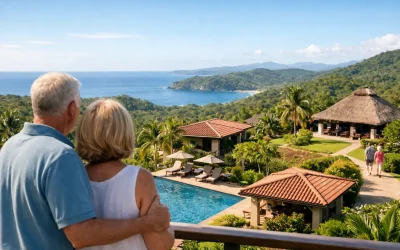

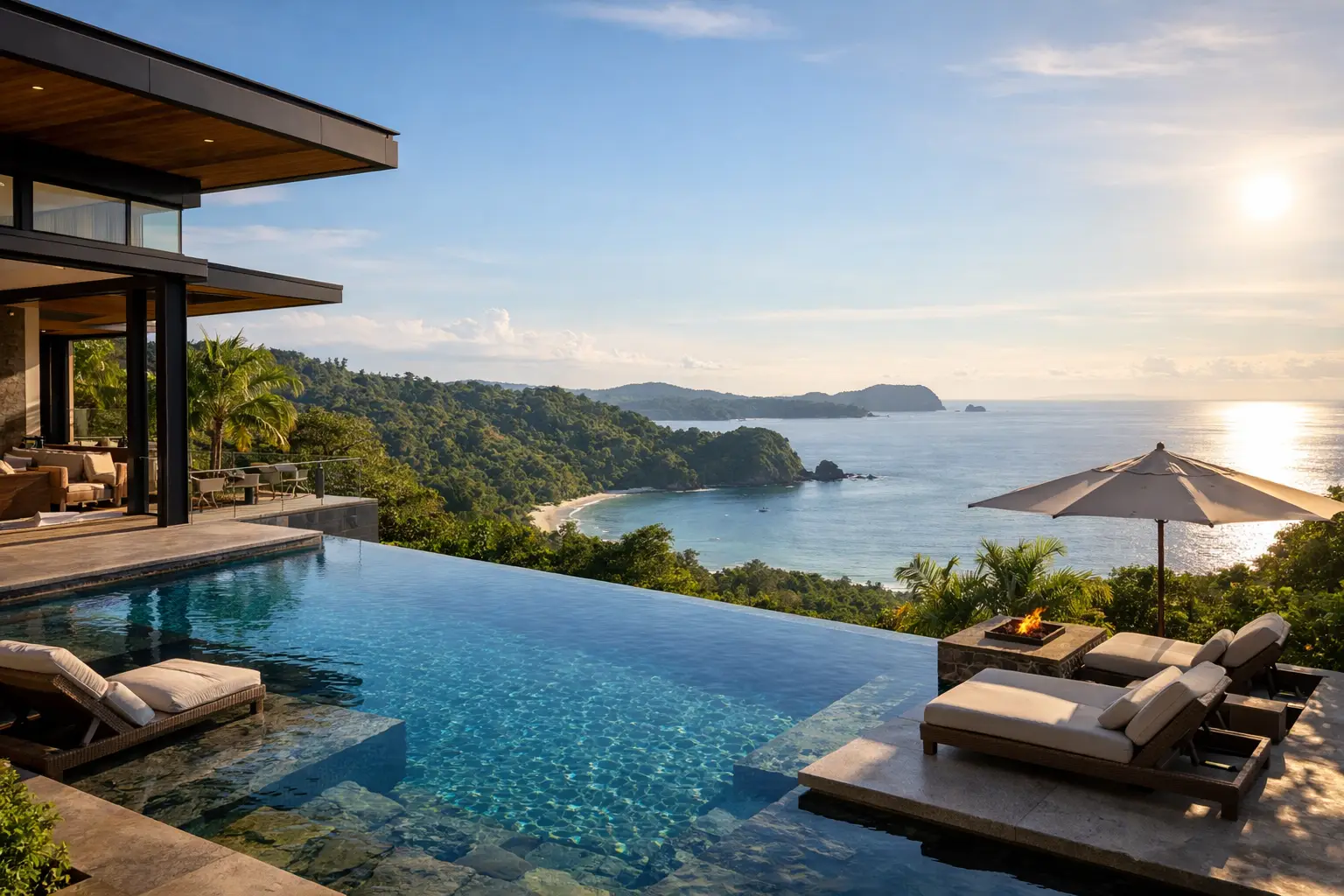
For a growing number of high-net-worth buyers, extreme luxury living in Costa Rica is not about showing off. It is about waking up to a Pacific horizon, hearing howler monkeys in the trees, stepping into a cold plunge before breakfast, and knowing your home sits in one of the most biodiverse countries on earth. Here, luxury looks different. It is less ballroom, more barefoot precision.
That difference is exactly what makes Costa Rica so compelling. The country has long attracted travelers who want beauty and freedom, but the upper tier of the market has evolved far beyond the classic vacation villa. Today’s luxury buyer is looking for privacy, design excellence, legal clarity, strong infrastructure, and a lifestyle that blends comfort with meaning. In Costa Rica, those pieces can come together beautifully, but not automatically.
What extreme luxury means here
In many destinations, luxury is measured by brand names, square footage, and access control. In Costa Rica, the highest end of the market is more layered. Yes, there are dramatic cliffside estates, architectural showpieces, yacht-ready marinas, and residences with concierge-level service. But the real premium often comes from what cannot be manufactured: year-round warm weather, protected ocean views, jungle immersion, proximity to world-class surf, and a daily rhythm that feels healthier and calmer than life in major urban centers.
That is why the best properties do more than impress. They are positioned to capture breezes, sunset angles, privacy, and access. A home with perfect indoor-outdoor flow, reliable water systems, backup power, and thoughtful landscaping may outperform a flashier property that ignores the realities of the tropics. In Costa Rica, luxury without functionality tends to lose its shine fast.
Where extreme luxury living in Costa Rica is taking shape
The luxury map is not limited to one zip code. Guanacaste remains the headline region for many international buyers, especially along the Papagayo Peninsula, Flamingo, Las Catalinas, Tamarindo, and the surrounding north Pacific coast. This part of the country offers a polished mix of beach clubs, golf, marinas, branded residences, fine dining, and increasingly sophisticated wellness and hospitality services. It also benefits from strong tourism demand and relative convenience for travelers arriving through Liberia.
The central Pacific has its own appeal. Areas such as Manuel Antonio, Hermosa, and parts of Santa Teresa attract buyers who want dramatic topography, established luxury inventory, and a slightly more bohemian edge. In these markets, the prestige often comes from the setting itself – jungle-covered hills, whitewater views, and a sense that nature is still firmly in charge.
Then there are the buyers who define luxury as space, quiet, and a cooler microclimate. For them, select mountain enclaves and inland estates can be just as compelling as the coast. A property with panoramic valley views, equestrian facilities, organic gardens, and easy helicopter access may represent a more personal kind of high-end living than a beachfront address.
The takeaway is simple: the best location depends on your version of luxury. Rental performance, family use, wellness priorities, surf access, and year-round livability do not always point to the same place.
The new markers of elite living
Costa Rica’s top tier has matured. Buyers are still drawn to infinity pools and guest houses, but the conversation now goes much deeper. Wellness is a major driver. Private gyms, saunas, treatment rooms, yoga decks, filtered water systems, and chef-designed kitchens are no longer niche requests. They are part of the baseline expectation for many affluent homeowners.
Sustainability is another major differentiator. In a country that markets itself through nature, environmental performance matters. Solar integration, low-impact materials, rainwater capture, native landscaping, and smart energy management are not just feel-good features. They reduce operating costs, improve resilience, and align with what many international buyers value most about Costa Rica in the first place.
Technology also plays a larger role than outsiders sometimes assume. High-speed internet, remote security monitoring, integrated lighting and climate systems, and staff-ready service areas are essential for owners who split time between countries or run businesses remotely. Tropical beauty may be the headline, but smooth logistics are what make a luxury home truly livable.
Beauty has a practical side
Costa Rica rewards dreamers, but it also rewards prepared buyers. Extreme luxury living works best when it is grounded in due diligence. A spectacular property can still come with access issues, water limitations, zoning complications, concession land concerns, homeowners association rules, or construction realities tied to weather and terrain.
That is especially true in coastal markets, where demand has accelerated development pressure. Ocean views are valuable, but so are road quality, drainage, retaining walls, legal easements, and the credibility of the developer or seller. Buyers who have experience in Aspen, Miami, or the south of France sometimes assume the top end operates the same way here. It does not. Costa Rica has its own legal frameworks, permitting culture, and regional differences.
That does not make the market risky by definition. It means expert local guidance is not optional. Strong legal counsel, a respected real estate professional, a clear title review, and technical inspections are part of the luxury process here, not an afterthought. The smartest buyers understand that confidence is one of the most valuable amenities a property can offer.
Service, privacy, and lifestyle design
The finest homes in Costa Rica are increasingly being shaped around full-lifestyle design. Owners want more than a residence. They want a system that supports the way they live. That may mean a property manager who can prepare the home before arrival, arrange transportation, stock the kitchen, coordinate wellness treatments, schedule surf lessons for grandchildren, and secure reservations during peak season.
Privacy is central, but so is ease. Many affluent residents want to feel far from the noise without feeling isolated. They want gated security, but not a sterile environment. They want architectural distinction, but still want the house to breathe with the landscape. Costa Rica is at its best when luxury feels rooted rather than imposed.
This is one reason branded communities and resort-adjacent enclaves continue to perform well. They offer infrastructure and service consistency that appeals to international owners. The trade-off, of course, is that some buyers prefer a more independent estate with fewer rules and a stronger sense of place. Neither approach is inherently better. It comes down to whether you value managed convenience or private autonomy.
Investment appeal, with local realities
Luxury buyers are often motivated by lifestyle first, but investment logic still matters. Costa Rica remains attractive because it combines global visibility with limited prime inventory in key coastal corridors. Ocean-view land is finite. Walkable beach towns with high-end services are still relatively rare. International demand has helped support pricing in the upper end, especially for properties with design quality, reliable management, and proven rental appeal.
Still, this is not a market for simplistic assumptions. Not every luxury home produces strong returns. Ultra-custom properties can be expensive to maintain. Some locations are easier to rent than others. Seasonality, staffing, utility costs, and maintenance in a tropical environment all affect the ownership equation.
That is why the strongest purchases usually sit at the intersection of emotion and discipline. The property should feel exceptional, but it should also make sense on paper. Buyers who respect both sides of that equation tend to be happiest over time.
Why does the setting change the experience?
What sets Costa Rica apart is that the backdrop is not decorative. It shapes daily life. You may spend the morning with a personal trainer overlooking the forest canopy, take meetings from an open-air office, break for a surf session, and end the day with a dinner built around local seafood and produce. The luxury is not just in what you own. It is in how the country allows you to live.
That comes with responsibility. Building and living well here means respecting watersheds, wildlife corridors, local communities, and the pace of a country that values its natural capital. The most meaningful luxury in Costa Rica does not fight the environment. It works with it.
For readers who come to Howler Media looking for the country behind the postcard, that may be the real story. At the highest level, luxury in Costa Rica is not colder, bigger, or louder. It is smarter, more intentional, and deeply connected to place. If that is your definition of wealth, few destinations make the case more convincingly.
FAQs
What is extreme luxury living in Costa Rica?
Extreme luxury living in Costa Rica means high-end property ownership that combines privacy, design, comfort and strong connection to nature.
Where are the most luxurious places to live in Costa Rica?
Some of the most luxurious places to live in Costa Rica include Papagayo, Flamingo, Las Catalinas, Tamarindo, Manuel Antonio, Santa Teresa and select mountain estates.
Why are rich buyers investing in Costa Rica real estate?
Rich buyers invest in Costa Rica real estate for lifestyle, privacy, climate, natural beauty and access to limited prime coastal inventory.
What features do luxury homes in Costa Rica usually have?
Luxury homes in Costa Rica often include ocean views, infinity pools, wellness spaces, smart systems, strong tropical design and private service areas.
Is Costa Rica luxury real estate a good investment?
Costa Rica luxury real estate can be a good investment when location, design, legal clarity and rental or resale potential are all strong.
Do luxury homes in Costa Rica need special due diligence?
Yes, luxury homes in Costa Rica need careful due diligence because title, water, access, zoning and tropical construction realities all matter.
Is Guanacaste the best area for luxury property in Costa Rica?
Guanacaste is one of the strongest luxury regions, especially for buyers seeking marinas, beach clubs, golf and easier airport access.
Are mountain estates in Costa Rica considered luxury?
Yes, mountain estates can be highly luxurious, especially for buyers who value privacy, cool climate, space and panoramic views.
What makes Costa Rica luxury different from luxury in other countries?
Costa Rica luxury feels different because it focuses more on livability, nature, wellness and place rather than pure display.
Can luxury homes in Costa Rica be both sustainable and high-end?
Yes, many of the best luxury homes in Costa Rica combine sustainability with premium design through solar systems, native landscaping and efficient water use.
Are branded communities popular with luxury buyers in Costa Rica?
Yes, branded communities are popular because they offer service consistency, security, infrastructure and managed convenience.
What should overseas buyers check before buying luxury property in Costa Rica?
Overseas buyers should check title, zoning, easements, water, inspections, HOA rules and the reputation of the seller or developer.
Lead photo suggestion: A sleek open-air luxury villa perched above the Pacific at sunset, with an infinity pool, native landscaping and jungle-covered hills rolling down to the sea.