
Costa Rica rewards curiosity, but it punishes rushed itineraries. Travelers who try to cram in every waterfall, beach town, volcano, and wildlife stop often leave with a blur of long drives and surface-level memories. That is why one of the smartest questions to ask before booking is this: What are the best curated travel experiences in Costa Rica for the kind of trip you actually want?
The answer depends less on star ratings and more on fit. In a country where cloud forest lodges, Pacific surf camps, private wildlife reserves, coffee farms, wellness retreats, and barefoot luxury resorts all exist within a relatively compact map, curation matters. The best experiences are not just beautiful. They are thoughtfully designed, locally grounded, and paced in a way that lets you absorb Costa Rica rather than race through it.
What makes curated travel experiences in Costa Rica worth it?
A curated trip should do more than bundle a hotel, shuttle, and tour. In Costa Rica, the best ones solve real friction points: road logistics, shifting weather patterns, regional differences, guide quality, and the gap between a tourist checklist and a meaningful experience.
That matters here because geography can be deceptive. A destination that looks close on a map may take half a day to reach, especially in green season or on mountain roads. The right curator understands those realities and builds around them. They also know when private transfers are worth the cost, when a domestic flight saves a vacation, and when staying put for four nights in one region delivers more than bouncing between three.
The strongest curated experiences also reflect Costa Rica’s values. They tend to include conservation-minded operators, local food, smaller-scale lodgings, and activities that respect ecosystems rather than overwhelm them. If an itinerary promises everything, it is usually offering too much. The best ones are edited.
The best curated travel experiences in Costa Rica by travel style
For most travelers, the sweet spot is not “see all of Costa Rica” but “experience one version of Costa Rica exceptionally well.” These are the categories that consistently deliver.
Wildlife and rainforest immersion
If your idea of a great trip includes scarlet macaws at dawn, sloths in the cecropia trees, and guided walks where a naturalist turns a patch of forest into a living documentary, Costa Rica does this better than almost anywhere. Curated wildlife experiences work best when they pair the right region with expert interpretation.
The Osa Peninsula is the heavyweight choice for serious biodiversity. It feels remote because it is remote, and that is part of the appeal. A well-curated stay here usually includes guided access to primary rainforest, boat transfers or light aircraft logistics, and lodging that balances comfort with the realities of the environment. This is not the place for a rushed two-night stop. It rewards travelers who can slow down and accept that nature runs the schedule.
For easier access without sacrificing wildlife, Tortuguero and the Arenal region can be excellent. Tortuguero offers canal-based exploration and, in season, unforgettable turtle nesting encounters. Arenal provides a softer landing for families or first-time visitors who want wildlife, hot springs, hanging bridges, and polished hospitality in one destination. The trade-off is popularity. You gain convenience and infrastructure, but lose some of the deep remoteness of places like Osa.
Wellness retreats with a sense of place
Costa Rica has no shortage of yoga decks and jungle spas, but the best curated wellness experiences are not generic retreats dropped into a tropical backdrop. They are connected to the landscape, the food, and the pace of local life.
The Nicoya Peninsula stands out, particularly in places where dry forest, ocean air, and a slower rhythm create space to genuinely reset. A strong retreat here might combine movement, surf, nourishing meals, bodywork, and unstructured time. That last part matters. Not every traveler wants a timetable from sunrise meditation to evening cacao ceremony.
For some, wellness means luxury and privacy. For others, it means community and simplicity. Costa Rica offers both, but travelers should look carefully at the balance between serious practice and lifestyle branding. A beautiful retreat can still feel performative if it lacks depth. The best ones leave room for silence, local flavor, and time outdoors beyond the treatment room.
Surf trips that go beyond a lesson package
Surfing in Costa Rica can be world-class, but a truly curated surf experience is about matching the break, season, and coaching style to the traveler. That sounds obvious, yet many visitors end up in the wrong town or on the wrong board because the experience was designed for marketing appeal rather than skill level.
The Pacific coast offers very different surf personalities. Santa Teresa attracts style-conscious travelers who want quality waves, good restaurants, and a social scene. Nosara tends to appeal to those who want a more wellness-oriented atmosphere with consistent beginner-to-intermediate conditions nearby. Tamarindo works well for first-timers and mixed groups because it combines accessibility, amenities, and a wide range of instructors.
For experienced surfers, curation becomes even more valuable. Timing swell windows, choosing the right base, and building in boat access or day missions can turn a good trip into a memorable one. For beginners, the best surf packages include video review, recovery time, proper equipment, and an honest reading of conditions – not just a promise that anyone can stand up on day one.
Cultural and culinary journeys
Some of the most rewarding travel experiences in Costa Rica happen away from the expected adventure circuit. A curated cultural itinerary might weave together coffee, cacao, cooking, architecture, music, artisan communities, and regional history in ways that show the country beyond the postcard image.
The Central Valley is often underestimated by beach-focused travelers, yet it is one of the best places for this kind of trip. Around San Jose and the highland towns, visitors can experience museums, markets, specialty coffee, and a more layered view of Costa Rican identity. Add a stay in the hills with access to farms and gardens, and the trip begins to feel grounded rather than decorative.
This is also where curation helps distinguish authentic exchange from staged performance. Not every farm tour is insightful. Not every cooking class connects to regional tradition. The strongest experiences are led by people who know the stories behind the ingredients, the land, and the changes shaping modern Costa Rica.
Soft-adventure luxury
For travelers who want a strong sense of nature without sacrificing comfort, Costa Rica may be at its best. This is where curated travel shines: private guides, architecturally distinctive lodges, excellent food, and adventure calibrated to your energy level.
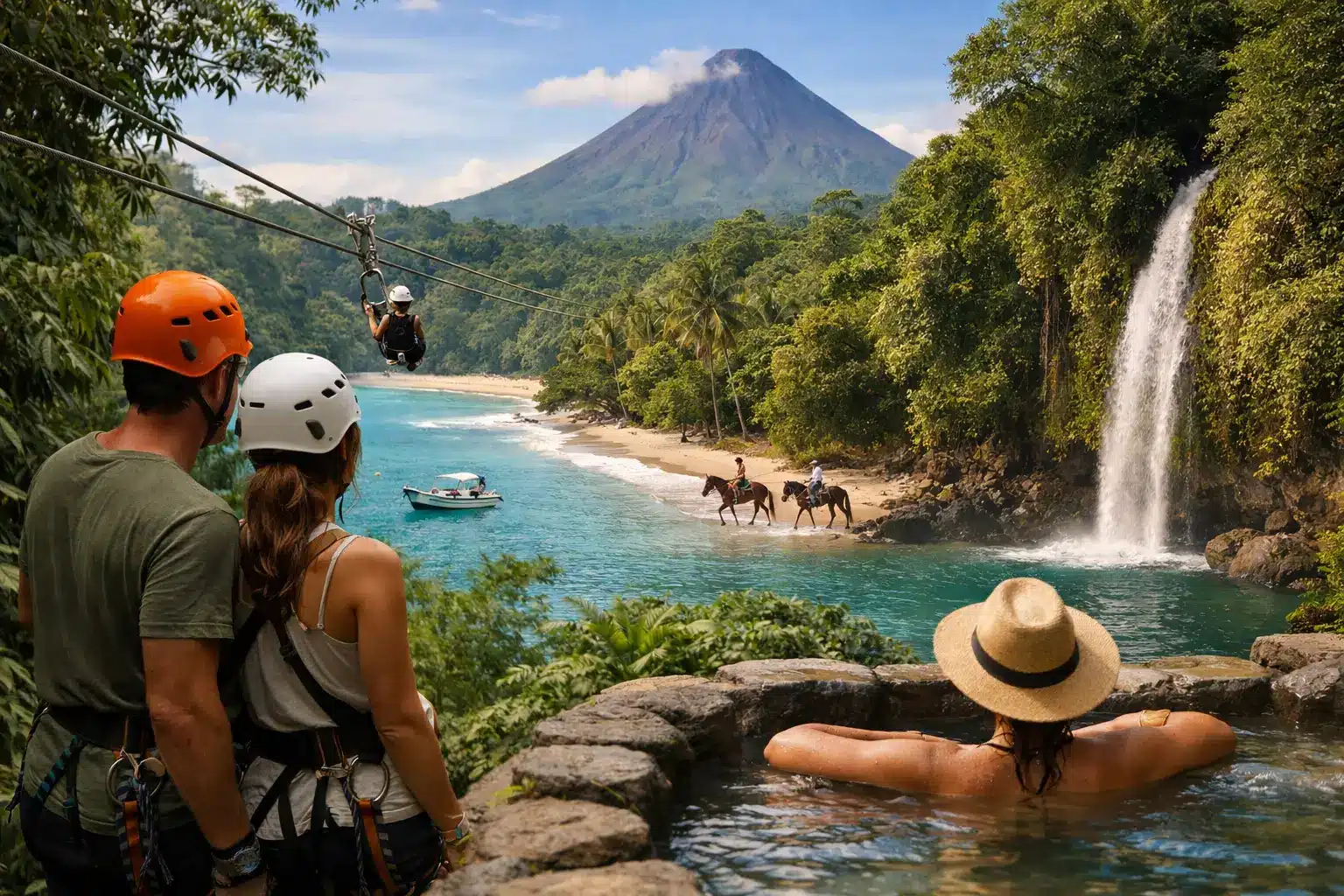
Think zip lines followed by a chef-driven dinner, a morning wildlife walk before an afternoon in thermal waters, or a catamaran outing that avoids the party-boat atmosphere. In destinations like Arenal, Papagayo, and select parts of the Manuel Antonio area, this model works exceptionally well.
The trade-off is that luxury can sometimes create distance from the country itself. If every meal is on-property and every excursion is insulated, the trip can feel interchangeable with other upscale destinations. The best soft-adventure itineraries still make room for local encounters, regional cuisine, and a guide who can interpret what you are seeing beyond the brochure language.
How to choose the right curated Costa Rica trip
The best itinerary starts with honesty. Are you looking for rest or motion? Wildlife or design? Family-friendly convenience or off-grid immersion? Costa Rica can satisfy all of those, but rarely in one trip without compromise.
Duration is the first filter. If you have five to seven days, stay focused on one region or two at most. Ten days gives you more flexibility, but only if transfers are realistic. Budget is the second filter. Curated does not have to mean ultra-luxury, but it does mean paying for expertise, logistics, and access. Often, that investment saves money in other ways by reducing wasted transit time and mediocre last-minute choices.
Season matters too. Green season can be magnificent – lush landscapes, fewer crowds, dramatic skies – but some remote experiences become more complex. Dry season brings easier movement and stronger demand. A good curator does not just sell a destination. They help align the season with your expectations.
Common mistakes travelers make
The biggest mistake is overbuilding the itinerary. Costa Rica is rich in variety, but constant movement can flatten the very sense of wonder people come for. Another common error is choosing based on trend rather than temperament. A destination that looks perfect on social media may be wrong for your age, travel style, mobility, or interest level.
Travelers also underestimate the importance of guides. In Costa Rica, a great guide can transform a forest walk, mangrove paddle, or coffee experience. Without one, you may miss what makes the place extraordinary. That is often the difference between a tour and a curated experience.
If there is one guiding principle, it is this: choose depth over coverage. The best curated travel experiences in Costa Rica do not try to show you everything. They reveal one region, one rhythm, or one side of the country so well that you start planning your return before the trip is over.