
By Andrés Cañas.
Editor James Benson
You came to Costa Rica for the peaceful green. But first you have to deal with the humidity, heat, and insects.
During 20+ years working in my family’s architectural firm (which has been around for over half a century), I have come across a lot of noise about what living here entails.
So I wrote this for people putting down roots in Costa Rica to help sort through the torrents of advice. It’s a practical guide to designing homes that connect you with nature…while protecting you from los zancudos. The aim is indoor–outdoor living that works—building with the tropics, not against them. I hope it helps.
Connecting to Nature: 4 Principles
The following ideas are principles we find very useful when designing for those coveted micro moments of communion with nature in and around your home. They are illustrated with practical examples, but your only limits are your imagination.
1) Katei House–garden as one.
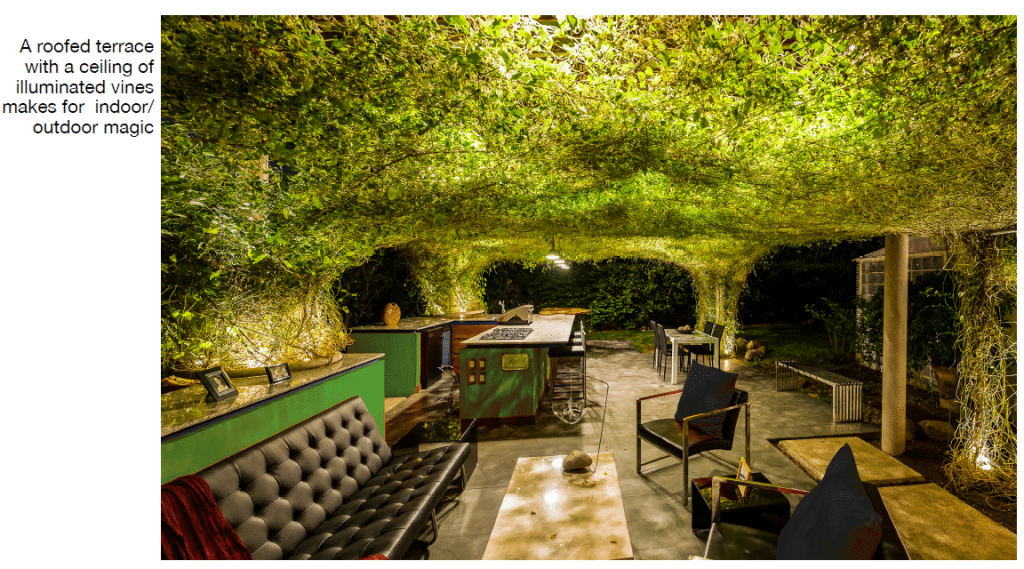
Design the boundary between the house and the garden as a soft seam. Bring the garden in and take the house outside. What does that look like? Some examples:
>Let the garden flow visually and physically into the house. Have floor-to-ceiling glass with the garden on both sides, so the boundary between indoor and out is blurred.
>Put planters anywhere; be creative. Place herb beds beside kitchens.
>Make the terraces part of the interior (or is the interior part of the terrace?) with sliding doors that tuck away in hidden pocket walls.
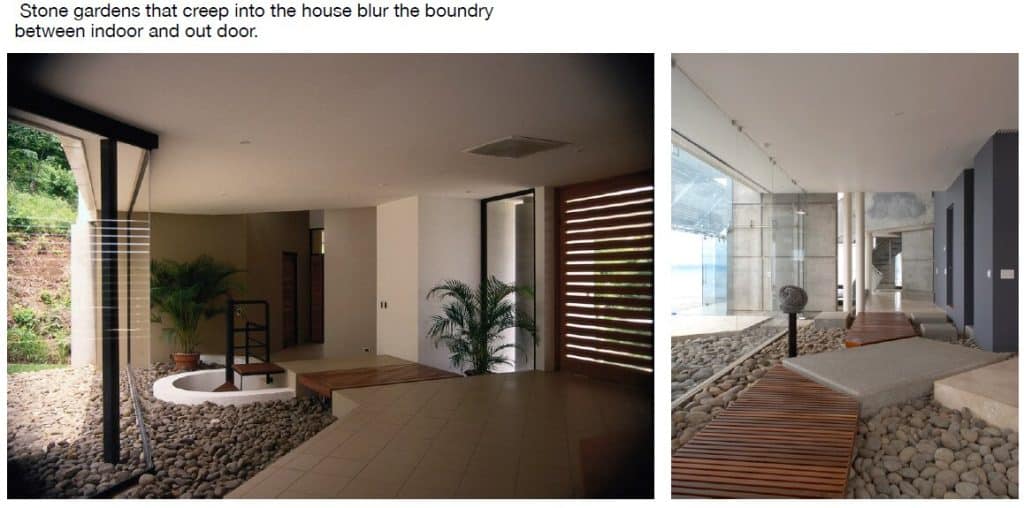
2) Shakkei. Borrow the scenery.
Compose views that bring the larger landscape inside. Make your surroundings part of your home.
Let the garden flow visually and physically into the house. Have floor-to-ceiling glass with the garden on both sides, so the boundary between indoor and out is blurred.
>Anywhere you can, align spaces, passageways, windows and doors to frame any of the marvelous natural wonders you have around you, like mountains, ocean, rivers, tree canopies, and even just the sky + clouds.
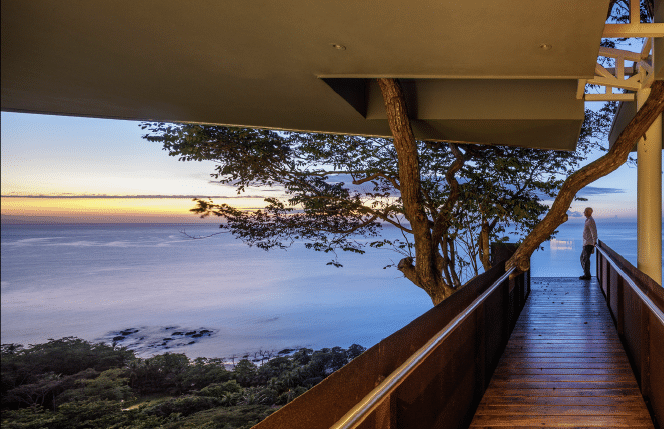
>If you have an ocean view, you can use the infinity effect to bring the horizon right up your feet.
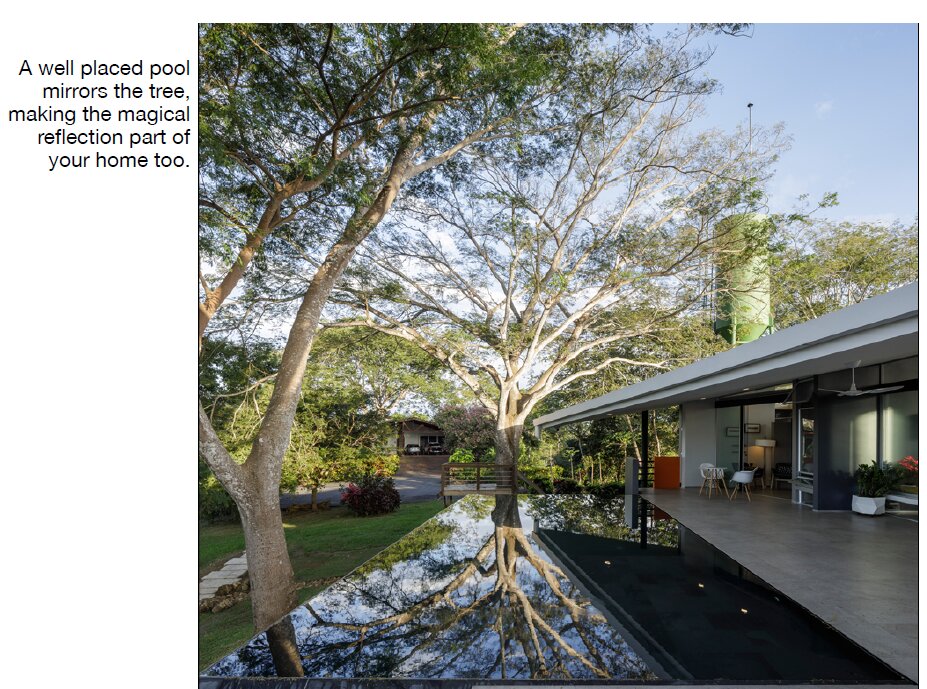
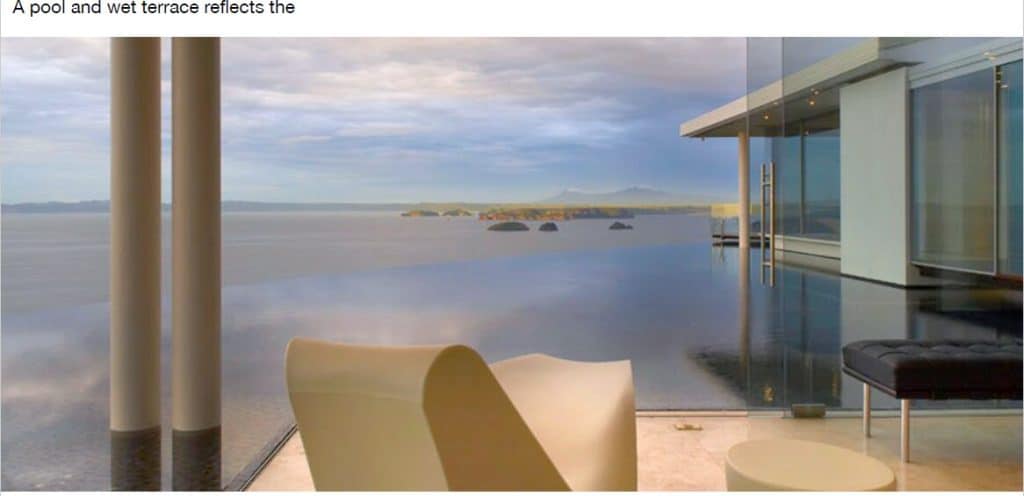
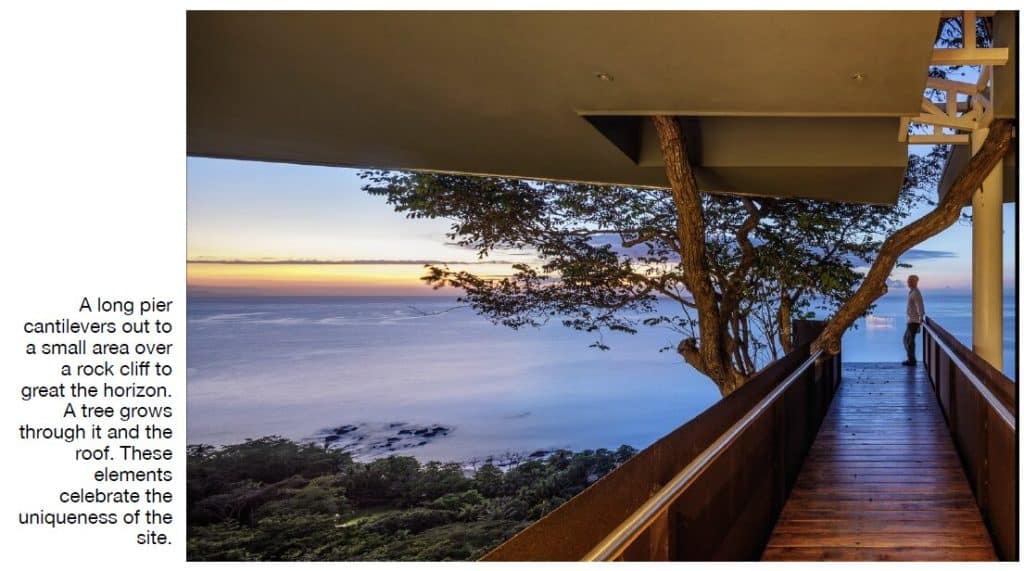
3) Architectural terroir.
Terroir is a term used in winemaking to describe the character a place imparts on the wines’ taste. We made up the term “architectural terroir” to describe site-specific architecture that celebrates its site and surroundings. Let the house grow from the site and the climate.
>Highlight and incorporate characteristics of the site itself, like a tree or rock formation.
>Step the design to go with the slope of the terrain. This avoids excessive cut-and-fill, and you can always reach out with light structure to extend the livable area.
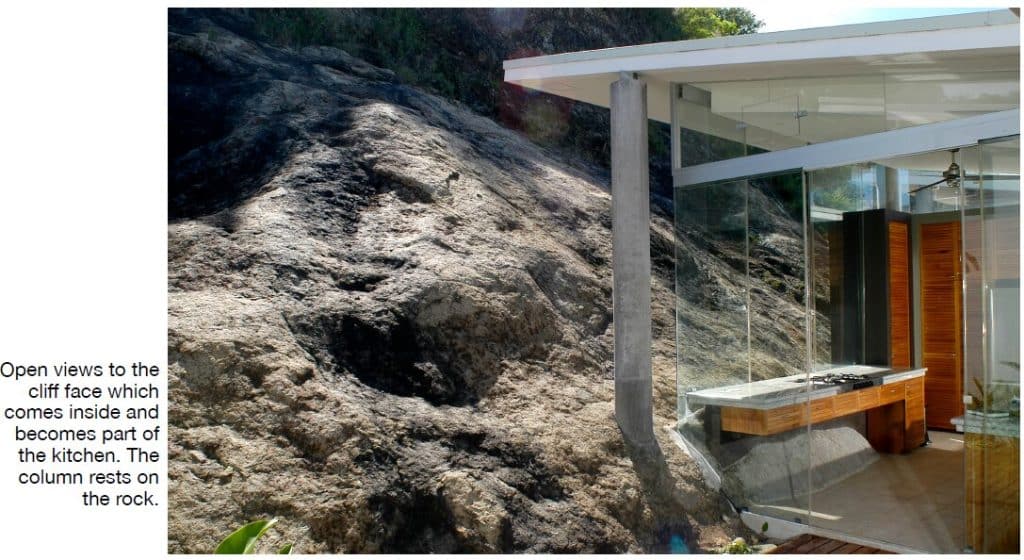
4) Daylight as a daily ritual.
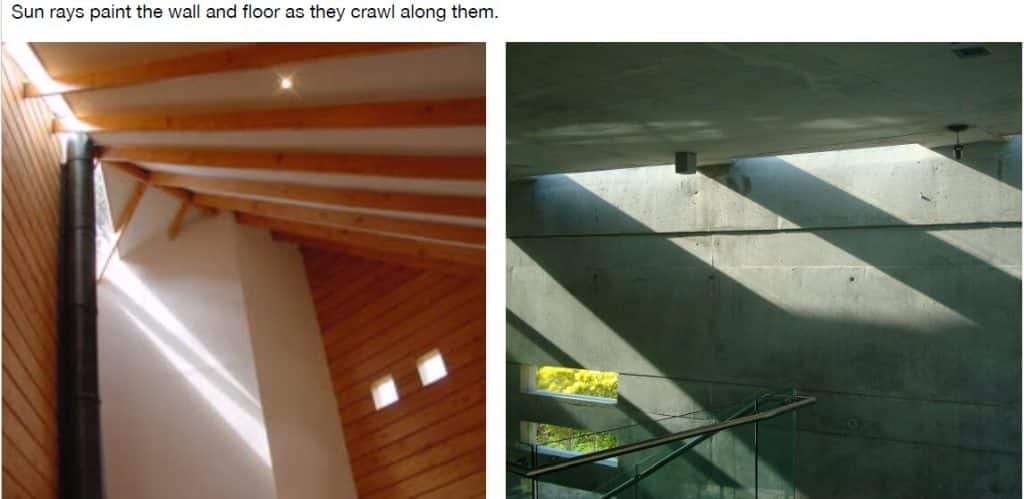
Invite light in for the timeless pleasure of it, then tame the glare and heat.
• Use light shelves and operable louvers to bounce and modulate the sun.
• Place skylights where shafts of light can animate walls/floors.
Addressing the Flip Sides: Humidity, Heat, and the Mosquitoes
If you’ve incorporated those four principles, you’re well on your way to connecting with nature. But what about the parts of nature you want to minimize for comfort and safety?
1) Humidity.
• Plan true cross-ventilation in your home. Use adequate openings on opposing walls, oriented for the prevailing breeze.
• Use wing walls/wind-catchers, high clerestories (hot air out) + low inlets (cool air in). They can be excellent pressure helpers to drive breezes through the home.
• Interior courtyards are a time-honored solution to drive both cross ventilation and create a stack effect. This is not unlike a chimney that draws hot air up and out.
• Use skylights for daylight and the pleasure of a slow-moving sun beam,
which also helps in humidity control. Be careful to avoid bubbles of trapped hot air.
• Deploy closet dehumidifiers for 24/7 moisture control.
• Use alternative construction materials:
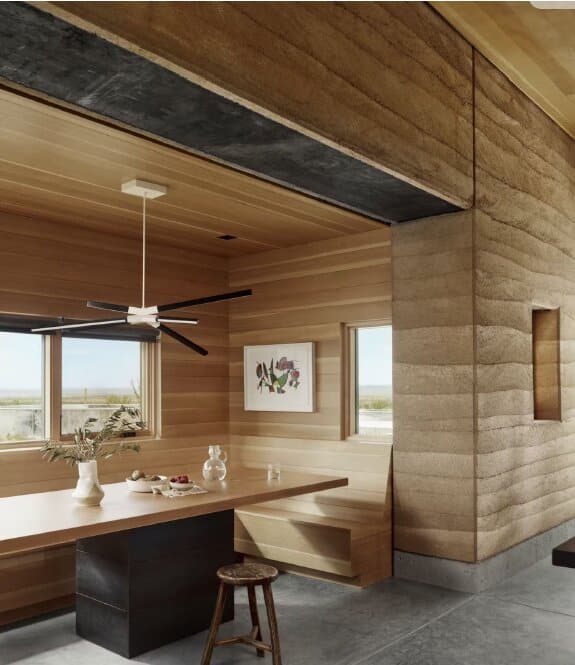
• Rammed earth. Its thick, compacted walls add thermal mass and buffer humidity; it’s beautiful and durable, though not always the most economical.
• Biocomposite alternative to concrete blocks. (e.g., local mixes such as Bagacrete®† or Agroblox®†). It’s vapor-permeable and has good insulation with a soft, earthy, tactile feel. Use this with lime plasters, which are alkaline, breathable, and more mold-resistant than many acrylic finishes.
• One-sided wooden walls. This open assembly allows moisture to migrate and dry rather than get trapped. For some it has a “cabina look” which and can work really well in a contemporary design setting.
2) Climate comfort.
• Ceiling fans + cross-ventilation can provide the most comfort most days.
• Surrounding gardens can pre-cool the air coming into the house.
• Medium to large water surfaces can also pre-cool the incoming air if placed right.
• If the house is well designed for it, you can use targeted mini-split AC units for hot spells or nighttime comfort instead of permanently sealing the whole house.
3) Mosquitoes.
>Avoid standing water with graded paths, add overflows to planters and screen cisterns.
>Use permeable paving so the ground “sips” instead of puddling.
>Although screens aren’t necessary in all regions, if you choose them, use good quality ones and maintain/clean them regularly. (Pets may destroy them).
>Well-placed fans disrupt the CO₂/body-scent plume that attracts mosquitoes.
>My favorite: Make dragonfly-friendly ponds. Dragonflies are the apex predators of zancudos and even feast on their watery larvae. Make them with shallow shelves and deeper pockets, emergent plants, and gentle natural water circulation. Avoid fish that eat dragonfly nymphs. Surround the ponds with flowering species that support adult hunters.
>Use plant-based perimeter sprays sparingly to protect beneficial insects.
Closing thoughts
You don’t need to choose between a sealed refrigerator box and a mosquito buffet. Aim for a home that works with the site, wind, sun, water, insects, and neighbors. One that welcomes breeze, light, garden, and mountains, and uses materials that manage humidity. This, along with a mature acceptance that a little damp and a few wings are part of living in Costa Rica, will surely help you find your own way to fully live that Pura Vida.
About the author

Andrés Cañas is Partner and Principal Architect at the family-run firm Cañas Arquitectos, the longest-running architectural practice in Costa Rica and one of the country’s most internationally awarded and respected studios. He is an active artist, sculptor, and industrial designer whose work explores the intersection of natural phenomena and built form, with two decades of exhibitions and international collectors. He lives and works in San José with his wife and two children. Instagram; @canasarquitectos @andrescanasart