Photos by Greivin Araya
Few birds in Costa Rica create the same sense of wonder as the Long-tailed Manakin. Small in size but overflowing with personality, this remarkable bird is known for its dazzling colours, astonishing dance routines, and unusual teamwork during courtship. Hidden within the tropical dry forests and woodland edges of Costa Rica’s Pacific slope, the Long-tailed Manakin has become one of the most memorable species for birdwatchers exploring the country’s extraordinary biodiversity.
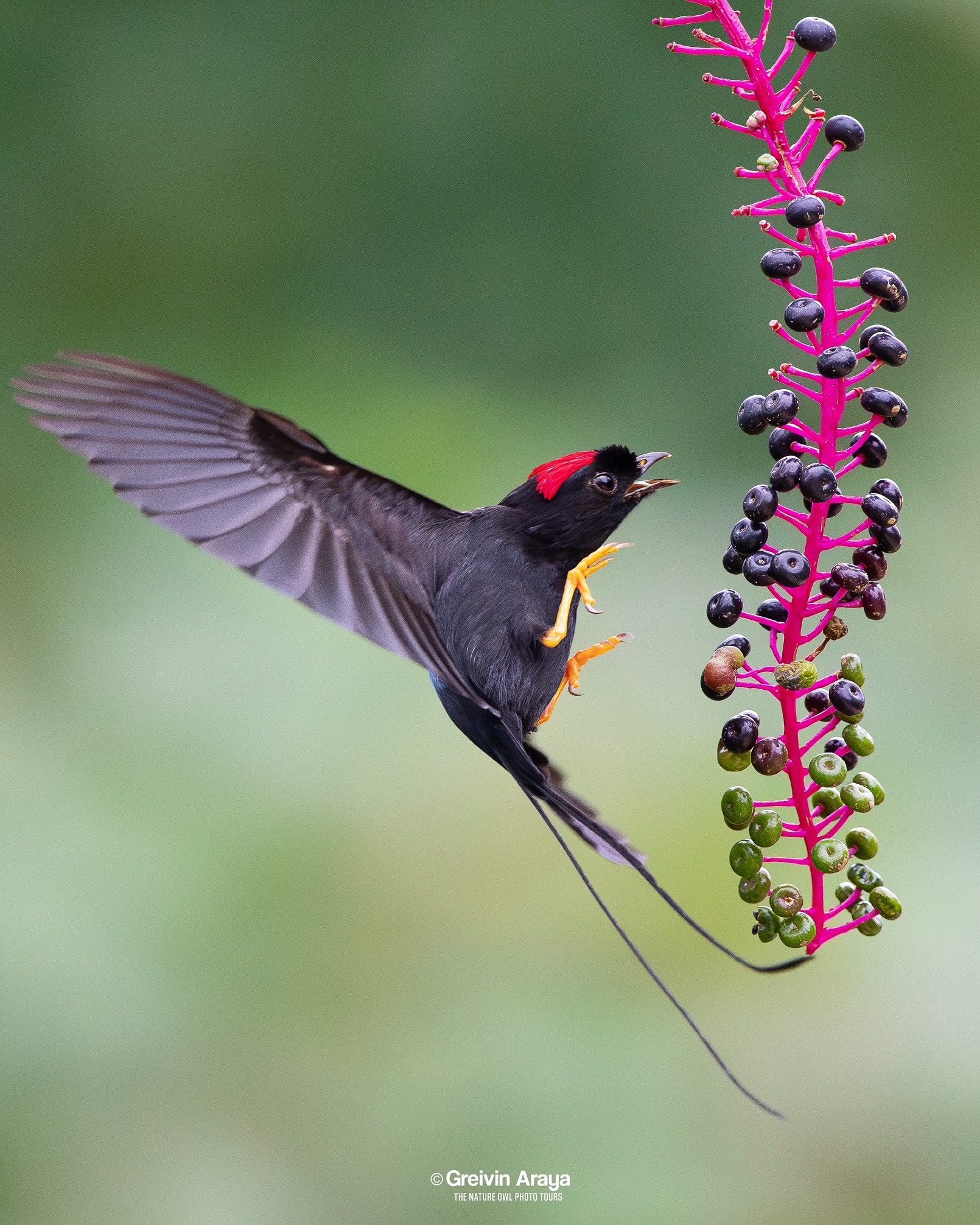
Although barely larger than a sparrow, the male Long-tailed Manakin looks like a tropical jewel brought to life. His glossy black body forms a dramatic contrast with a bright turquoise-blue back and a fiery red crown that glows like a tiny flame on his head. The feature that gives the bird its name, however, is its tail. Two slender tail feathers extend far beyond the rest of the body, often appearing longer than the bird itself. These elegant streamers sway as the bird hops and moves, adding theatrical flair to every performance.
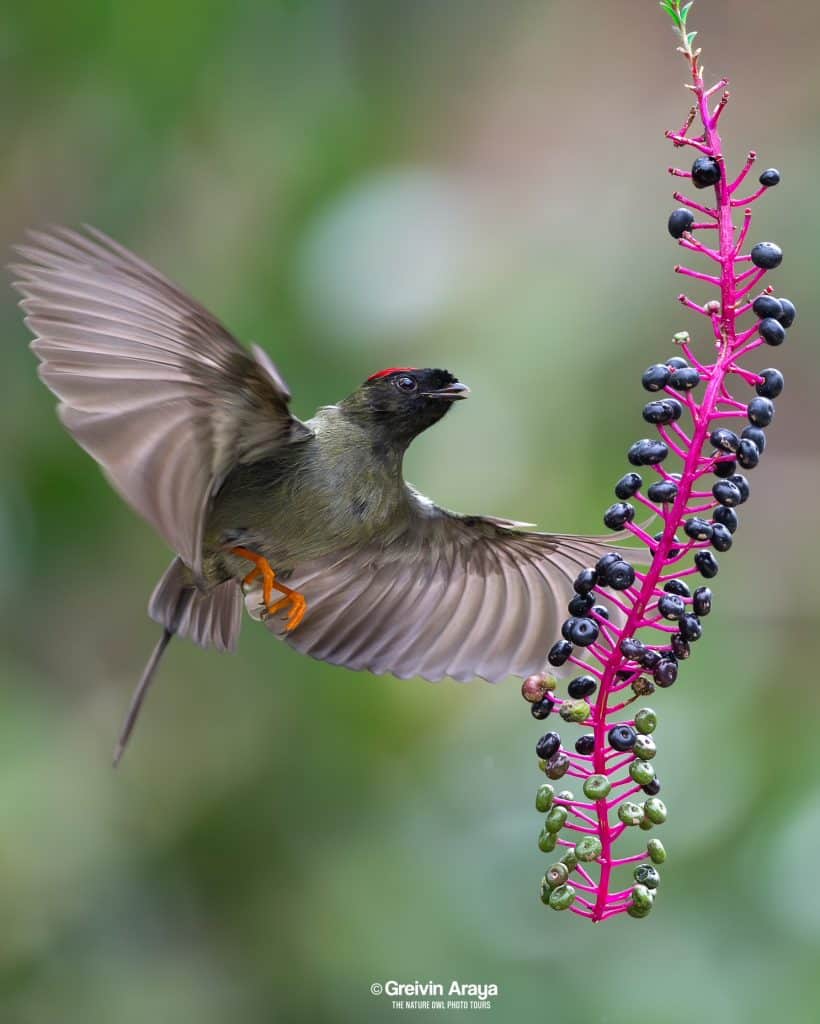
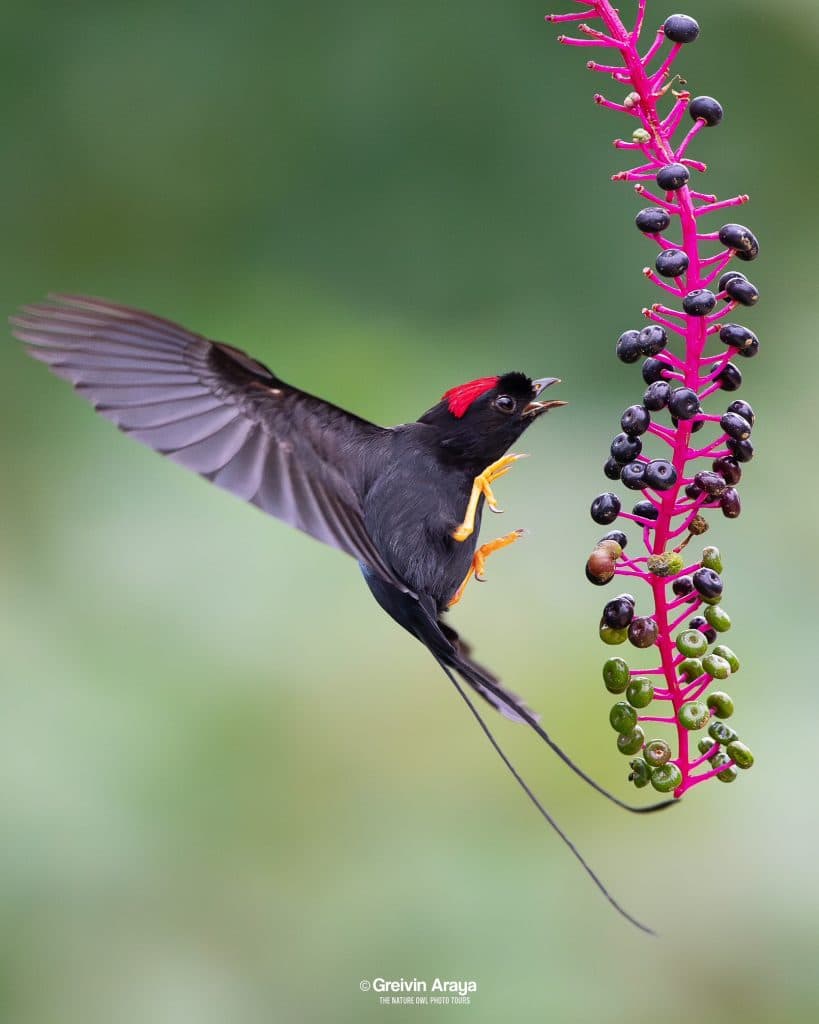
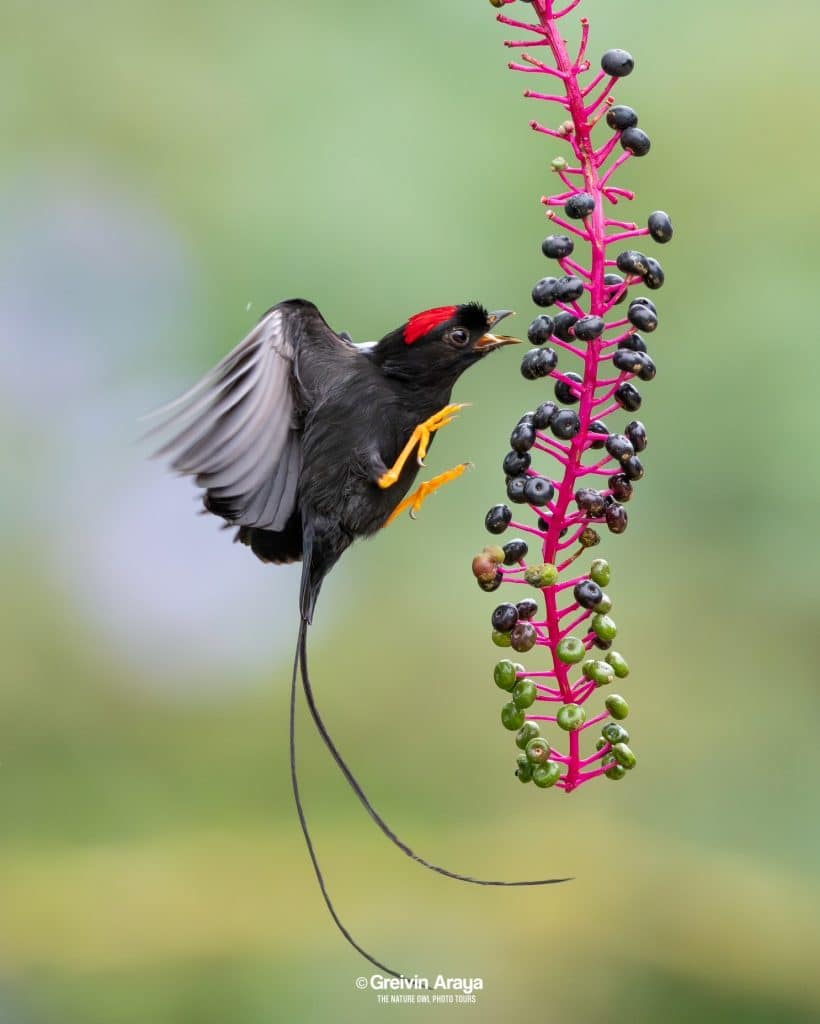
Female Long-tailed Manakins look very different from their flamboyant male counterparts. Their feathers are olive-green and much more subdued, a natural camouflage that blends seamlessly into leaves and branches. This subtle colouring protects them from predators as they forage quietly in the forest canopy. Juveniles resemble the females until they mature and develop the vibrant plumage that makes adult males so spectacular.
What truly sets the Long-tailed Manakin apart is its astonishing courtship ritual. Many birds perform elaborate displays to attract mates, but few do it with the choreography and cooperation seen in this species. Instead of competing individually, two males form a partnership and perform together.
These performances take place in special areas known as leks. A lek is essentially a stage within the forest where several male birds gather to perform their routines for visiting females. Each pair of males claims a branch or small display area, where they rehearse and perform synchronized dances.
Watching a pair of Long-tailed Manakins perform is like observing a perfectly rehearsed ballet. The birds hop rapidly back and forth along a branch, moving in precise coordination. Their movements are so synchronized that they almost appear connected by invisible strings. During the dance they produce sharp mechanical snapping sounds by flicking their wings, accompanied by high-pitched whistles and chirps that echo through the forest understory.
This cooperation is one of the most fascinating aspects of their behaviour. Typically, the pair consists of an alpha male and a beta male. The beta male helps perform the display but usually does not mate with females. Instead, he gains valuable experience and may eventually inherit the display territory and become the dominant male in the future. Some partnerships can last for several years, making this one of the most remarkable examples of teamwork in the bird world.
In Costa Rica, Long-tailed Manakins are most commonly found in the tropical dry forests of the northwestern Pacific region, particularly in protected areas such as Santa Rosa National Park and Palo Verde National Park. These landscapes are characterised by seasonal forests that experience a dramatic shift between dry and rainy periods.
Within these ecosystems, the birds favour forest edges, secondary growth, and semi-open woodland where fruiting shrubs and small trees are abundant. These areas provide both food and suitable branches for courtship displays.
The Long-tailed Manakin’s diet consists primarily of small fruits and berries. They hop through branches searching for ripe fruit clusters, often swallowing berries whole. In addition to fruit, they occasionally capture insects, which provide extra protein.
Their feeding habits serve an important ecological role. By consuming fruit and later dispersing the seeds throughout the forest, Long-tailed Manakins help regenerate vegetation and maintain plant diversity. In this way, they quietly support the health of the entire ecosystem.
For birdwatchers, spotting a Long-tailed Manakin can feel like discovering a secret performance in nature’s theatre. The best time to witness their displays is early morning, when males are most active and the forest is still cool and quiet. The snapping sounds from their wings and their distinctive calls often reveal their presence before they are even seen.
Birding guides in Guanacaste often know specific lek locations where these birds perform regularly. Observing the dance in person is an unforgettable experience. The synchronized movements, brilliant colours, and theatrical energy make the Long-tailed Manakin one of Costa Rica’s most entertaining wildlife spectacles.
Costa Rica is home to more than 900 species of birds, making it one of the most rewarding birdwatching destinations in the world. Among them, the Long-tailed Manakin stands out not only for its beauty but for its extraordinary behaviour. It reminds visitors that nature’s most fascinating stories are often hidden in the quiet corners of the forest.
For travellers exploring Costa Rica’s Pacific dry forests, the sight of two tiny birds performing a perfectly coordinated dance on a branch is something that stays in memory long after the trip ends.
#howlermag #howlermagazine
Frequently Asked Questions
Where can you see Long-tailed Manakins in Costa Rica?
They are most commonly found in the dry forests of northwestern Costa Rica, particularly in Guanacaste near Santa Rosa National Park and Palo Verde National Park.
What makes the Long-tailed Manakin unique?
Its cooperative courtship dance, where two males perform synchronized displays together, is one of the most unusual behaviours in the bird world.
What do Long-tailed Manakins eat?
They primarily eat small fruits and berries, but they also occasionally consume insects.
When is the best time to see them?
Early morning is the best time to observe their dancing displays, when males are most active at lek sites.Why are they important to the ecosystem?
By eating fruit and dispersing seeds, they help maintain forest regeneration and biodiversity.
Former Navy Journalist, published author and international speaker. Howler executive since 2019.