
Costa Rica is a small country with a huge creative pulse. Artists here draw from rainforest light, volcanic silhouettes, ancestral stories and the everyday humour of street life. Whether you paint, sculpt, film or simply love looking at art, these ten concepts explain why Costa Rica feels like a living studio.
What makes nature Costa Rica’s greatest artistic muse?
Nature shapes Costa Rican art by offering a constant parade of colour, light and movement.
From cloud forests dripping with moss to Pacific sunsets that look almost staged, artists rarely have to invent drama – it is already there. Canvases fill with emerald greens, toucan yellows and the deep blues of the Caribbean. Sculptors work in native woods and volcanic stone, while photographers chase the way mist wraps itself around coffee fields at dawn.
Typical examples include:
• Landscape painting that captures places like Monteverde, Arenal or Corcovado with exaggerated light and lush texture, almost like a visual love letter to the forest.
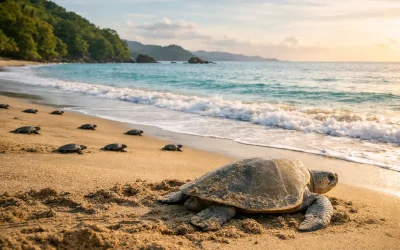
• Wildlife portraits of sloths, jaguars, macaws and sea turtles, often painted slightly larger than life to emphasise their presence and personality.
• Environmental art using recycled plastic, driftwood or beach debris, turning pollution into a quiet protest piece.
How do indigenous symbols and spirituality inspire Costa Rican artists?
Indigenous symbolism inspires art by grounding it in ancient stories and spiritual worldviews.
The Bribri, Boruca, Cabécar and other groups bring a deep visual language of animals, spirits and sacred geometry. Many contemporary artists, whether indigenous or not, borrow respectfully from these traditions.
You often see:
• Boruca devil masks, carved and painted in fierce colours for the “Juego de los Diablitos”, symbolising resistance and resilience.
• Jaguar imagery representing strength, guardianship and the threshold between human and spirit realms.
• Spiral and circle motifs hinting at cycles of life, death and rebirth, often woven into textiles or etched into ceramics.
How do Costa Rican artists explore identity and memory?
Identity and memory appear in Costa Rican art through intimate, sometimes dreamlike narratives.
Artists question what it means to be Costa Rican in a globalised world: part Indigenous, part European, part Afro-Caribbean, part migrant. Works may mix childhood scenes with newspaper clippings, old family photos with surreal jungle fragments.
You might find:
• Mixed-media portraits layered with passports, bus tickets and school notebooks, echoing migration and personal history.
• Murals in urban barrios that blend neighbourhood landmarks with symbols of hope, grief or pride.
• Installations that use old furniture, radios or suitcases to evoke collective memories of war, political change or rural life.
Why are human forms and movement so important in Costa Rican art?
Human figures and movement allow artists to express rhythm, music and emotion.
From salsa and cumbia to surfing and football, Costa Ricans move a lot, and that motion often spills onto the canvas.
Common approaches include:
• Stylised dancers whose limbs stretch across the frame, echoing marimba beats or Caribbean calypso.
• Sculptures capturing a surfer dropping into a wave, or a farmer bent over in a coffee field, frozen mid-gesture.
• Abstract figures suggested only by curves and lines, meant to feel like the pulse of a city rather than a realistic body.
How do social and political stories appear in Costa Rican art?
Social and political narratives reach Costa Rican art through sharp observation and quiet critique.
Murals, prints and performance pieces respond to inequality, environmental damage, tourism, gender issues and digital life.
Artists may:
• Paint street art in San José that questions consumerism, corruption or gentrification using bold, almost comic-book style.
• Create photographic series on workers in banana plantations, hotel staff in tourist hubs or street vendors, giving visibility to often overlooked lives.
• Stage performances that mimic protests or bureaucracy, inviting the audience to think about power and responsibility.
How is mythology and storytelling kept alive through art?
Myths and stories stay alive in Costa Rican art by being retold visually for new generations.
Legends of spirits in rivers, guardian animals and haunted trees become fertile material for illustration and digital art.
You might notice:
• Children’s book illustrations of creatures from local folklore guiding youngsters through moral lessons.
• Murals showing volcano gods or shape-shifting animals watching over a village.
• Short animated films that blend traditional myths with modern themes like climate change or migration.
Why do many Costa Rican artists focus on feminine divinity and empowerment?
Feminine divinity appears in Costa Rican art as a symbol of resilience, nurture and spiritual strength.
Goddess-like figures, everyday women and ancestral matriarchs step into the spotlight in painting, photography and performance.
Typical elements include:
• Portraits of women merged with rivers, trees or moons, suggesting that the land and the feminine are deeply connected.
• Works that highlight single mothers, grandmothers or market vendors as heroines of daily life, not just background characters.
• Symbolic use of seeds, womb-like shapes and circles to talk about creativity, care and rebirth.
How do humour and absurdity shape contemporary Costa Rican art?
Humour and absurdity allow Costa Rican artists to question society without sounding preachy.
Memes, internet culture and local jokes all find their way into galleries and street walls.
You may see:
• Paintings that mix sacred icons with fast food, smartphones or tourist selfies, poking fun at modern obsessions.
• Cartoons and prints that exaggerate local characters – the over-relaxed surfer, the gossiping neighbour, the hyper-serious politician.
• Video art that re-cuts viral clips with traditional music, turning chaos into social commentary.
How do culture and history influence artistic style in Costa Rica?
Culture and history influence Costa Rican art through traditional crafts and colonial echoes reworked in modern ways.
Think hand-painted oxcart wheels from Sarchí, reimagined as huge mandalas on walls, or colonial architecture cropped into bold geometric compositions.
Artists often:
• Use traditional weaving, mask-making and woodcarving techniques while updating colours and themes.
• Reference historic events, such as the abolition of the army, as symbols of national identity and peace.
• Build installations with old photographs, letters and documents to explore how history shapes the present.
How does everyday life become art in Costa Rica?
Everyday life becomes art in Costa Rica whenever an artist turns ordinary scenes into something worth pausing for.
A plastic chair outside a corner shop, a bus stop at sunset, schoolchildren in uniform under a mango tree – all can end up framed or projected.
Expect to find:
• Street photography of pulperías, markets and bus stations, catching small gestures and unposed moments.
• Paintings of cafés, football pitches and rainy pavements that make the familiar feel poetic.
• Community murals created with local residents, so the art literally grows out of the neighbourhood.
FAQ about Costa Rican artistic inspiration
What makes Costa Rica such a creative country?
Costa Rica feels creative because nature, cultural diversity and strong community life all provide artists with constant material to work from.
Where can visitors see these artistic concepts in real life?
You can see them in:
• Museums and galleries in San José, including contemporary art spaces.
• Street murals in urban districts and coastal towns.
• Indigenous communities and craft villages, where traditions are still practised.
Do you have to be a professional artist to be inspired here?
No, you do not need to be a professional; visitors, hobby painters, photographers and writers often say they feel more imaginative after spending time in Costa Rica.How is technology changing Costa Rican art?
Technology is changing Costa Rican art by allowing creators to mix video, sound and digital illustration with traditional techniques, and to share their work globally online.