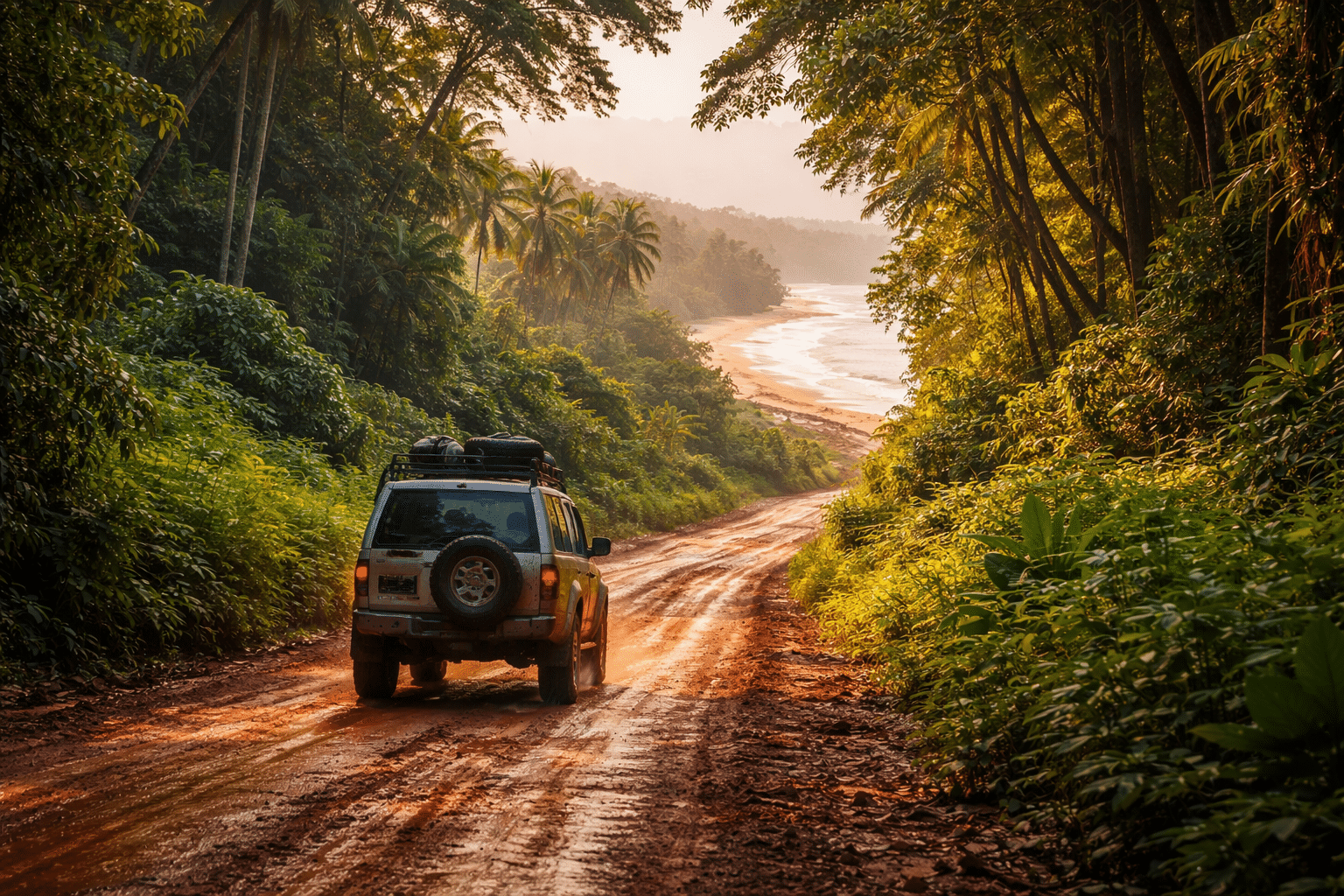
There are road trips that show you a country, and then there are road trips that introduce you to the country the way it actually behaves—mud included, rivers included, monkey screams at dawn included. The drive around Costa Rica’s Osa Peninsula is that second kind.
This is the peninsula that keeps getting described in hushed tones by naturalists and slightly frazzled 4×4 renters. It’s where two major protected areas—Corcovado National Park and Piedras Blancas National Park—anchor one of the most biologically intense corners of the Americas. Research often cited about the region notes that the Osa holds about 2.5% of global terrestrial biodiversity in a surprisingly small area, and it includes the largest remaining tract of Pacific lowland wet forest in Mesoamerica. (PubMed Central)
So yes: it’s beautiful. It’s also real. And if you want the kind of Costa Rica that feels like it’s still making up its mind whether humans belong there, point your vehicle south and drive it.
Where the trip begins: Chacarita → Route 245
Your starting line is Chacarita, a practical, no-nonsense town that exists to keep the Southern Zone fed, fueled, and moving. From here you take Route 245, the main artery on the east side of the Osa. The good news: this stretch is paved and generally straightforward driving, though it can be curvy and conditions can vary after heavy weather. (Two Weeks in Costa Rica)
This is the part where the scenery starts doing the heavy lifting—forests, coastal wetlands, and that sense you’re slipping farther from the “Costa Rica with espresso bars” and closer to the “Costa Rica with tracks in the mud you hope belong to something vegetarian.”
Stop 1: Rincón de Osa — the bridge with a cult following
You’ll roll into Rincón de Osa and think, “Wait… this is the famous stop?” Then you see the bridge.
Birders know this spot because it’s one of the classic places to scan the canopy and mangroves for the Yellow-billed Cotinga, a rare, range-restricted bird that has become a true trophy sighting in Costa Rica. (Field Guides)
Even if you couldn’t tell a cotinga from a coconut, it’s still worth pulling over: mangroves on one side, rainforest on the other, and the river sliding underneath like it has secrets it refuses to share with the highway.
Stop 2: Puerto Jiménez — your last “stock up like a grown-up” town
Next you reach Puerto Jiménez, the peninsula’s main service town on this side—where you top off fuel, grab snacks, replace that one charger you forgot, and make sure you have cash. It’s also a launching point for boat transfers and tours, and it has the vibe of a frontier town that’s learned how to host visitors without pretending it’s a resort. (Osa Tourism)
Here’s the big shift: Route 245’s paved comfort largely ends around Puerto Jiménez, and what follows depends on season, rain, and the mood of the road. Many travel guides recommend a 4×4 for the deeper Osa routes—especially if you’re continuing toward Cabo Matapalo and Carate. (MytanFeet)
Past Puerto Jiménez: when the power lines disappear
Leaving town, you’ll notice something odd: fewer people, fewer signs, fewer wires overhead. Parts of this region are famously off-grid, which means you’ll pass homes and lodges running on solar, generators, or their own systems. It’s not a gimmick—it’s simply what you do when you live at the end of a peninsula wrapped in rainforest.
The road becomes a living thing out here. It changes shape. It collects puddles. It invents potholes. And then, sooner than you’d like, it introduces you to the main character of this drive:
Water crossings.
Some rivers have bridges, some don’t, and conditions vary by time of year. The golden rule is painfully simple: if water looks high, fast, or unfamiliar, don’t guess. Wait it out, ask locals, or reroute. This isn’t a place where bravado gets rewarded.
Stop 3: Matapalo / Cabo Matapalo — the “stay here” stretch
Some people try to push all the way to Carate in one shot. They can. They also tend to arrive with that tight smile that says, “I have been clenching the steering wheel for 40 kilometres.”
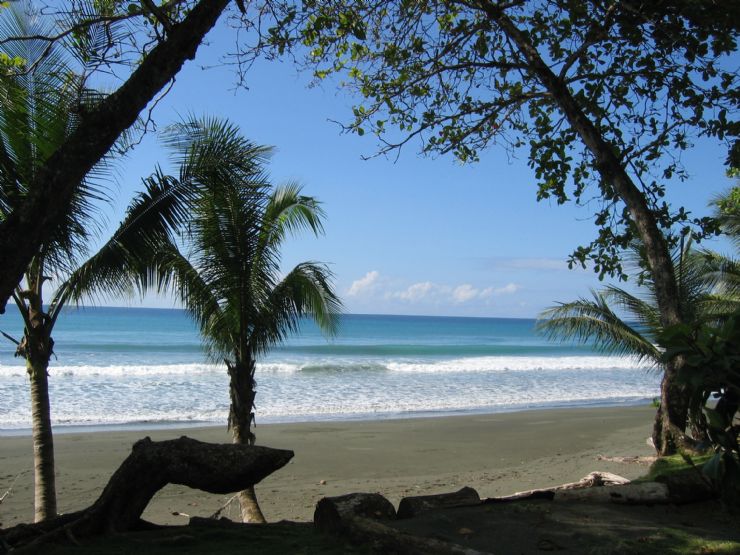
A smarter play is to slow down and spend a night near Matapalo / Cabo Matapalo. This area is packed with the kind of Osa moments people brag about later: scarlet macaws slicing across the canopy, monkeys in the trees, beaches that look freshly unwrapped, and rainforest that feels like it’s breathing next to your ear.
There are waterfall walks and jungle trails in the area, and it’s an ideal place to get your “first full hit” of Osa before you tackle the final leg.
The final run: Matapalo → Carate (a.k.a. “count the rivers”)
The last stretch to Carate is where the drive earns its reputation. Expect multiple streams and river mouths, patches of deep ruts, and the kind of terrain that makes you grateful you packed patience.
Start early. Drive in daylight. And unless you have a very specific reason, don’t do this section at night—not because it’s spooky (it is), but because visibility and unexpected water or washouts can turn a normal delay into a genuine problem.
Carate: it really does feel like the edge
Carate has that island energy without being an island: remote, quiet, and absolutely dialed-in to nature. It’s the end of the road in the literal sense—and for many travelers, the beginning of the best walking day of their trip.
From here, you can reach the La Leona sector of Corcovado National Park via beach access. Corcovado visits require planning: permits are required, and guided entry is commonly required (and strongly recommended for safety and wildlife spotting). (sinac.go.cr)
Also: tides matter. A beach walk that feels easy in the morning can get unpleasant (or blocked) when the water rises. Check local tide times and set your turnaround plan before you get mesmerised by the jungle.
A few practical tips that make this trip better
- Download offline maps before you lose signal.
- Fuel up in Puerto Jiménez and don’t assume the next pump is open.
- Carry cash, especially for small stops.
- Pack dry bags for electronics—rain and river spray are not polite.
- Respect wildlife space (especially on roads at dawn/dusk).
- Leave no trace. The Osa doesn’t need souvenirs from you.
Why you should do this drive now
Not because it’s “going away tomorrow,” but because the Osa is a moving target. Roads evolve. Infrastructure expands. More people hear about it every year. The peninsula will always be wild, but the experience of reaching its farthest corners the hard way is a special kind of travel—and it’s worth tasting while it still feels earned.
Granddad’s Way to the Beach: Central Valley to Santa Teresa
Beauty and History: Cartago Through the Orosi ValleyJTNDaWZyYW1lJTIwc3JjJTNEJTIyaHR0cHMlM0ElMkYlMkZ3d3cuZ29vZ2xlLmNvbSUyRm1hcHMlMkZlbWJlZCUzRnBiJTNEJTIxMW00MiUyMTFtOCUyMTFtMyUyMTFkMjUyNDc4LjgwMzE5MDk3MjY5JTIxMmQtODMuNTA3Njg2NCUyMTNkOC41OTc3OTMyJTIxM20yJTIxMWkxMDI0JTIxMmk3NjglMjE0ZjEzLjElMjE0bTMxJTIxM2UwJTIxNG01JTIxMXMweDhmYTQxNTYwNWUwMzE5MTklMjUzQTB4NmE2MGE2ZWZmYzc4ZjRhNyUyMTJzUHVudGFyZW5hcyUyNTIwUHJvdmluY2UlMjUyQyUyNTIwQ2hhY2FyaXRhJTIxM20yJTIxMWQ4Ljc5OTI5NzElMjEyZC04My4yNTE5Mzg5JTIxNG01JTIxMXMweDhmYTQ3M2RkYzJjYTZkMDklMjUzQTB4ODY2ZDkyZjQzNzkxZDgyJTIxMnNSaW5jb24lMjUyMGRlJTI1MjBPc2ElMjUyQyUyNTIwUmluY29uJTIxM20yJTIxMWQ4LjY5ODY0ODc5OTk5OTk5OSUyMTJkLTgzLjQ4NDI3MTYlMjE0bTUlMjExczB4OGZhNDY2YzUwOWViZmQyMyUyNTNBMHhiYmFlM2E2YmIxNGZhMmFlJTIxMnNQdW50YXJlbmFzJTI1MjBQcm92aW5jZSUyNTJDJTI1MjBQdWVydG8lMjUyMEppbSUyNUMzJTI1QTluZXolMjEzbTIlMjExZDguNTI3MjI1OTk5OTk5OTk5JTIxMmQtODMuMzA2NzE2OTk5OTk5OTklMjE0bTUlMjExczB4OGZhNDhhZTRjMTMyMjY3NSUyNTNBMHg1MmIyMzlmNjE0MWYwZTJiJTIxMnNNYXRhcGFsbyUyNTJDJTI1MjBQdW50YXJlbmFzJTI1MjBQcm92aW5jZSUyMTNtMiUyMTFkOC4zOTgyMDU4OTk5OTk5OTklMjEyZC04My4yODEzNzE3JTIxNG01JTIxMXMweDhmYTQ3ZDc2M2U0MmNkYTMlMjUzQTB4OTMxZDE5MTA1OTJjYTgzYyUyMTJzQ2FyYXRlJTI1MkMlMjUyMFB1bnRhcmVuYXMlMjUyMFByb3ZpbmNlJTIxM20yJTIxMWQ4LjQ0NDg4MDk5OTk5OTk5OSUyMTJkLTgzLjQ2MzAyMTQlMjE1ZTAlMjEzbTIlMjExc2VuJTIxMnNjciUyMTR2MTYzOTY2OTQ4MzA2OCUyMTVtMiUyMTFzZW4lMjEyc2NyJTIyJTIwd2lkdGglM0QlMjI2MDAlMjIlMjBoZWlnaHQlM0QlMjI0NTAlMjIlMjBzdHlsZSUzRCUyMmJvcmRlciUzQTAlM0IlMjIlMjBhbGxvd2Z1bGxzY3JlZW4lM0QlMjIlMjIlMjBsb2FkaW5nJTNEJTIybGF6eSUyMiUzRSUzQyUyRmlmcmFtZSUzRQ==See this article in the magazineJTNDZGl2JTIwc3R5bGUlM0QlMjJwb3NpdGlvbiUzQXJlbGF0aXZlJTNCcGFkZGluZy10b3AlM0FtYXglMjg2MCUyNSUyQzMyNnB4JTI5JTNCaGVpZ2h0JTNBMCUzQndpZHRoJTNBMTAwJTI1JTIyJTNFJTNDaWZyYW1lJTIwc2FuZGJveCUzRCUyMmFsbG93LXRvcC1uYXZpZ2F0aW9uJTIwYWxsb3ctdG9wLW5hdmlnYXRpb24tYnktdXNlci1hY3RpdmF0aW9uJTIwYWxsb3ctZG93bmxvYWRzJTIwYWxsb3ctc2NyaXB0cyUyMGFsbG93LXNhbWUtb3JpZ2luJTIwYWxsb3ctcG9wdXBzJTIwYWxsb3ctbW9kYWxzJTIwYWxsb3ctcG9wdXBzLXRvLWVzY2FwZS1zYW5kYm94JTIyJTIwYWxsb3dmdWxsc2NyZWVuJTNEJTIydHJ1ZSUyMiUyMHN0eWxlJTNEJTIycG9zaXRpb24lM0FhYnNvbHV0ZSUzQmJvcmRlciUzQW5vbmUlM0J3aWR0aCUzQTEwMCUyNSUzQmhlaWdodCUzQTEwMCUyNSUzQmxlZnQlM0EwJTNCcmlnaHQlM0EwJTNCdG9wJTNBMCUzQmJvdHRvbSUzQTAlM0IlMjIlMjBzcmMlM0QlMjJodHRwcyUzQSUyRiUyRmUuaXNzdXUuY29tJTJGZW1iZWQuaHRtbCUzRmQlM0QyMDIyX2phbnVhcnlfaWRtJTI2cGFnZU51bWJlciUzRDE2JTI2dSUzRGhvd2xlciUyMiUzRSUzQyUyRmlmcmFtZSUzRSUzQyUyRmRpdiUzRQ==