
Howler Monkeys in Costa Rica: The Jungle Alarm Clock You’ll Never Forget
Costa Rica’s howler monkeys are the loud, leafy neighbours you hear long before you ever see them. These tree-dwelling primates are some of the largest monkeys in the Americas, and they’re a daily soundtrack to life in the forests and beach towns of the country.
What exactly are howler monkeys and where do they live in Costa Rica?
Howler monkeys are large, leaf-eating New World monkeys that live high in the trees across much of Costa Rica’s lowland and mid-elevation forests. You’ll find them in:
- Pacific coastal forests, especially in Guanacaste and the Nicoya Peninsula
- Caribbean lowland rainforest
- Forest patches near towns, roads and even some resorts
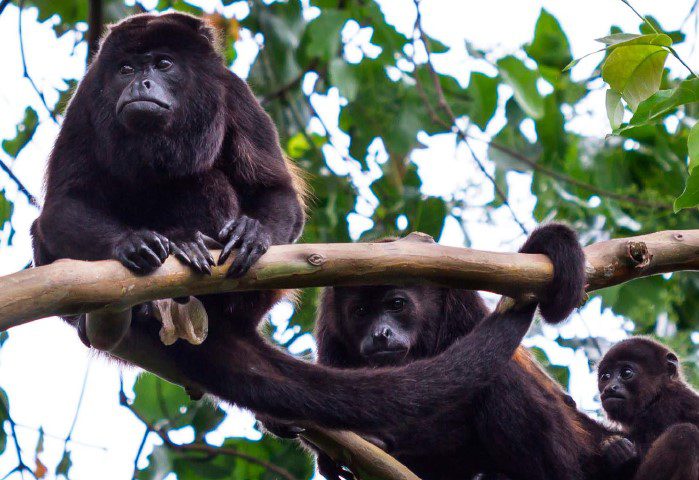
They move through the canopy in family groups, using their long tails as an extra “hand” to balance as they feed and rest. Even in small scraps of forest near beaches or villages, they can adapt and carry on with their slow, leafy lifestyle.
Why do howler monkeys howl so loudly?
Howler monkeys roar to mark their territory, keep in touch with neighbouring groups and avoid unnecessary fights. A specialised, enlarged voice box and throat pouch act like a built-in loudspeaker, allowing their calls to carry for kilometres through dense forest.
At dawn and dusk, males often start the chorus, producing a rolling, growling roar that locals know as well as the sound of the waves. These calls:
- Tell other groups, “We’re here, this patch of trees is taken.”
- Help family members stay in contact without having to move too much
- Save energy by resolving disputes with sound instead of physical fights
On a still morning, you can hear their voices two or three miles away, even if the monkeys themselves are hidden deep in the canopy.
How do howler monkeys live together in family groups?
Howler monkeys live in social troops, usually made up of a few adult males, several adult females and their youngsters. The exact size varies, but in Costa Rica most groups are under 20 animals, even though they can occasionally reach 30–40.
Within a troop:
- Adult males often lead the howling and defend the group’s feeding areas
- Females form the stable core of the group and care for the young
- Juveniles play, chase and practise “mini howls” as they grow
To avoid inbreeding, many young monkeys eventually leave the group they were born into. They may be pushed out as they mature, then join other troops or form new ones. Females can have infants at any time of year, usually one baby at a time, which clings to its mother’s belly at first and later rides on her back. With luck, a howler can live for more than two decades in the wild.
What do howler monkeys eat in Costa Rica’s forests?
Howler monkeys survive mainly on a low-energy diet of leaves, topped up with fruit and flowers when they can find them. Their strong jaws and specialised gut allow them to digest tough foliage that many other animals can’t use.
In Costa Rica, their menu often includes:
- Young, tender leaves from a wide variety of trees
- Figs and other fruits, especially from ficus trees
- Flowers during the dry season, when leaves are scarcer
Because leaves don’t provide huge amounts of energy, howlers are famously laid-back. They spend long stretches of the day resting, dozing and grooming in the treetops, saving their energy for slow, deliberate movements between feeding spots.
Are howler monkeys in Costa Rica under threat?
Howler monkeys are coping better than many other primates, thanks to their flexible diet and ability to live in relatively small forest patches. However, they still face several pressures.
Key threats include:
- Loss and fragmentation of forest habitat
- Road accidents occur when they use power lines or cross open ground
- Electrocution on uninsulated cables near towns and villages
- Hunting and illegal capture in some areas
Even so, their resilience is impressive. They can adjust to second-growth forest, farm edges and mixed landscapes, as long as there are enough trees connected for them to move and feed. Support for wildlife-friendly electricity infrastructure and forest corridors makes a real difference to their long-term outlook.
How can you see howler monkeys responsibly in Costa Rica?
The best way to see howler monkeys is to walk or stay near forested areas at dawn or early morning, listening for their calls and watching the treetops. Often, you’ll hear them long before you spot a tail or silhouette against the sky.
For a respectful encounter:
- Keep your distance and use binoculars or a zoom lens
- Never feed them – human food can make them sick and change their behaviour
- Stay quiet so you don’t add stress to the group
- Choose guides and tours that emphasise wildlife welfare and conservation
You may share your breakfast with a howler chorus in a beach town, or glimpse a family moving through the canopy above a jungle lodge. Either way, their presence is a reminder that Costa Rica’s forests are alive and noisy in all the best ways.
Frequently asked questions about howler monkeys in Costa Rica
Are howler monkeys dangerous to humans?
Howler monkeys rarely pose a threat to people, as they prefer to stay in the trees and avoid direct contact. They may bark or move away if they feel disturbed, but attacks are extremely unusual if you keep your distance.
Why do howler monkeys sound so scary?
Their roar is naturally deep and booming because of their enlarged voice box and throat pouch. It sounds fierce, but it’s mostly a long-distance message to other monkeys, not a warning aimed at humans.
What time of day is best to hear howler monkeys?
You’re most likely to hear them at first light and around dusk, when groups often call back and forth. Cloudy or humid mornings can make the sound carry even further.
Can you see howler monkeys near Costa Rican beaches?
Yes, many coastal towns and resorts still have strips of trees and small forest patches that support howler groups. It’s common to hear them in places like Guanacaste’s beach communities.
Do howler monkeys help the forest ecosystem?
Howler monkeys play a crucial role in dispersing seeds through their droppings and by pruning leaves and flowers. Their feeding habits help shape the forest and support the regeneration of plants.