

Bottom line — keep your eyes open and be aware of your surroundings.
The potentially deadly danger posed by both of these featured creatures comes from being in a human’s rightful place at the wrong time.
 Fer-de-lance
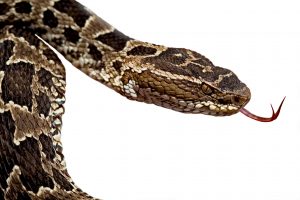
This venomous snake, in habitats ranging from southern Mexico to northern South America, is referred to as the ultimate pit viper. It’s considered more dangerous to humans than other vipers because it chooses to live in close proximity to humans, and is the main cause of snakebite incidents.
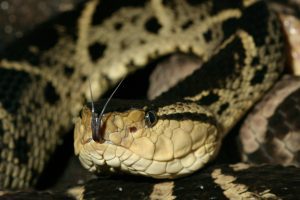
The fer-de-lance, known in Spanish as terciopelo, takes on a muddied appearance from living in leafy ground litter, but actually has brightly colored features. It’s a nocturnal and solitary creature, less active in cooler, drier periods.
These pit vipers can be found basking in the sun near water during the day, waiting to ambush their prey. When cornered, they will become defensive. They are described as irritable, fast-moving, excitable and unpredictable. Because they are large and can travel with their heads up, bites to humans can occur above the knee.
Bottom line — keep your eyes open and be aware of your surroundings. The fatality rate from fer-de-lance bites in most areas is 0 percent, as antivenom is usually readily available. But untreated or improperly treated bites can result in necrosis and death.
Brazilian wandering spider
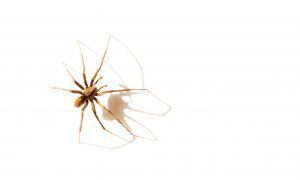
This giant spider is named for its habit of wandering rain-forest floors at night, unlike other spiders that choose habitats higher off the ground in lairs or webs. During the day, Brazilian wandering spiders hide in rotted logs, beneath rocks and in dark, moist places near human dwellings. Because they are often found in bunches of pineapples or bananas, “banana spider” is another common name.
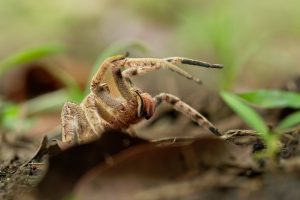
The legs of these spiders can be five or six inches long, and their bodies one or two inches. A key distinguishing characteristic is their defensive posture — two front leg pairs held high, revealing a banded leg pattern and display of chelicerae (fangs).
Despite being considered the world’s deadliest spider, the Brazilian wandering spider’s mouthparts are very small and not well-adapted to attack on large mammals such as humans. However, its wandering nature within densely populated areas poses a threat, particularly in dark, cool hiding places such as houses, clothes, cars, boots and boxes. Best advice — be sure to shake out blankets, clothing and shoes, and watch out where you root around.See the story in the magazine, click here.
AUDIOVISUAL:
Click on the lower right box to open puzzle in full screen.JTNDaWZyYW1lJTIwc3JjJTNEJTIyaHR0cHMlM0ElMkYlMkZ3d3cuamlnc2F3cGxhbmV0LmNvbSUyRiUzRnJjJTNEcGxheSUyNmFtcCUzQnBpZCUzRDM5MjczYWY3OWM4YyUyNmFtcCUzQnZpZXclM0RpZnJhbWUlMjIlMjBzdHlsZSUzRCUyMndpZHRoJTNBMTAwJTI1JTNCaGVpZ2h0JTNBMzAwcHglMjIlMjBmcmFtZWJvcmRlciUzRDAlMjBhbGxvd2Z1bGxzY3JlZW4lM0UlM0MlMkZpZnJhbWUlM0U=