
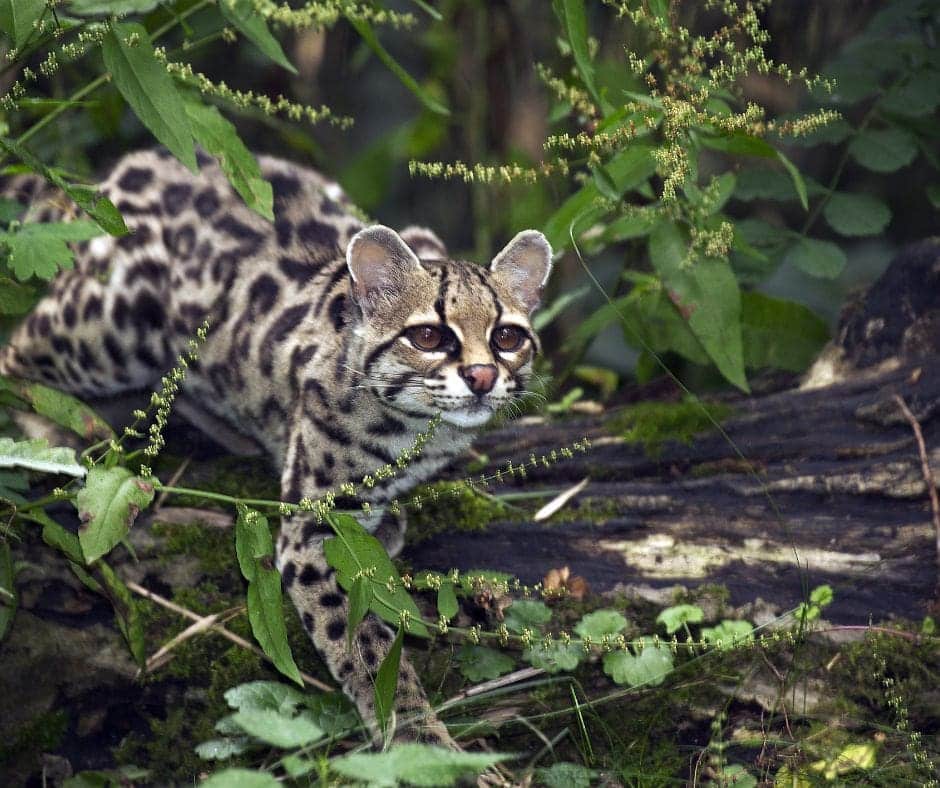
In the dense, verdant jungles of Costa Rica, where the moonlight barely touches the forest floor, the margay cat moves like a shadow. This small, elusive predator, with its strikingly patterned coat and large, expressive eyes, is a master of the night. Known locally as the “tigrillo,” the margay epitomizes the mysterious beauty of the Central American wilderness.
A Nocturnal Acrobat
The margay’s life is predominantly nocturnal. As dusk falls and the jungle comes alive with the calls of nocturnal creatures, the margay begins its nightly activities. Its exceptional tree-climbing abilities set it apart from other cats. With ankles that can rotate up to 180 degrees, it can descend a tree head-first or hang from branches by a single foot. This agility makes it a formidable hunter, capable of navigating the complex canopy in pursuit of birds, small mammals, and insects.
Where to Spot the Margay
Spotting a margay in the wild is a rare treat for any nature enthusiast. These cats are primarily found in the protected areas of Costa Rica, such as Corcovado National Park, Monteverde Cloud Forest Reserve, and the private reserves that dot the Talamanca mountain range. Night tours in these areas offer the best chances to witness the margay in its natural habitat, as their reflective eyes catch the light of guides’ torches.
Environmental Contributions
The margay plays a crucial role in the biodiversity of the Costa Rican rainforest. As a predator, it helps maintain the balance of the ecosystem by controlling the populations of smaller animals. Moreover, margays are also seed dispersers. As they move through the forest, they help spread the seeds of the fruits they consume, aiding in forest regeneration and promoting plant diversity.
The Plight of the Margay
Despite their ecological importance, margays face numerous threats. Habitat destruction due to deforestation and the expansion of agricultural land reduces their living spaces and prey availability. Additionally, they are sometimes captured for the illegal pet trade. Conservation efforts are crucial for their survival, with initiatives focusing on habitat preservation, legal protection, and education to reduce human-wildlife conflict.
Conservation Efforts
Organizations within Costa Rica and internationally are working tirelessly to protect the margay. Research projects aim to better understand their behaviors and needs, which is essential for developing effective conservation strategies. Ecotourism also plays a significant role, as it raises awareness about the margay and generates funds that support conservation activities.
Embracing the call of the wild, the margay continues to thrive in the less disturbed corners of Costa Rica, a beacon of the country’s rich biodiversity. For those lucky enough to spot this elusive cat, it remains a poignant reminder of nature’s complexity and beauty.